May 13 Legislative Report: 22nd National Assembly Begins Full Discussion on Public Welfare Bills

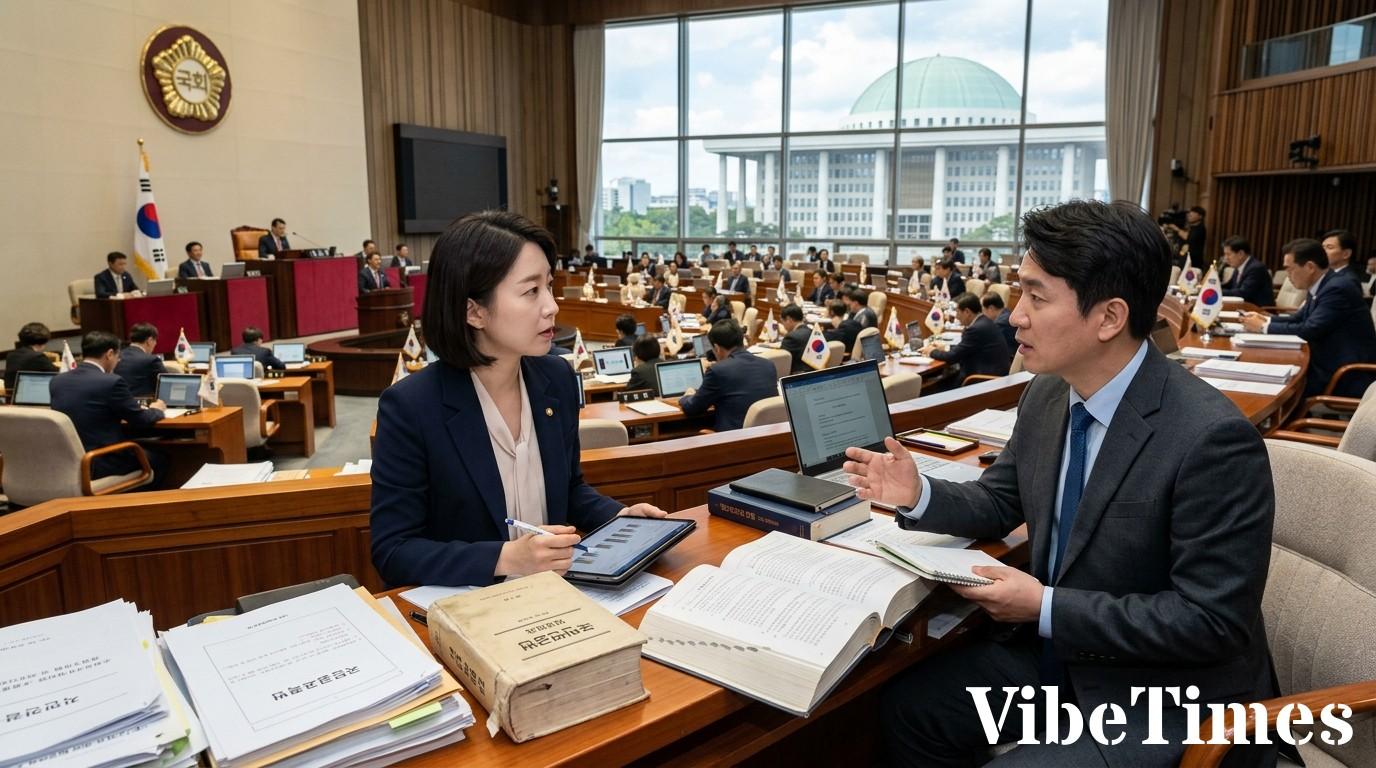
22nd National Assembly Kicks Off Full Discussions on Public Welfare Bills... Expectations Rise for Strengthened National Pension Independence and Expanded Education Funding
With the 22nd National Assembly now convened, discussions on various bills directly related to public welfare and the economy are in full swing. In particular, measures to bolster the independence of the National Pension Fund Management Office and movements to expand financial support and ease regulations in the education sector are drawing significant attention. These developments are expected to have a crucial impact on long-term national economic growth and the enhancement of public welfare.
Assemblyman Shin Jang-sik is pushing to introduce a bill that further strengthens the independence of the National Pension Fund Management Office. Given the immense scale of assets managed by the National Pension Fund, an independent decision-making structure, resilient to political pressure or short-term market fluctuations, is essential. Enhancing the fund management office's independence can contribute to securing stable investment returns from pension assets in the long term and safeguarding the future of beneficiaries. However, meticulous supplementary measures are needed to address potential issues such as unclear lines of responsibility or delays in decision-making that may arise during the independence strengthening process. Since the opening of the 22nd National Assembly, Assemblyman Shin has also been simultaneously working to promote freedom of the press and citizens' right to know by proposing a policy for 'support for major newspaper subscription fees.' This effort is positively evaluated for its contribution to securing the health of the media ecosystem and improving access to information.
Education Sector: Discussions on Easing Tuition Fee Regulations and Expanding Financial Support
Assemblyman Lee Eok-won is deeply involved in the review of education sector budgets concerning the easing of university tuition fee regulations and the expansion of university financial support, within the National Assembly's Education Committee. While easing university tuition fee regulations has the positive aspect of potentially enhancing educational quality by improving universities' financial health, it could also lead to increased educational expenses for households. Therefore, a cautious approach is necessary, coupled with efforts for transparent financial management and educational service improvements by universities. Since the opening of the 22nd National Assembly, Assemblyman Lee has focused his legislative activities on securing educational fairness and resolving private education issues, striving to reflect the voices from the educational field. Furthermore, he is considering introducing legislation to prevent and respond to violent crimes such as 'random attacks,' which is recognized as a critical task in strengthening the social safety net. Operating as a member of the Education Committee, Assemblyman Lee is participating in the proposal and review of education-related bills alongside other committee members like Assemblymen Ha Jung-woo and Kim Chul-jin. These lawmakers are accelerating legislative activities by continuously communicating with individuals in the education sector to develop field-oriented education policies.
In this manner, numerous assembly members belonging to the Education Committee are actively stepping forward to resolve pressing educational issues. Many committee members, including Lee Young-mi, Song, Cho Gil-hyung, Kim Wan, Yoon Sung-jin, Lee Ga-hyun, Cho Se-yeon, Oh Yu-rim, Ma Ji-hyun, Ok Yeong-kyung, Cho El-jin, Lee Dae-tong, Yang Ji-min, Park Sung-bae, Jeon Ye-hyun, Choi Jin-nyung, Park Hae-min, and Lee Jae-hyun, are participating in the review of education-related policies and bills, voicing diverse opinions. Although specific legislative details are not always specified, their active engagement is interpreted as a significant movement reflecting societal demands for educational system improvements. In particular, discussions on expanding university financial support are expected to play a vital role in maintaining the quality of higher education and securing national competitiveness in an era of low birth rates and an aging population. This is not merely an issue for universities but a national imperative directly linked to nurturing future talent.
National Assembly Operations and Legislative Push Trends
Meanwhile, the 22nd National Assembly is establishing the framework for its future operations through the election of its Speaker and Vice Speakers for the latter half of its term. The Democratic Party has selected Assemblyman Cho Jeong-sik as its candidate for the latter-half Speaker and Assemblywoman Nam In-soon for Vice Speaker. The People Power Party has chosen Assemblyman Park Deok-hum as its candidate for Vice Speaker. Assemblyman Cho Jeong-sik, a six-term lawmaker and the longest-serving member within the Democratic Party, is expected to bring stability to the National Assembly's operations and accelerate the passage of key legislation. He has expressed his determination to 'swiftly conclude the formation of standing committees within June' and his ambition to create 'a National Assembly befitting Korea's great transformation.' Furthermore, Han Byung-do, the floor leader of the Democratic Party, has indicated his intention to secure economic-related standing committees, such as the Legislation and Judiciary Committee and the Trade, Industry, Small and Medium Venture Business Committee, for his party. This move appears aimed at expediting the passage of economic revitalization bills that have faced legislative delays.
These operational changes within the National Assembly could influence the momentum of legislative initiatives. The ongoing dinners between Prime Minister Kim Boo-kyum and lawmakers from both ruling and opposition parties, in pursuit of bipartisan cooperation, are also expected to positively impact legislative discussions. Close communication between the Prime Minister's Office and the leadership of the ruling and opposition parties can help alleviate impasses during the legislative process and contribute to finding common ground. Notably, President Lee Jae-myung's remark that 'if possible, handle it through presidential decrees' regarding delays in the passage of bills agreed upon by the National Assembly suggests his disappointment with the speed of legislative processing. This is interpreted as emphasizing the need to enhance negotiation power between parties in future legislative processes and focus more on the actual passage of public welfare bills. The current state of the National Assembly will be a significant variable in determining the direction of key bills currently under discussion, such as pension reform and securing education funding.
Market and Industry Impact Outlook
The strengthening of the National Pension Fund Management Office's independence is expected to have a positive long-term impact on capital market stability. Independent fund management will lead to rational, principle-based investment decisions, likely resulting in higher long-term yields for the fund. Moreover, a transparent and predictable management strategy can foster trust among domestic and international investors, making the capital market more attractive. However, due to the sheer size of the fund, its short-term impact on market liquidity or the prices of specific asset classes may be limited. Nevertheless, in the long run, the stable investment behavior of pension funds can contribute to mitigating market volatility.
Discussions on easing university tuition fee regulations and expanding financial support are anticipated to have complex effects on the higher education market and related industries. Easing tuition fee regulations can provide universities with greater financial autonomy, offering opportunities to enhance competitiveness through increased investment in research and development and improvements in educational environments. This, in turn, could lead to the cultivation of talented individuals and the development of advanced technologies, generating positive ripple effects across the national economy. On the other hand, concerns exist that increased educational costs for students and parents could exacerbate socioeconomic inequality. Therefore, expanding government financial support will be a crucial policy tool to alleviate these burdens and ensure equity in educational opportunities. Increased university funding can also lead to growing demand in related industries, such as educational equipment, IT solutions, and research instruments, positively impacting the growth of related companies.
Overall Outlook
The bills being discussed in the 22nd National Assembly concerning the strengthening of National Pension independence and the education sector are crucial tasks that will contribute to the sustainable growth of the national economy and the improvement of citizens' quality of life. Assemblyman Shin Jang-sik's bill to enhance the independence of the National Pension Fund is expected to contribute to long-term fiscal stability and capital market trust. Discussions led by Assemblyman Lee Eok-won and other members of the Education Committee on expanding university financial support and easing tuition fee regulations are anticipated to positively impact the qualitative improvement of higher education and the nurturing of future talent. If these bills are smoothly deliberated and passed by the National Assembly, it is projected that both the stable operation of the National Pension Fund and increased investment in education for future generations can be achieved. However, a thorough analysis of the socioeconomic ripple effects each policy may bring, along with a process to derive consensus among stakeholders, will be essential. Close attention is required regarding the National Assembly's legislative trends and policy implementation processes going forward.