#정치
Lee Jae-myung Special Prosecutor Debate Intensifies: 'Civil Rights Restoration' vs. 'Indictment Cancellation'

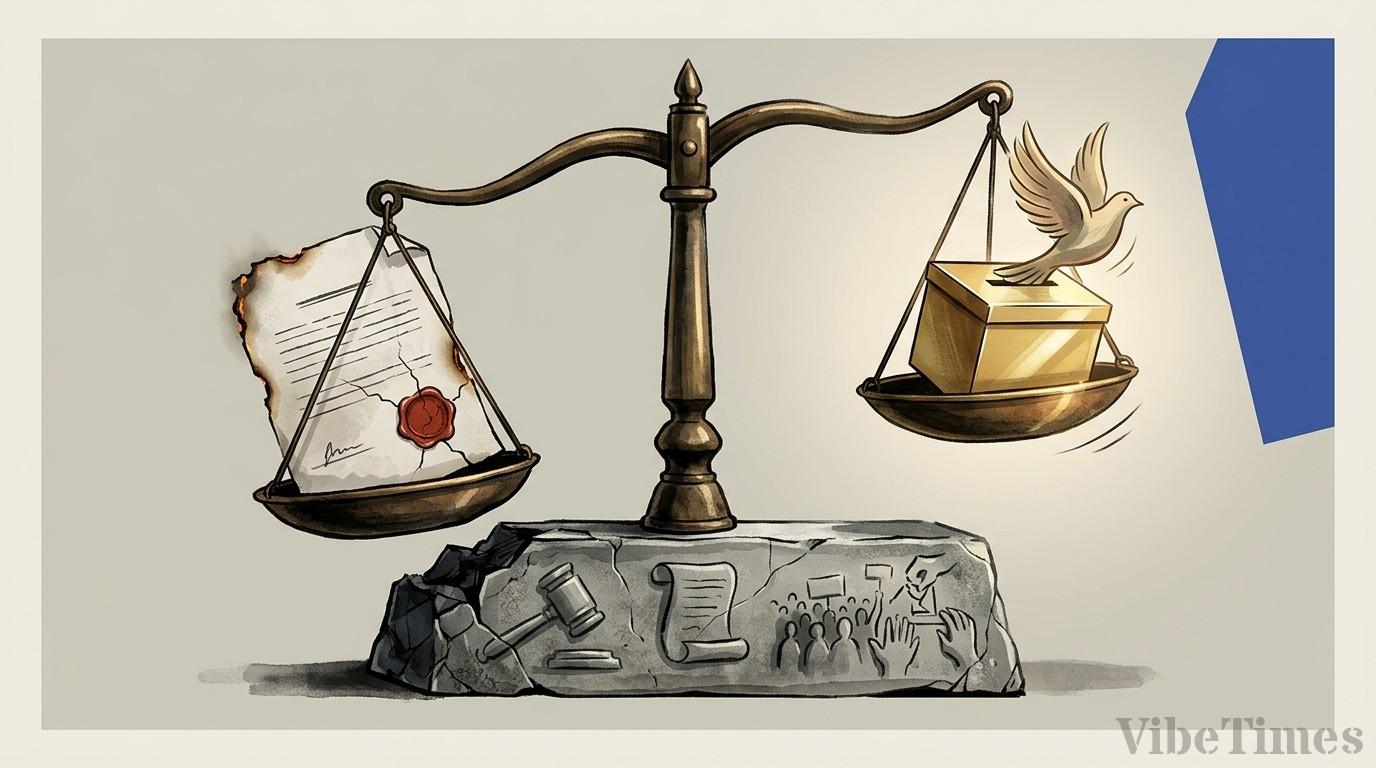
Lee Jae-myung Special Prosecutor Demands: Clash Deepens Over 'Indictment Cancellation' and 'Civil Rights Restoration'
The political arena is currently abuzz with heated debates surrounding the introduction of a special prosecutor related to Lee Jae-myung, leader of the Democratic Party of Korea. Notably, Jang Dong-hyuk, a senior member of the People Power Party, strongly criticized Lee's demand for an 'indictment cancellation special prosecutor,' labeling it merely 'bulletproofing' and a 'get-out-of-jail-free card.' He argued instead for a 'civil rights restoration special prosecutor.' This issue has emerged as a political flashpoint, intertwined with the ballot shortage incident during the June 3rd local elections, drawing intense focus on the legislative process.Background of Legislative Controversy: Special Prosecutor Demands and Ruling Party Rebuttals
On May 27th, Jang Dong-hyuk stated on his Facebook page, "The public is calling for a 'civil rights restoration special prosecutor,' but Representative Lee Jae-myung is solely fixated on an 'indictment cancellation special prosecutor.'" He added that for Lee, a special prosecutor is merely "a tool for bulletproofing and absolution, not for the realization of justice." This statement questions the purpose and sincerity of the special prosecutor Lee is pursuing, highlighting the sharp differences in stance between the ruling and opposition parties. Jang warned that the government could face a crisis if the 'civil rights restoration special prosecutor' is refused, asserting that "the waves of public sentiment will engulf it." This is interpreted as reflecting the opposition's demand that the focus should be on investigating problems in the election process, such as the ballot shortage during the June 3rd local elections, and guaranteeing citizens' right to vote. Conversely, the 'indictment cancellation special prosecutor' advocated by Lee's side appears to aim at resolving suspicions related to ongoing judicial proceedings. The ruling party counters that this is an unnecessary political offensive and could infringe upon the independence of the judiciary.Key Content of the Bills and Expected Impact
While the specific details of the 'indictment cancellation special prosecutor' bill have not yet been clearly disclosed, the core issue is likely to be an investigation into the fairness of the prosecution's probe into the various charges currently faced by Representative Lee, and a review of the legality of the indictment itself. If this bill is pursued, it could directly impact ongoing trials and further intensify political interpretations and debates, separate from judicial rulings. In contrast, the 'civil rights restoration special prosecutor' is expected to focus on investigating allegations of illegal or negligent acts during the election process, such as the ballot shortage during the June 3rd local elections. This could probe issues with election management bodies or suspicions of interference by specific groups, potentially raising the need for future election system reforms. While the introduction of such a special prosecutor could contribute to ensuring transparency and fairness in the election process, there are also concerns that it might incite challenges to election results or fuel political conflict.Debate for and Against, and Expert Opinions
Opinions are divided among various political factions and experts regarding these special prosecutor demands. The People Power Party, as argued by Jang Dong-hyuk, criticizes the 'indictment cancellation special prosecutor' as a politically motivated 'bulletproof special prosecutor' and emphatically calls for a 'civil rights restoration special prosecutor' to rectify problems in the election process. In this regard, the People Power Party is also accelerating efforts to operate a special committee for a parliamentary inquiry into election management and is exerting comprehensive pressure on the National Election Commission. Conversely, within the Democratic Party, a bill to amend the Code of Criminal Procedure, focusing on the 'abolition of supplementary investigation authority,' has been jointly proposed, demonstrating a strong stance on prosecutorial reform. Former Representative Chung Sye-kyun described this as a "speed race" and urged for the adoption of the bill as a joint party platform by the pro-government parties. This is also linked to efforts to completely abolish the supplementary investigation authority of the Supreme Prosecutors' Office, slated to launch in October, and is seen as an intention to accelerate discussions on separating and reducing the prosecution's investigative and prosecutorial powers. Cho Hyun-yong, a lawmaker from the Jo Guk Innovation Party, also stated, "If the President and the ruling party refuse a special prosecutor, they are digging their own graves," criticizing the President's veto power and advocating for prosecutorial reform policies such as reducing the scope of direct prosecution by the prosecution and maintaining its monopoly on indictments. These moves, combined with the demands for a special prosecutor related to Representative Lee, are serving as a driving force for broader discussions on prosecutorial reform and the restructuring of the judicial system throughout the opposition bloc. Meanwhile, some in the legal community have raised concerns that the independence and authority of the judiciary could be undermined depending on whether a special prosecutor is introduced and its specific content. In particular, the 'indictment cancellation special prosecutor,' which could be perceived as political interference in ongoing judicial proceedings, is pointed out as having a high potential for amplifying legal and political controversies. For the 'civil rights restoration special prosecutor,' it is also argued that clear legal grounds and defined investigation scopes are crucial, and concrete measures capable of substantially investigating problems in the election process must precede it.Future Outlook: Legislative Process and Political Moves
Currently, the prospects for how special prosecutor bills related to Representative Lee Jae-myung will be debated in the National Assembly and whether they will actually pass remain uncertain. This is due to the clear gap in positions between the ruling and opposition parties and the complex entanglement of their respective political situations and vested interests. The 'indictment cancellation special prosecutor' is likely to face strong opposition from the ruling party, while for the 'civil rights restoration special prosecutor,' the development of a concrete bill and the achievement of consensus within the opposition bloc will be critical tasks. Some anticipate that discussions on special prosecutors will become more active around the time of the August 17th party convention. As the Democratic Party pursues prosecutorial reform as a core party agenda, the timing of the amendment to the Code of Criminal Procedure could emerge as a significant issue. Furthermore, the results of the parliamentary inquiry special committee's activities related to the June 3rd local elections and discussions on reforming the election commission could indirectly influence whether a special prosecutor is introduced. In conclusion, the demand for a special prosecutor concerning Representative Lee Jae-myung has become the central point of contention in current legislative discussions, with the conflicting demands of 'indictment cancellation' and 'civil rights restoration' escalating political tensions. It is anticipated that the future legislative process, as well as the political strategies of each party and public opinion, will interact complexly to determine the fate of these bills.
Related Articles
National Assembly Data Analysis: Kim Seung-su's Party-Line Defection Rate at 2.6%
정치
법안 1만8000건 쌓고 24%만 처리…국회는 '입법 공장'이 됐다
정치
Design Work Begins on Special Insurrection Unit to Handle 46 Remaining Cases
정치
President Lee Jae-myung Proposes Resuming Korea-Mexico FTA Talks in Mexico
정치
성장률 3.3%, 그런데 사업장 3분의 2는 월 100만원
정치
Cheong Wa Dae Reviews Legal Action Over Yoo Si-min's 'Rotten Fish Market' Remark
정치