35 Million Won Budget: Can You Afford an Apartment? A Regional Comparison

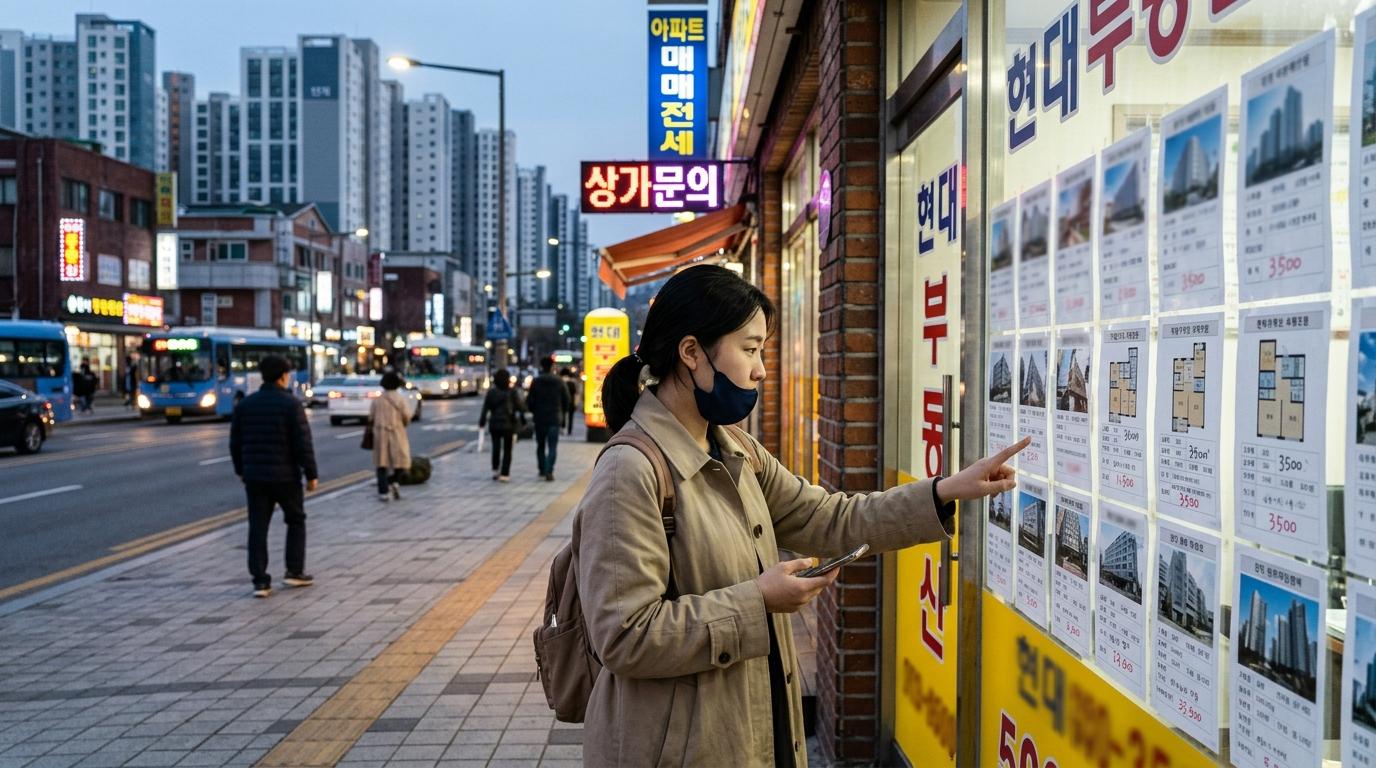
Buying an apartment in South Korea with a budget of 35 million won is highly challenging. Given the nationwide surge in real estate prices and high average transaction values, this amount is practically insufficient to own a new apartment or a home in the Seoul metropolitan area or major cities. However, by meticulously analyzing the characteristics of regional real estate markets, exploring diverse housing types, and actively utilizing government financial support products, one can explore possibilities for securing housing under restricted conditions. This article aims to provide realistic information and concrete alternatives for prospective buyers considering a housing purchase with a 35 million won budget.
Examining the practical limitations of a 35 million won budget and the feasibility of purchasing an apartment reveals that South Korea's real estate market commands significant price levels, creating a wide gap with such a budget. According to KB Real Estate statistics, the average nationwide apartment sale price stood at approximately 450 million won as of the end of 2023, with Seoul exceeding 1 billion won. 35 million won is less than 10% of these average prices. Apartments in high-priced areas like the Seoul metropolitan area and major metropolitan cities can range from hundreds of millions to billions of won, making direct purchase of new or recently built apartments virtually impossible with this budget. Even in smaller provincial cities or rural areas, new apartments command substantial prices, rendering direct acquisition with 35 million won highly restricted.
Exploring housing types that can be considered instead of purchasing an 'apartment,' it is difficult to find an apartment that can be owned outright with a 35 million won budget. Therefore, it is more realistic to approach this from a broader perspective of 'livable real estate' rather than being confined to the specific housing type of 'apartment.' Firstly, one could look into older, small apartments, over 30 years old, located in provincial small cities or outer districts. These properties may have low redevelopment potential or severe physical deterioration, leading to very low price points. Secondly, housing types other than apartments, such as villas (townhouses, multi-family homes) or small studio apartments (officetels), are options. These tend to be relatively cheaper than apartments, increasing the possibility of finding purchasable units within a 35 million won budget. Thirdly, investing in the early stages of redevelopment/reconstruction or acquiring stakes through auctions offers potential, but these are more investment-oriented than for direct residence and carry significant risks.
1. Analysis of Housing Types and Regions Accessible with 35 Million Won
To find an apartment with a 35 million won budget by exploring older homes in provincial small cities and old downtown areas, one must broaden their scope to regions with limited accessibility or lacking infrastructure. Specifically, in the old downtown areas of provincial medium-sized cities (excluding major metropolitan ones) or in underdeveloped rural regions, very old, small-sized apartments built over 30 years ago can occasionally be found. These properties often suffer from severe physical deterioration requiring repairs, and there is a high possibility of additional remodeling costs to ensure basic living conveniences such as heating, insulation, and leak prevention. Sale prices can range from the late 20 million won to the early-to-mid 30 million won range depending on the region, but it's crucial to note that transaction volumes are very low and the availability of such properties is scarce.
Confirming the potential of alternative housing such as villas and officetels, townhouses, multi-family homes (villas), or small officetels can be relatively realistic alternatives when apartment purchases are difficult. These housing types are often priced lower than apartments, thus increasing the probability of finding units purchasable for under 35 million won, particularly older villas in provincial towns or very small officetels for one or two-person households in outer metropolitan areas. However, these dwellings may have drawbacks compared to apartments, such as higher maintenance fees, limited parking, and less convenient access to amenities, requiring thorough comparative analysis when inspecting properties. For instance, old villas measuring 20-30 square meters in provincial small cities can be found in the 20 million won range, and officetels around 25 square meters built in the early 1990s in outer metropolitan areas can be found in the mid-to-high 30 million won range.
Considering the potential and risks of early-stage redevelopment/reconstruction investment and stake auctions, one can also consider investing in small villas, land stakes, or cooperative stakes in areas where development is beginning to be discussed, with a long-term perspective rather than immediate apartment acquisition. This is more focused on potential future capital gains than on direct residency. However, it is nearly impossible to acquire valuable stakes in areas with high project feasibility for 35 million won, and even if acquired, the uncertainty of project progression and speed poses a significant risk of delayed or forfeited investment returns. Furthermore, while it is theoretically possible to acquire a partial stake in a property through stake auctions, this involves complex legal procedures and potential unforeseen additional costs, making it a high-risk investment.
2. Financial and Legal Aspects to Consider When Purchasing Housing with 35 Million Won
A strategy must be devised to leverage government-supported low-interest loans, as a significant portion of the funds needed for a housing purchase with a 35 million won budget will likely depend on borrowing. Therefore, actively utilizing government support programs such as the 'Didimdol Loan' from the Korea Housing Finance Corporation or 'Bogeumjari Loan' is essential. These policy loans offer lower interest rates and potentially higher loan limits than general financial institution loans, which can significantly enhance actual purchasing power. However, eligibility and loan amounts vary greatly depending on the applicant's income, creditworthiness, and the price of the target property. It is paramount to thoroughly check personal eligibility requirements beforehand, estimate the maximum loan amount obtainable, and establish a realistic borrowing plan that considers one's repayment capacity.
In terms of managing incidental and additional costs, it is important to remember that housing transactions incur various expenses beyond the sale price, including acquisition tax, registration and license tax, legal representative fees, and real estate brokerage fees. When purchasing a home with 35 million won, these incidental costs alone can amount to a considerable sum. For instance, acquiring a property valued at 30 million won could incur several million won in taxes alone. Furthermore, properties purchasable within this budget are often older, making additional repair and maintenance costs due to deterioration highly probable. Therefore, a prudent approach involves setting a total budget for actual housing purchase significantly higher than 35 million won, ensuring at least 10-15% of the sale price is secured for incidental costs and initial repairs.