May 15 Legislative Report: 22nd National Assembly Intensifies Discussion on Education Agenda

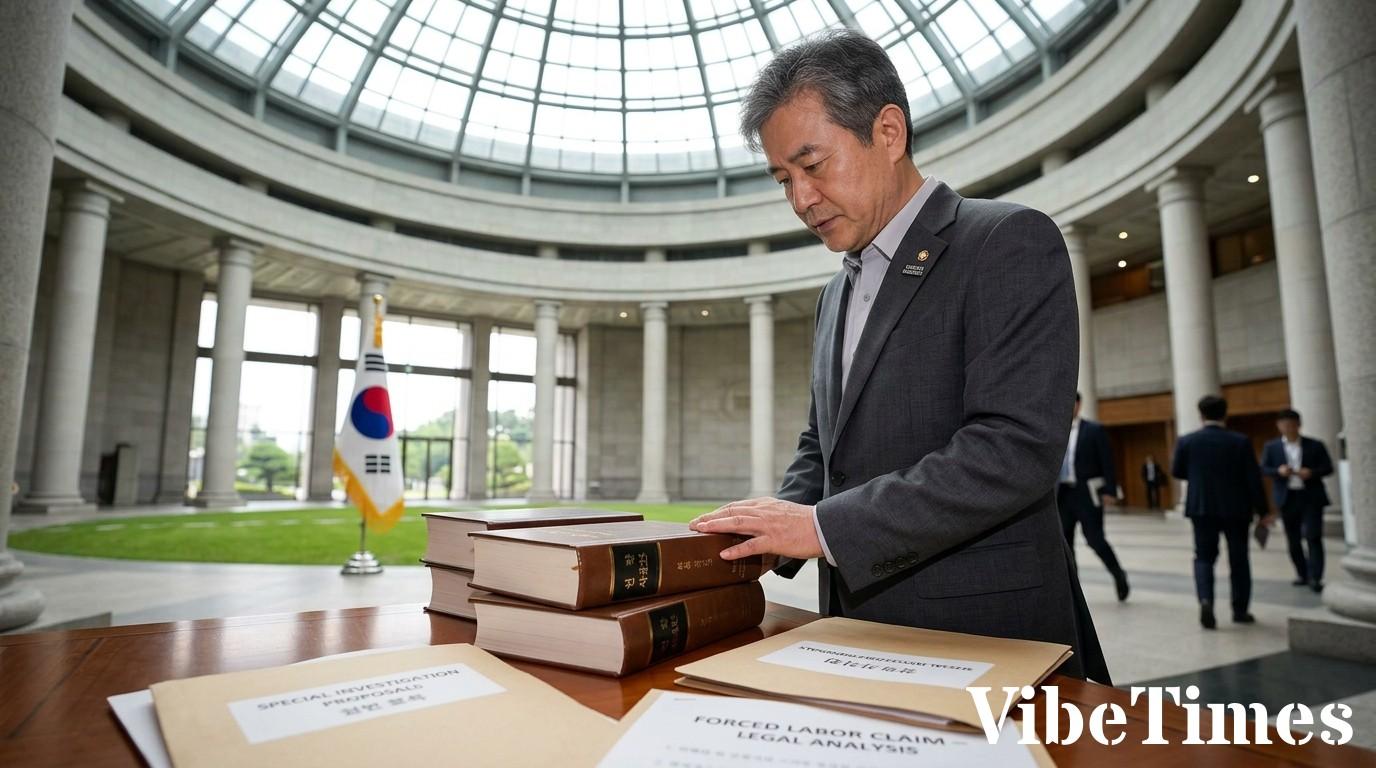
22nd National Assembly Begins Full-Scale Discussions on Education Issues and Key Legislation
With the opening of the 22nd National Assembly, legislative activities and discussions within key standing committees are gaining momentum. In particular, lawmakers serving on the Education Committee are expected to actively review education issues and deliberate on related bills. Members such as Uhm Hee-joon, who has a background supporting lawsuits for forced labor victims during his time with the Lawyers for a Democratic Society (Minbyun), along with Noh Sang-won, Jeon So-young, Shin Seung-moon, Choi Seung-cheol, Song Tae-ik, Jang Jung-won, Hong Ji-yoon, Kim Jin-yang, Jo Su-min, Kim Hee-young, Choi Tae-won, and Yoon Sung-sik, will be participating in policy discussions within the Education Committee. They have signaled in-depth deliberations on various education-related agendas, including educational system innovation, protection of teachers' rights, and education for future generations.
Among them, Assemblyman Noh Sang-won has participated in the proposal of the 'First Lady Kim Keon-hee Special Prosecutor Act' and is expected to play a pivotal role in reviewing and enacting education-related bills as the floor leader for the Education Committee in the 22nd National Assembly. Assemblywoman Jeon So-young, also a member of the Education Committee, has emphasized legislative activities through cooperation and communication between the ruling and opposition parties, urging the People Power Party to acknowledge the public's judgment on the overall state administration and calling for cooperation. Assemblyman Shin Seung-moon expressed his political convictions through a 'Party Speech' instead of a representative speech for the negotiation bloc during the first plenary session. In this manner, each lawmaker is seeking to advance the education sector based on their expertise and political convictions.
Assemblyman Choi Seung-cheol expressed his intention to review bills to solve the youth housing problem even before his standing committee assignment and presented opinions on educational system innovation measures during the first meeting of the Education Committee. Assemblyman Song Tae-ik has strived to reflect voices from the field into policy through close communication with the Korean Medical Association and related academic societies, and has also raised concerns regarding medical issues, such as urging stronger penalties for sexual offenses and assault cases in medical settings. Assemblyman Jang Jung-won has set future generations and educational innovation as core goals for his legislative activities, while Assemblywoman Hong Ji-yoon is serving as the deputy floor leader for the Jo Guk Innovation Party and also as the floor leader for the Education Committee. Assemblyman Kim Jin-yang is focusing on resolving issues related to the infringement of teachers' rights and exploring ways to improve teachers' treatment, and Assemblyman Jo Su-min is playing a role as the floor leader for the Education Committee, participating in the push for the passage of the '5 Teachers' Rights Bills.' Assemblywoman Kim Hee-young demonstrated her commitment to education issues by attending Education Committee meetings and asking questions. Assemblyman Choi Tae-won has expressed his intention to propose and participate in discussions on bills to prevent infringement of teachers' rights and strengthen teacher protection, while Assemblyman Yoon Sung-sik has proposed strengthening criminal penalties for acts infringing teachers' rights and amending related laws. The diverse backgrounds and expertise of these members are expected to enrich the activities of the 22nd National Assembly's Education Committee.
Selection of National Assembly Speaker Delayed, Cooperation Challenges Between Ruling and Opposition Parties
Meanwhile, the ruling and opposition parties are in deep conflict over the selection of the presiding officers for the first half of the 22nd National Assembly, leading to delays in plenary session schedules. With the Democratic Party of Korea selecting Cho Jung-sik, a six-term lawmaker and former presidential chief of staff to Lee Jae-myung, as its candidate for the Speaker of the National Assembly for the latter half, attention is focused on his potential influence on future legislative processes. The Democratic Party announced that Cho Jung-sik was confirmed as the Speaker candidate with over half the votes in a party caucus held on the 13th. This result was based on a combined tally of 20% from online voting by party members and 80% from in-person voting by lawmakers on the day, with analyses from within and outside the party suggesting the influence of 'Myungshim' (President Lee Jae-myung's will). Cho Jung-sik is expected to be officially elected in a plenary session as early as the 20th, beginning his two-year term.
Cho Jung-sik's expected election as Speaker is anticipated to accelerate the pursuit of the Lee Jae-myung administration's state agenda. Particularly as controversial bills are slated for passage, such as the amendment to the Criminal Procedure Act abolishing prosecutors' supplementary investigation rights after the June 3rd local elections, and the 'Fabricated Prosecution Special Prosecutor Act,' which could lead to the cancellation of charges related to President Lee Jae-myung's cases, the role of the National Assembly Speaker as a mediator and the restoration of cooperation between the ruling and opposition parties are emerging as crucial challenges. Cho Jung-sik securing a majority in the first round of the Speaker nomination race is widely seen as a result reflecting the strong support from first-term lawmakers within the party and President Lee Jae-myung's intentions. This situation suggests that fierce strategic maneuvering and political disputes between the ruling and opposition parties are inevitable in future National Assembly operations and bill processing.
Currently, the ruling and opposition parties are at odds over the schedule for the plenary session to elect the presiding officers, and it is reported that no agreement was reached on the 14th. This indicates that the 22nd National Assembly is facing difficulties in its smooth operation from its inception. Looking at the candidate registration status for the National Assembly by-elections, which are held concurrently with the June 3rd local elections, some candidates' declared assets, criminal records, and tax delinquency records are being disclosed, attracting voter attention. Public interest is growing in the individuals who will enter the National Assembly based on the candidates' profiles and backgrounds, which could subsequently influence the National Assembly's legislative activities and policy direction. Therefore, resolving the conflict over the election of presiding officers and making cooperative efforts will be an essential prerequisite for the National Assembly to function normally.
Analysis of Key Bills and Legislative Trends: Education and Public Welfare Sectors
The major bills expected to be proposed or discussed in the 22nd National Assembly are likely to concentrate on the education and public welfare sectors. As members of the Education Committee are actively participating, bills related to the protection of teachers' rights are drawing attention. The issues of resolving the infringement of teachers' rights and improving teachers' treatment, which Assemblymen Kim Jin-yang and Choi Tae-won are focusing on, have already garnered significant public attention. The proposed amendment by Assemblyman Yoon Sung-sik to strengthen criminal penalties for acts infringing teachers' rights and related laws is also expected to be actively debated. Furthermore, the passage of the '5 Teachers' Rights Bills,' in which Assemblyman Jo Su-min is participating, is a key agenda item for the education community. These bills will focus on protecting the legitimate educational activities of teachers, ensuring students' rights to learn, and establishing practical measures for cases of teachers' rights infringement.
Meanwhile, bills to solve the youth housing problem, which Assemblyman Choi Seung-cheol has shown interest in, could also be addressed as important agenda items from the perspective of stabilizing public welfare. In particular, bills proposed by Assemblywoman Kim Hee-jung of the Land, Infrastructure and Transport Committee to strengthen management of abandoned buildings and vitalize housing supply are matters that could directly impact the construction and real estate markets. This is a policy that can be linked not only to housing issues but also to urban regeneration and economic vitalization. Moreover, with the recent disclosure of National Assembly candidate asset declarations, criminal records, and tax delinquency records, societal demands for the integrity and qualifications of lawmakers are increasing. Against this backdrop, discussions on amending relevant laws or strengthening ethical regulations are also likely to emerge.
Thus, the 22nd National Assembly is initiating legislative activities across various fields. Alongside in-depth discussions on education issues, policy changes are anticipated in broad areas such as public welfare stabilization and national land development. It is hoped that bills that provide substantial benefits to the public will be promptly prepared through close cooperation and productive discussions between the ruling and opposition parties. In particular, the tension between the ruling and opposition parties is expected to escalate further regarding the passage of contentious bills following the election of Cho Jung-sik as Speaker, and attention must be paid to how these political dynamics will influence future bill passage and overall National Assembly operations.