2025 Forecast: Job and Industry Structure Shifts as Generative AI Matures

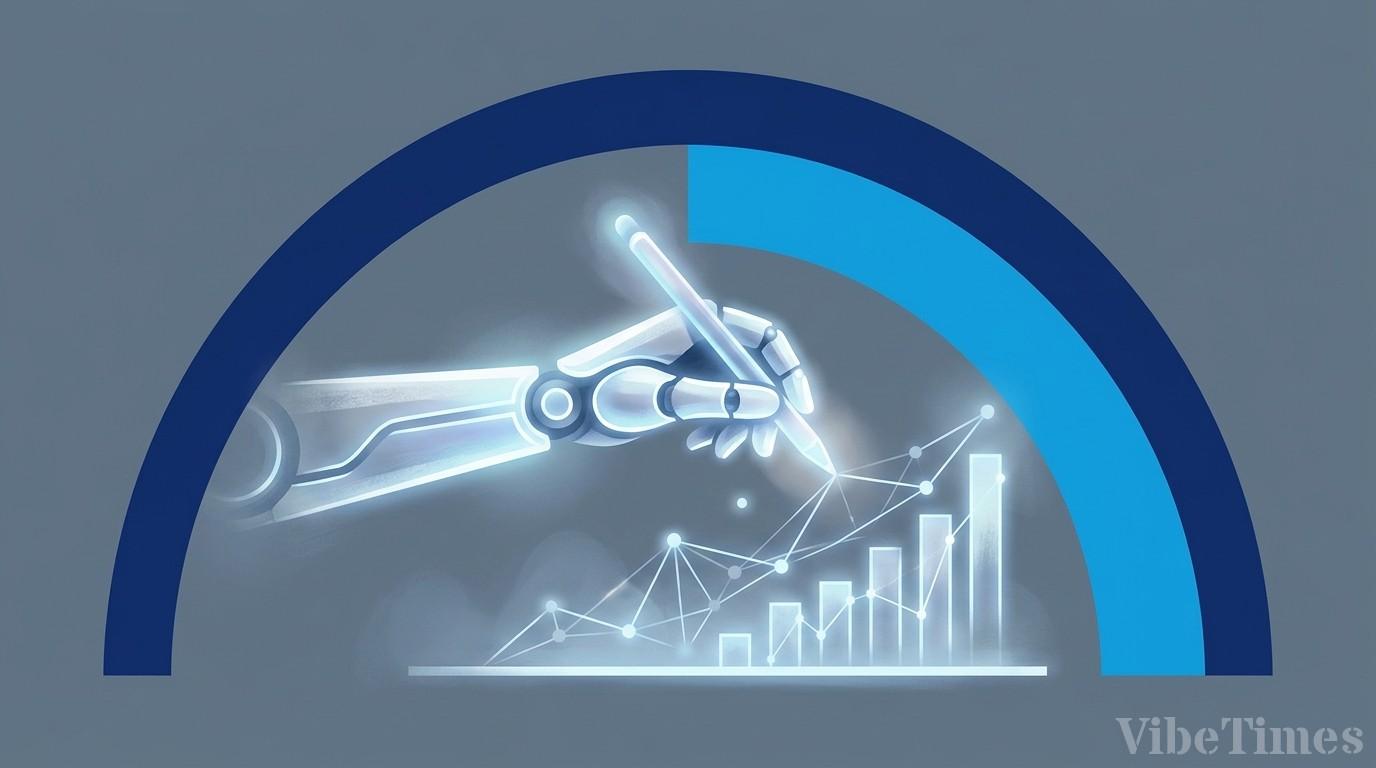
2025 marks a tipping point where Generative AI moves beyond the laboratory to a full-fledged stage where it designs corporate workflows themselves. As multimodal capabilities and Agent AI become commercialized, extending beyond text, the core challenge of the labor market is shifting rapidly from simple productivity gains to the redefinition of jobs by AI.
Driven by accelerated corporate investment, global giants like Microsoft, Google, and Salesforce are making 'Copilot' features—which serve as co-pilots in business software—a standard inclusion. Consequently, AI utilization in the workplace has evolved from an option to a necessity.
1. From 'Tool' to 'Colleague': Automation and Division of Labor in Work Processes
Completing Bureaucratic Task Automation with Multimodal & Agent AI
By 2025, multimodal AI, which integrally processes voice, video, and code beyond text-based chatbots, will become the standard in work environments. In particular, as Agent AI technology—capable of making independent judgments to execute complex task flows rather than just answering simple questions—is advanced, the way we work is changing completely.
This change can be confirmed through specific figures. According to market research, by 2025, AI agents are predicted to handle approximately 15% of routine business decisions independently without human intervention. Consequently, significant portions of bureaucratic and repetitive knowledge labor, such as email drafting, scheduling, and report drafting, are directly delegated to AI systems.
Establishing a New Standard for Human-AI Collaboration
The existing model where AI generates output and humans simply review it is evolving further. A collaboration structure is settling in where humans focus on the role of 'supervisor,' setting the overall direction of work, while AI agents lead the actual execution process.
The key lies in a 'phygital' work environment that combines physical offices with digital environments. Technologies like Zoom's AI Companion and Microsoft Teams Premium for minute-taking and real-time translation smooth collaboration for global teams working across different time zones. This maximizes the utility of remote work, allowing monitoring and instructions on site situations through AI assistants without physically commuting to the office.
2. Redrawing the Job Map: Downgrading of Coding and Rise of Strategists
Democratization of Software Engineering and the Era of System Integrators
As generative AI coding aids like GitHub Copilot become essential tools for developers, the central axis of job competency is shifting. The value of implementation skills—memorizing and writing code line by line—is rapidly declining, while the importance of capabilities to design entire systems and plan architectures is surging.
Developers in 2025 will no longer be mere functionaries writing code. Instead, they will be strongly required to demonstrate the competency of 'system integrators' who compare, arrange, and validate the massive amounts of code generated by AI. Across the entire job environment, AI utilization skills are transforming into the most basic job requirements, much like using Excel or Word.
Rise of the Super Office Worker Who Penetrates Data
In general office and planning roles, contextual insight—the ability to interpret organizational data and apply it to business contexts—beyond mechanically operating AI tools, is becoming the core competitive edge. According to Gartner, by 2025, 70% of global companies plan to actively use AI to cultivate employees into 'Super Workers' with maximized work capabilities.
The proportion of repetitive tasks that simply summarize and create documents will plummet. Conversely, a workforce shift toward roles that make final decisions based on data derived by AI, or utilize uniquely human skills of empathy, persuasion, and negotiation that AI cannot mimic, is rapidly accelerating across the industry.
3. Paradigm Shift in Organizational Culture and Governance Challenges
Changing Evaluation Criteria and Resetting Standards in the New Hiring Market
As AI adoption drastically increases work efficiency, workplace evaluation criteria are shifting thoroughly from hours-based to results-oriented. The ability to accurately delegate a significant portion of one's work to AI is evaluated as a core performance indicator, which accelerates the spread of flexible labor systems such as the four-day workweek or part-time work.
The hiring market for new recruits also faces structural changes. AI proficiency acts as a mandatory evaluation factor in the selection of both experienced and entry-level candidates. Companies prefer talents with the technical agility to maximize work efficiency in the short term using AI, and these practical skills directly influence the curricula of educational institutions like universities.
Managing Uncontrollable Generations and New Security Challenges
As AI utilization surges in work processes, companies face strong security and control threats. There is a real risk of critical internal corporate information inadvertently leaking into the training data of public AI platforms, or AI providing hallucinations—false information presented as fact—that could deal fatal blows to business.
To solve this, AI management and monitoring roles are being established as regular jobs, with demand exploding. Just as DevOps integrates development and operations, the roles of MLOps (managing AI model tuning and deployment) and LLMOps (optimizing Large Language Model performance) experts are becoming crucial. Establishing AI governance—thoroughly monitoring who uses which AI for what purpose and setting ethical guidelines—is emerging as a key management challenge.
4. Outlook: Practical Survival Strategies for AI Coexistence
Strengthening Cross-Validation Capabilities to Complete 0.1 to 1
AI can generate the skeleton of 80–90% of a task in mere seconds. The core competency demanded of humans in this era is concentrated on cross-validation capabilities that fill the remaining 10–20% gap to derive a perfect 100% result. The ability to fact-check the veracity of AI-generated content and the skill to critically evaluate and refine outputs become an individual's absolute competitive advantage.
Individuals must actively learn the AI tools most relevant to their jobs. Training to reduce processing time by at least 30% in current workflows is essential, and prioritizing prompt engineering—learning to command AI accurately to obtain desired results—is a must.
Strategy for Augmentation, Not Replacement
It is inevitable that simple and repetitive administrative tasks will be largely replaced by AI. However, by adopting an augmentation strategy that actively uses AI as an assistive tool to expand one's job domain, survival opportunities can be significantly widened.
The key is job redesign: investing the secured time into more creative, strategic, high-value-added work. Individuals must proactively reconstruct their roles by leaving simple information searches to machines and strengthening emotional intelligence and soft skills—such as defining fundamental problems based on collected data and persuading team members. Corporations must also swiftly prepare systematic training programs that build clean, organized data infrastructures and help employees perceive machines not as competitors but as collaborators.