Lee Jae-myung Administration Kicks Off Resource Diplomacy with Mercosur Trade Agreement

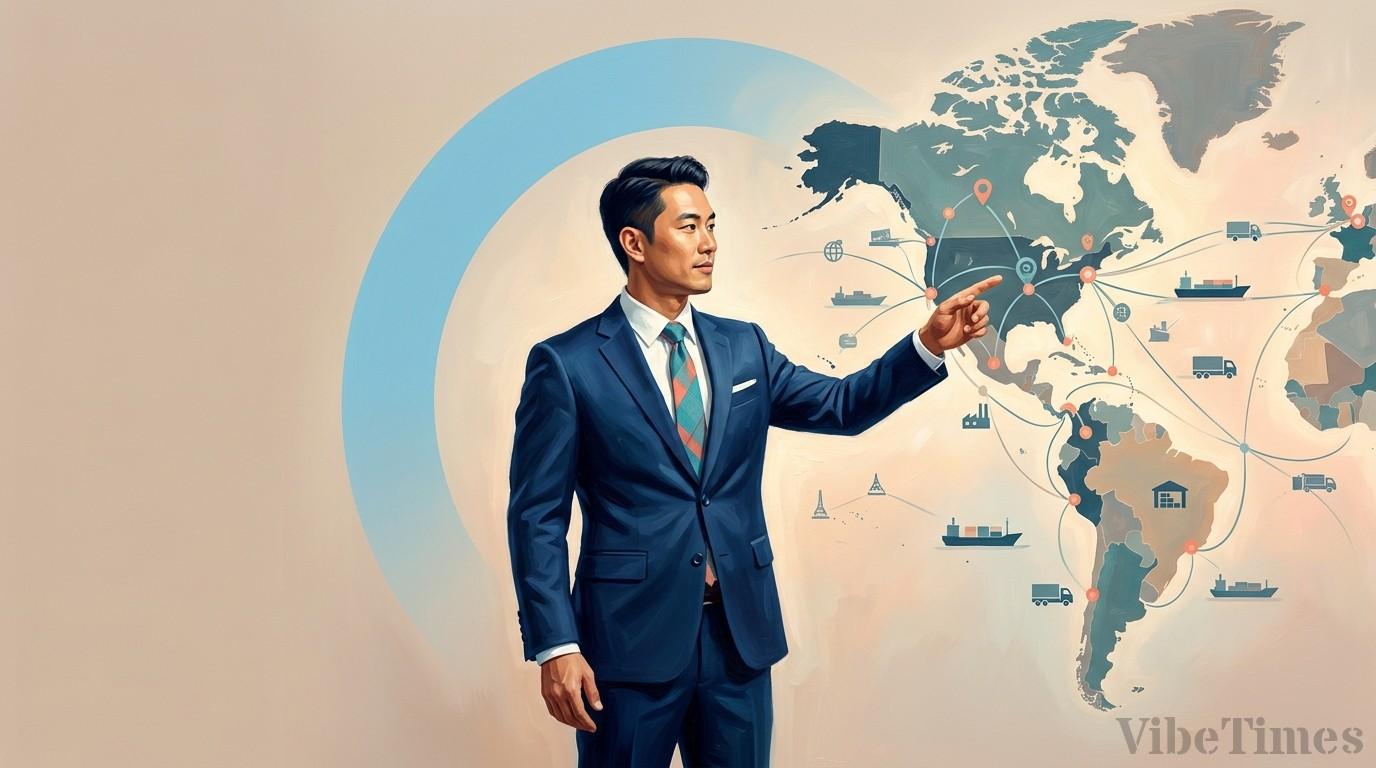
Lee Jae-myung Administration's Resource Diplomacy Joins Hands with Mercosur
Prior to his South American tour, President Lee Jae-myung conducted a written interview with the Spanish-language news agency EFE. During the session, President Lee strongly advocated for the need to sign a trade agreement with the South American common market, Mercosur. He also added that pushing for negotiations to improve the Free Trade Agreement (FTA) with Chile is a key task. Some might interpret this move as mere diplomatic pleasantries. However, facing the reality of the global supply chain restructuring, it is a national economic strategy that cannot be taken lightly.
Currently, the world is on high alert due to the U.S.-China hegemonic rivalry and the spread of protectionism. The imperative to restructure vulnerable supply chains, previously dependent on specific countries or regions, has arisen. In the interview, President Lee also expressed grave concern over this geopolitical uncertainty. He emphasized the need for mutual cooperation based on reliable partners and clear norms. In an era where free trade is retreating, securing stable sources of resources emerges as an absolute priority.
Strategic Synergy Between a Tech Powerhouse and a Resource-Rich Region
The economic structures of South Korea and South America possess a remarkably perfect complementarity. According to President Lee's analysis, Mercosur member countries are global leaders in agriculture and food production, energy, and critical minerals. Conversely, South Korea holds overwhelming competitiveness in advanced manufacturing, digital technology, shipbuilding, and batteries. By organically combining these strengths, both sides can complete a resilient value chain. It is a structure where South America's abundant underground resources meet South Korea's advanced technological prowess to create a synergy.
In particular, the advent of the artificial intelligence (AI) era has exponentially increased the value of critical minerals. This is because a stable supply of minerals necessary for building data centers and producing semiconductors has become a survival condition for global corporations. President Lee explicitly mentioned this during a meeting with the Korean diaspora in San Francisco, USA. He emphasized that if South Korea's semiconductor factories stop, the entire global industry will inevitably come to a halt. The blueprint is that South Korea's technology and South America's minerals must be closely tied together to sustain the global industrial ecosystem.
Domestic and Foreign Economic Policies Focused on Demand Control and Market Impact
The government's trade diplomacy efforts are closely intertwined with its domestic and foreign economic policy stance. Since the inauguration of the Lee Jae-myung administration, economic bureaucrats have placed a heavy policy emphasis on curbing demand through real estate regulations and tax pressures. This is the result of focusing on cooling down an overheated market rather than deregulating or expanding supply. This domestic policy direction aims to manage inflationary pressures and channel funds into highly productive sectors.
Externally, the administration is focusing on securing the stable supply of critical minerals and raw materials. The intention is to minimize the shock of surging raw material prices through resource diplomacy. Stabilizing raw material prices leads directly to lower production costs for the domestic manufacturing sector. The domestic policy of controlling demand and the foreign policy of securing resources are moving in tandem, producing the effect of balancing the macroeconomy. From an investor's perspective, this can be interpreted as a positive signal that reduces market volatility risks.
Remaining Tasks for Completing the Value Chain
The top priority going forward is to produce tangible results at the negotiating table with South American countries. A Mercosur trade agreement—specifically a reciprocal free trade agreement where both sides mutually abolish import tariffs to open markets—is merely the starting line. Political capacity to bind both sides into building a value chain where benefits are equally shared is essential. To firmly establish South Korea's initiative in AI-based future industries, the mineral supply chain—core to the battery and semiconductor industries—must be completely tied to South America.
However, some point out the increase in logistics costs due to geographical limitations and the political volatility of local countries as risk factors. Nevertheless, President Lee's resolve appears firm. The momentum for resource diplomacy secured through his South American tour is expected to serve as a powerful driving force to pull the South Korean economy out of the swamp of low growth. Ultimately, the expansion of economic territory encompassing the South American common market, alongside the South Korea-U.S. alliance, is evaluated as a core strategy directly linked to national security.