August 13 Legislative Report: Rise of University Education Policy Issues Including Rep. Ju Kwang-deok's Higher Education Act Amendment

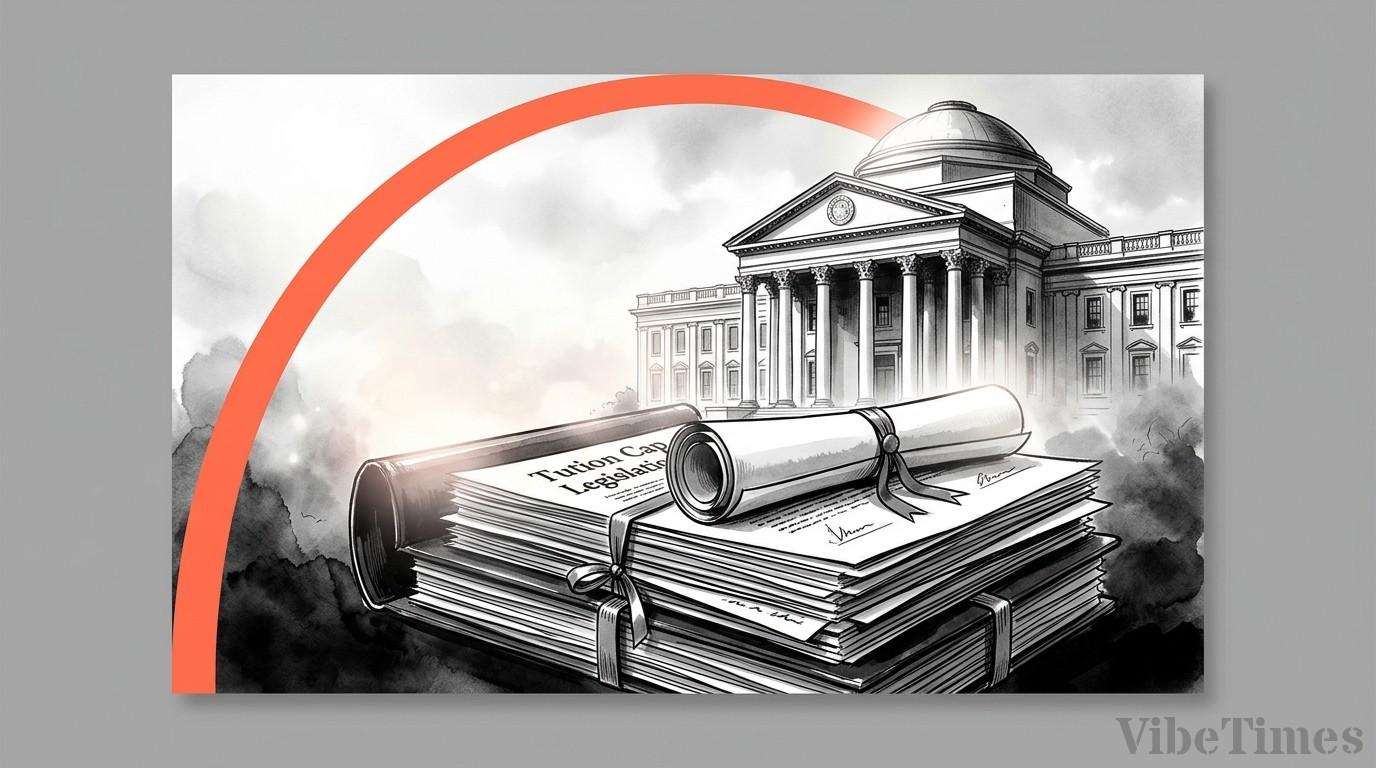
Proposal of Higher Education Act Amendment and Direction for Securing University Autonomy
Rep. Ju Kwang-deek of the People Power Party has taken center stage in university education policy after assuming the role of floor leader for the Education Committee in the first half of the 22nd National Assembly. By representing the proposal to amend the Higher Education Act, he has presented concrete institutional devices to alleviate the economic burden on parents and students. Most notably, the core of the amendment focuses on introducing a cap on total tuition fees to suppress tuition hikes. The intention is to place clear limits on annual tuition increases by reflecting inflation rates. Meanwhile, he also voiced concerns regarding the government's plans to expand document-based inspections of universities. He pointed out that uniform control methods could undermine university autonomy and strongly urged for the guarantee of independent policy operations by each institution. These legislative and oversight activities are interpreted as measures aimed at simultaneously solving the two tasks of alleviating students' financial burdens and strengthening the autonomous competitiveness of educational institutions.
Diversification of Education and Science/Technology Legislation and Industrial Impact
Legislative trends in the education sector are unfolding diversely, reflecting the demands of various demographics. Rep. Kim Myeong-gi of the Rebuilding Korea Party led an attempt to enact a bill amending the Elementary and Secondary Education Act to explicitly codify the right of victims of school violence to request a transfer. This is a measure intended to create a safe educational environment. Rep. Kang Suk-young also represented amendments to the Early Childhood Education Act and the Elementary and Secondary Education Act to establish a legal basis for safe meal operations. Fellow lawmaker Rep. Im Kwang-sik sought ways to improve the efficiency of local educational autonomy through a meeting with 17 metropolitan and provincial superintendents of education. In particular, he pushed for a bill amendment mandating the installation of air purifiers in schools to protect students from fine dust and climate change, rolling up his sleeves to expand health infrastructure. In addition, the activities of Rep. Park Yoon-kook of the Democratic Party of Korea are notable. A member of the Education Committee, Rep. Park participates in 'Sigma' (∑), a group of lawmakers with science and engineering backgrounds, and serves as the representative of the 'National Defense Science and Technology Innovation Forum'. Active discussions are underway regarding legislative politics to secure the future competitiveness of national strategic industries, ranging from basic science education to cutting-edge defense industry technology innovation.
Differentiation of Ruling Party Stance as Seen in Plenary Vote Patterns
The plenary voting process in the National Assembly reveals clear numerical evidence of policy divergence within the ruling party. During the vote on the 'Partial Amendment to the Public Health Management Act' on July 23, 38 lawmakers from the People Power Party voted in favor, while 7 voted against. This resulted in 7 members, including Kim Hee-jung, Park Dae-chul, and Park Su-young, breaking from the party line. A similar pattern appeared consecutively in June. On the vote for the 'Partial Amendment to the Korea Rural Community Corporation and Farmland Management Fund Act (Alternative)', 64 members voted in favor, while 10, including Park Su-young and Lee Cheol-gyu, opposed. Furthermore, during the processing of the 'Partial Amendment to the Framework Act on Resource Circulation', 8 dissenting votes were cast by Kim Eun-hye, Park Su-young, and Yu Sang-beom. This corroborates that lawmakers' independent judgments took precedence over party lines on specific economic issues such as taxation, regulatory easing, and resource circulation policies. For economic bills in particular, the complex interplay of regional constituency conditions and conflicting interests exposes the limitations of strict party-level control over voting. Notably, for bills requiring clear distribution of benefits, such as the agricultural fund law or the recycling promotion law, the gap between pro and con factions within the party is widening.
Overhaul of Criminal Justice System and Outlook for Future Legislative Resources
Beyond education and welfare bills directly linked to socio-economic infrastructure, a massive legislative task that could shake the entire national system remains as a pressing issue for the current National Assembly. Following the passage of the amendment to the Criminal Procedure Act, which completely abolishes the prosecution's investigative power, the National Assembly, including the standing committees, faces the task of follow-up legislation that must be organized before implementation in October. A staggering 134 individual bills need to be revised to align with the changed laws. To prevent a paralysis of the judicial system, the revision of related enforcement decrees and subordinate laws must be completed before the official launch of the Heavy Crime Investigation Department and the Public Prosecution Office on October 2. In this process, the establishment of a police oversight body and the creation of checks and balances on power agencies have emerged as essential tasks. In the upcoming regular session of the National Assembly, in addition to processing education bills for easing economic regulations and fostering future industries, the follow-up legislative sequence for the criminal justice system, which will require massive national finances and judicial resources, is expected to act as the most significant policy variable. Balancing the political interests of the ruling and opposition parties with the efficiency of national fiscal operation is the core task for the latter half of the current National Assembly term.