Supreme Court and Blue House in Direct Conflict over Rumors of Meeting Between Cho Hee-dae and Lee Jae-myung

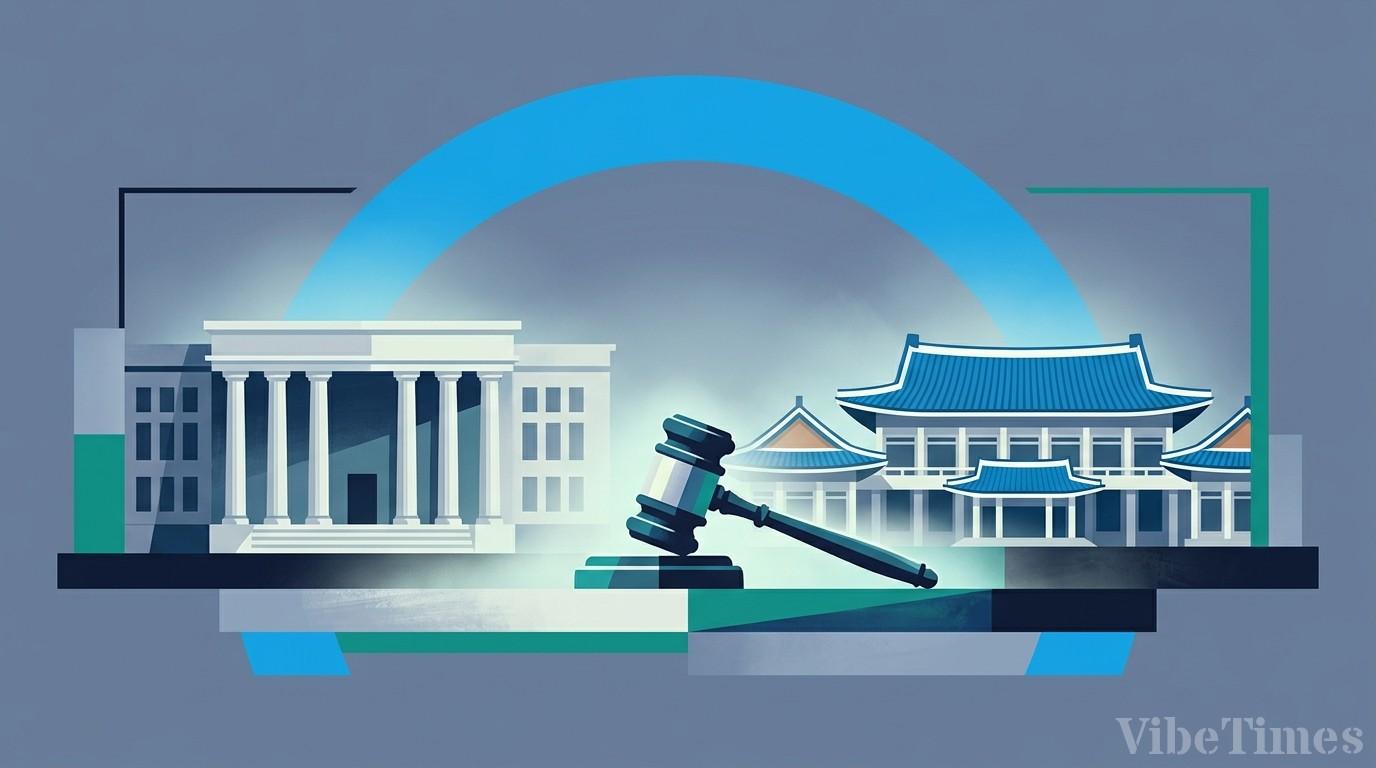
The Supreme Court and the Blue House have clashed directly over the facts regarding whether a meeting took place.
The Supreme Court is reported to have stated that a meeting between Chief Justice Cho Hee-dae and President Lee Jae-myung could not take place. However, the Blue House rebutted this, claiming there had been no discussions regarding a meeting at all, leading to a battle for the truth as the claims of both sides diverged. Essentially, the two sides are even disputing whether an attempt was made to contact the head of the judiciary and the head of the executive branch.
Political Pressure Mounts Amidst Supreme Court’s Actions
The backdrop to this dispute is the intense political pressure surrounding the judiciary. The National Assembly Legislation and Judiciary Committee passed a motion calling for Chief Justice Cho Hee-dae to appear on the 31st, led by the ruling party amidst opposition from the opposition. The vote was pushed through amidst tense opposition from lawmakers, creating an unprecedented situation where the Chief Justice must explain himself to the National Assembly. With the ruling and opposition parties also clashing over the Justice Minister's absence from the Assembly, tensions between the judicial/executive branches and the legislature have simultaneously heightened.
The People Power Party defined Democratic Party leader Kim Min-seok’s call for Chief Justice Cho Hee-dae to resign as 'taming the judiciary to shield President Lee Jae-myung.' Conversely, the Democratic Party launched a fierce attack on the prosecution's abuse of investigative powers, citing former lawmaker No Woong-rae’s not-guilty verdict in the second trial. Rep. Han Dong-hoon countered the ruling party’s offensive, calling it a 'build-up for dismissing the indictment.' Interpretations regarding the essence of the case remain polarized.
Key Point of Controversy Regarding the Failed Meeting
The crux of the issue is trust. When reports emerged that the Supreme Court had internally decided against holding the meeting, the Blue House drew a line, stating it was not an agreed-upon matter. Since this implies one side is distorting the facts, the issue is escalating from a simple scheduling problem into a matter of trust between government institutions. The Blue House has previously criticized Chief Justice Cho Hee-dae’s written submission process as a unilateral notification that disregarded the President’s appointment power. Lawmakers from the Democratic Party, Cho Kuk Innovation Party, and Progressive Party on the Judiciary Committee are calling for the rejection of specific appointments, arguing the President’s appointment authority was ignored, making it difficult to narrow the distance between the Supreme Court and the political circle.
Meanwhile, President Lee Jae-myung’s state affairs approval rating stood at 45% in a Gallup Korea poll for the third week of August, up 1 percentage point from the previous week, with positive and negative evaluations tied at 45% each. While the ruling and opposition parties pour their efforts into the battle over the judiciary, public opinion remains split down the middle. With the consolidation of support bases and the burden of losing centrist voters intertwined, both sides find themselves in a structure where it is difficult to back down easily.
Blue House Shifts to Speed Offensive in Ruling Party Communication
Amid the escalating conflict with the judiciary, the Blue House is accelerating communication with the ruling party. President Lee summoned the Democratic Party leadership to the Blue House for a dinner on the 25th and is scheduled to have a luncheon with all Democratic Party lawmakers on the 28th. Previously, on the 19th, he held a dinner at the Blue House with leader Kim Min-seok, Rep. Jeong Cheong-rae, and Rep. Song Young-gil, emphasizing party-government-administration cooperation. With the President emphasizing 'eradication of corruption without sanctuary' through the Anti-Corruption Policy Consultative Council following the launch of the new leadership, he faces the dual task of managing external conflicts and maintaining internal party unity.
However, it remains to be seen whether these communication efforts can offset the controversy over pressure on the judiciary. The People Power Party is likely to continue expanding the 'taming the judiciary' frame, and if the summons for the Chief Justice on the 31st materializes, the intensity of the conflict is expected to rise. In a landscape where approval ratings are split in half, both parties view this issue as a variable that will determine their future fortunes. It is expected that the next two weeks will decide whether the truth-seeking battle between constitutional institutions leads to a loss of co-governance or converges into institutional dialogue.