Lee Jae-myung's Approval Rating Falls to 43%, Tipping Negative for the First Time Since Taking Office

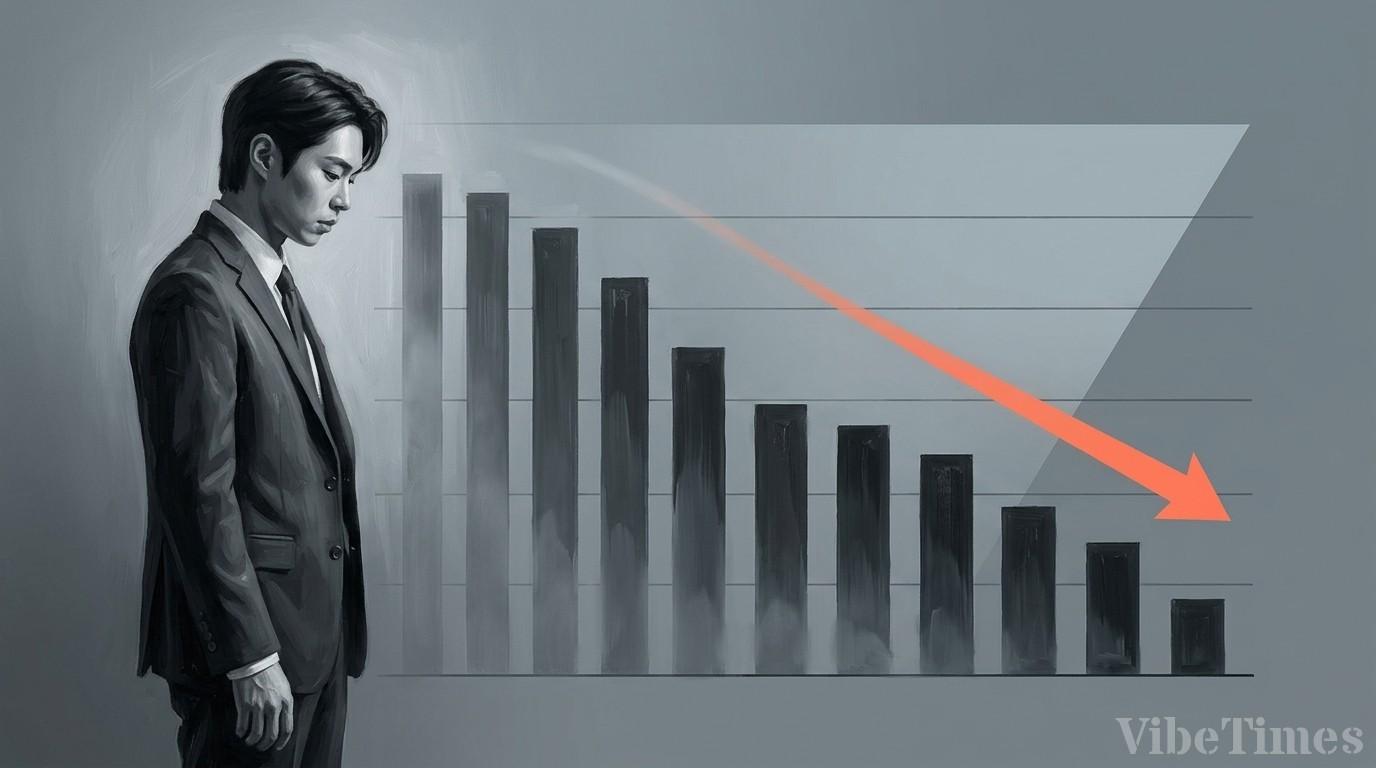
Negative assessments have overtaken positive ones. In an NBS opinion poll, President Lee Jae-myung's approval rating for his handling of state affairs fell to 43%, slipping into negative territory for the first time since he took office. That is 7 percentage points below the 50% recorded two weeks earlier. Another survey shows an even steeper fall. In a Media Tomato poll, positive ratings came in at 38.2% against negative ratings of 58.8%, leaving a gap of 20.6 percentage points between the two. With both figures marking post-inauguration lows, the downward trend itself is hard to dispute. Party support stood at 39% for the Democratic Party and 25% for the People Power Party.
Two Appointments That Drove the Plunge
The trigger for the decline can be found in personnel choices. President Lee named Basic Income Party lawmaker Yong Hye-in as his nominee for minister of gender equality and family, and Democratic Party lawmaker Kim Seung-won as his nominee for minister of justice. Public opinion was unsparing: 63% of respondents called Yong a “mistaken appointment,” while 47% said the same of Kim. In the former's case, that amounts to more than three in five respondents. The vetting of appointments has tripped up the approval rating.
Political sparring is escalating as well. The Basic Income Party leader defended the nominee's decision to keep her party affiliation, saying, “Resigning her National Assembly seat would be the easy part; serving in both posts is a responsibility she owes the party.” Democratic Party Rep. Park Hong-keun said “there is something unfair in the treatment of Kim Seung-won,” but added that “Yong Hye-in's ambition runs counter to public sentiment.” The People Power Party faulted the very criteria behind the appointments, saying, “Back when they were in the opposition, they courted them.” The ruling and opposition camps also remain locked in dispute over whether to hold Kim's confirmation hearing without witnesses. A single personnel decision has snowballed into a question of trust across the whole of the administration.
Centrists or Real Estate? Even the Ruling Party Is Split on the Diagnosis
Even within the ruling party, diagnoses of the decline diverge. Democratic Party Rep. Kim Min-seok cited the defection of centrist voters and internal party strife as the causes. Rep. Song Young-gil, by contrast, pointed to problems with real estate policy as the main culprit. The same numbers are producing different prescriptions — a sign that a recovery strategy has yet to take shape. If the political center is the problem, the appointment vetting system needs fixing first; if real estate is the problem, a wholesale policy review must come first. With the diagnosis split, the order of the response is bound to waver.
A Self-Diagnosis in Paris, and Drawing a Line on a Second Term
President Lee himself appears conscious of the nature of the crisis. During his state visit to France, he invoked the French Revolution, citing backlash reconsolidation and the flight of centrist voters as troubling signs suggested by the counterrevolutionary experience, and remarked, in effect, that the more energy surges, the more restraint is required. That dovetails precisely with Rep. Kim Min-seok's diagnosis of centrist defection. It is read as an expression of self-awareness — a search for the cause of the decline inside his own camp rather than outside it.
At a luncheon with overseas Koreans in Paris on the 9th (local time), he said, “My term is clearly limited under the Constitution.” The presidential office took this to mean he will not seek a second term, making it his first stated position on the debate over a constitutional amendment to allow re-election. The calculation appears aimed at preemptively cutting off the political burden of suspicions about extending his term at a moment of falling approval.
“The fair sharing of the opportunities and fruits of growth is the path to sustained growth.” — President Lee Jae-myung, emphasizing inclusive growth during his visit to France
A 193 Billion Won Price Package as the Litmus Test for a Rebound
The first card played to win back public sentiment was prices. The government expanded its subsidies for Chuseok discounts on agricultural, livestock and fisheries products from an initial 103 billion won by an added 90 billion won, to 193 billion won in all — the largest on record. Adlai Stevenson's dictum that “a hungry man is not a free man” notwithstanding, grocery prices are the variable that forms the lowest floor of an approval rating. If appointments and internal party strife drove the decline, recovery, too, can only start with vetting and communication.
The points to watch ahead come down to two: whether the slide stalls in the low 40s and rebounds, or is pushed into the 30s. Diplomatic achievements could prove a variable. In his summit with French President Emmanuel Macron, President Lee agreed to expand cooperation in security and defense, AI and nuclear energy, and also took up cooperation on freedom of navigation in the Strait of Hormuz. With OECD Secretary-General Mathias Cormann, he discussed ways to ease economic polarization. If these external gains mesh with the price measures, they are expected to serve as a springboard for a rebound in approval ratings. Conversely, a prolonged confirmation-hearing standoff could deepen the downward pressure.