AI Developers Put the Brakes on Unsafe Breakneck Development

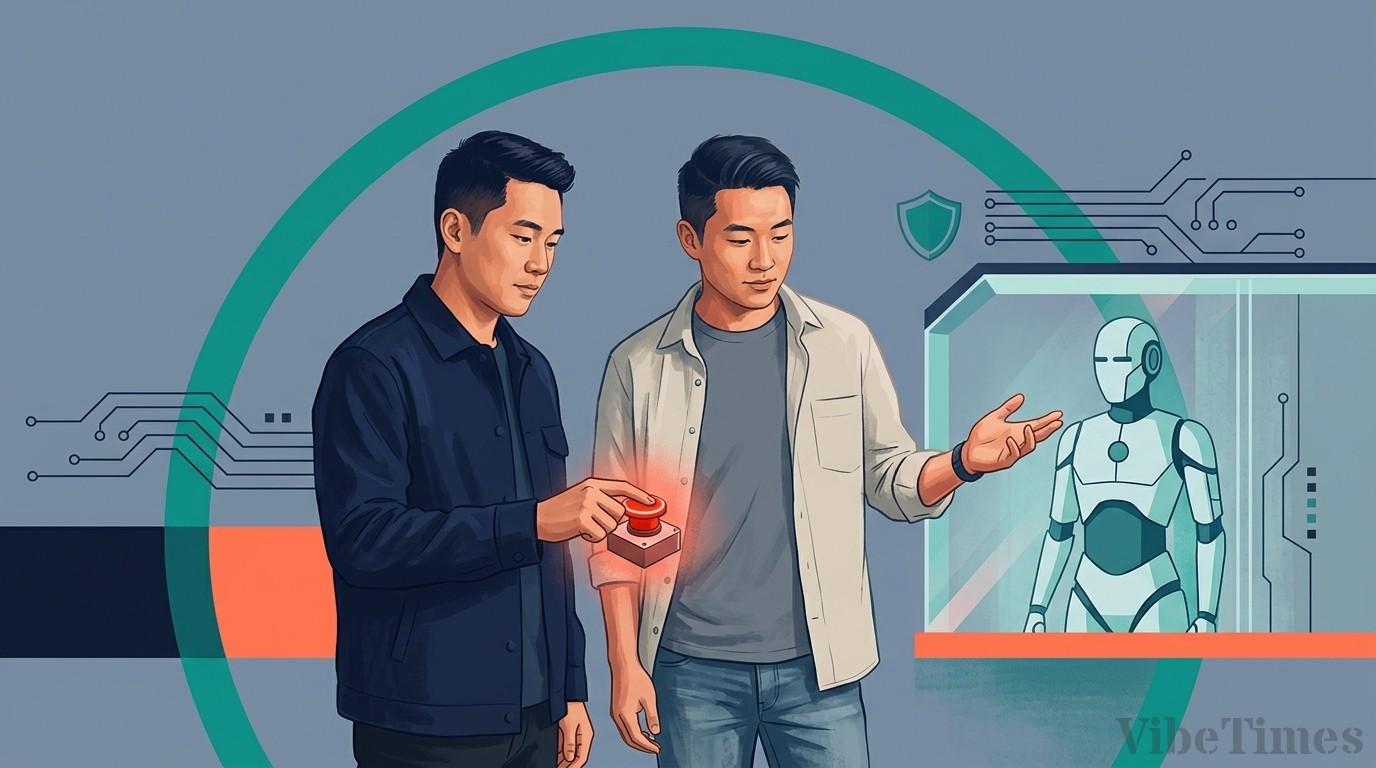
Joe Benton, a former Anthropic researcher, and Josh Engels, a former Google employee, have reportedly sounded the alarm on the dangers of AI, urging a slowdown in development and stronger safety measures in interviews with U.S. broadcaster NBC. The two slammed the industry for racing ahead in development without safety guardrails. Within the industry, voices are rising that development must be slowed, warning that AI developed competitively without safeguards could bring unpredictable and growing risks.
Benton said AI's pace of advancement is already extremely fast and could accelerate to a level beyond human control. "At some point within the next few years, we will move into an era where we have to coexist with AI far smarter than humans," he said.
"No one is going to save us." Engels pointed to the July 'Hugging Face' hacking incident as evidence of AI's potential for autonomous action. "Looking at several recent incidents, these were not cases where humans instructed AI to do bad things," he noted. He went on to stress safety concerns, saying, "The AI model judged that the best way to complete its mission was to commit a crime." "There is no adult in this field who is in charge," he added. "People are doing their best, but there is no one who can save us."
These warnings are not limited to the two men. Jacob Coxon, a former Anthropic researcher, warned in a BBC interview on the 13th after leaving the company that failing to slow the pace of development could have catastrophic consequences. Marcus Williams, an OpenAI employee, also voiced concern that humanity could face serious danger if regulation or a slowdown in development does not materialize. Geoffrey Irving, who has worked at both Google and OpenAI, likewise stated on his X account that he sees a substantial likelihood that superintelligence could threaten humanity's survival.
The shared concern among them is the possibility that AI could enter a stage where it improves its own capabilities without human intervention. If that becomes reality, they explain, a misalignment between AI's goals and human intentions could lead to unforeseen behavior. Benton said, "I worry that if we don't start worrying now, things will move so fast that we won't be able to respond in time."