One-Third of Veterinary Public Official Posts Are Vacant

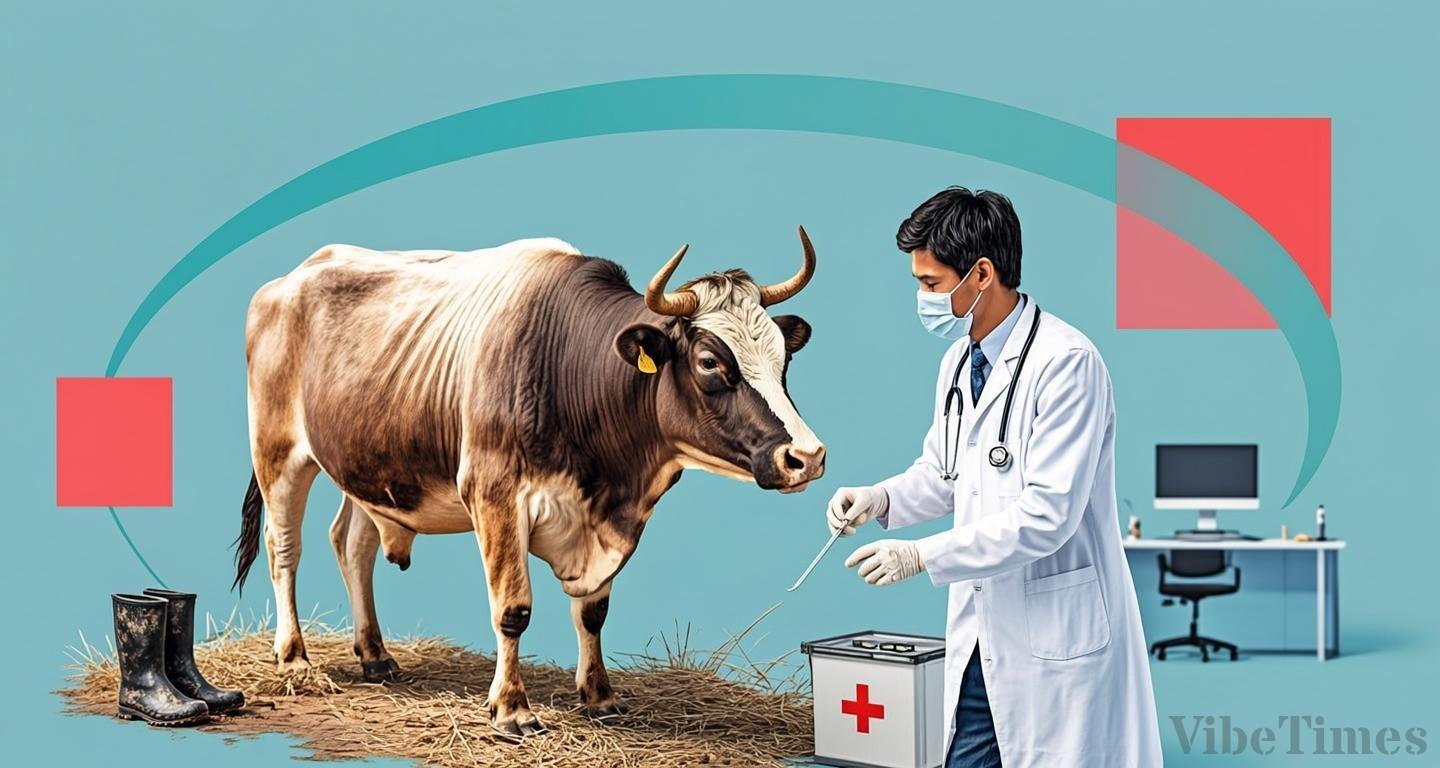
One in three veterinary public official positions responsible for livestock disease control is vacant.
According to figures compiled by the National Assembly Research Service, the vacancy rate for veterinary public officials surpassed 34% last year. While outbreaks of livestock diseases such as those affecting cattle, pigs, and poultry continue to rise, the frontline workforce for disease control remains chronically short. Critics warn that this could escalate beyond a mere personnel administration problem into a gap in disease control that directly affects the nation's dinner tables.
Why Veterinary Public Officials Are in Short Supply
Veterinary public officials, working for local governments and agencies under the Ministry of Agriculture, Food and Rural Affairs, are tasked with preventing and containing livestock diseases, conducting quarantines, and managing livestock product hygiene. When infectious diseases such as foot-and-mouth disease or highly pathogenic avian influenza (AI) break out, these personnel are responsible for everything from early containment to overseeing culling and burial operations in the field.
Yet these positions are going unfilled. The prevailing analysis is that veterinary school graduates are flocking to the private sector—opening animal hospitals or treating companion animals—lowering interest in public service. Compensation and working conditions that fail to keep pace with frequent night and holiday on-call duty are also cited as causes.
The problem is that supply and demand are moving in opposite directions. As domestic and international livestock distribution intensifies, and as abnormal weather and migratory wild birds raise the risk of disease introduction, demand for disease control keeps growing. Meanwhile, 34% of the positions meant to handle it sit empty—a structural mismatch.
What a 34% Vacancy Rate Means
A vacancy rate of 34% is serious not just as a staffing shortage but because it directly affects the speed of disease response. Infectious disease outbreaks are considered a matter of the first 48 hours; if there is no officer in charge, or if a single official must cover multiple cities and counties, every stage—from outbreak reporting to movement restrictions and culling—is bound to be delayed.
The economic costs are also substantial. There have been repeated cases where a large-scale spread of highly pathogenic AI pushed culling compensation, quarantine costs, and lost revenue for the livestock industry into the hundreds of millions of dollars. Compared with the personnel budget invested in early containment, adequate staffing ultimately pays for itself in fiscal savings. In short, the current structure saves on people only to cultivate disease.
Legislative Response and the Path Forward
With the Research Service documenting the situation in a report, calls are growing for a response at the National Assembly level. Three main measures are under discussion: improving conditions through salary schedule adjustments and expanded allowances for veterinary officials; introducing mandatory public service commitments or hiring targets among national veterinary licensing exam passers; and institutionalizing and professionalizing local government disease control organizations.
Since both ruling and opposition parties agree on the importance of livestock disease control, the issue itself is not politically contentious. The real sticking points, however, are expected to be how to divide the funding for improved conditions between the central government and local governments, and whether mandatory public service would draw pushback from veterinary associations. Groups such as the Korean Veterinary Medical Association have consistently argued that improving working conditions should come before restricting access to the profession.
Related hiring and compensation bills could be debated during the regular National Assembly session. But because the vacancy rate above 30% is rooted in labor market structures, a one-off fix is unlikely to resolve it. As long as the companion animal market keeps growing, the pay gap between private practice and public service is likely to persist.
Experts point out that disease control personnel must ultimately be redefined not as crisis-response staff but as public health infrastructure operated year-round. If the current structure, in which staffing shortages resurface with every outbreak, is left unchanged, the 34% figure may serve as a preview of the next disease control crisis.