Trump Delayed His 30-Minute Speech to Hold Talks with Lee Jae-myung

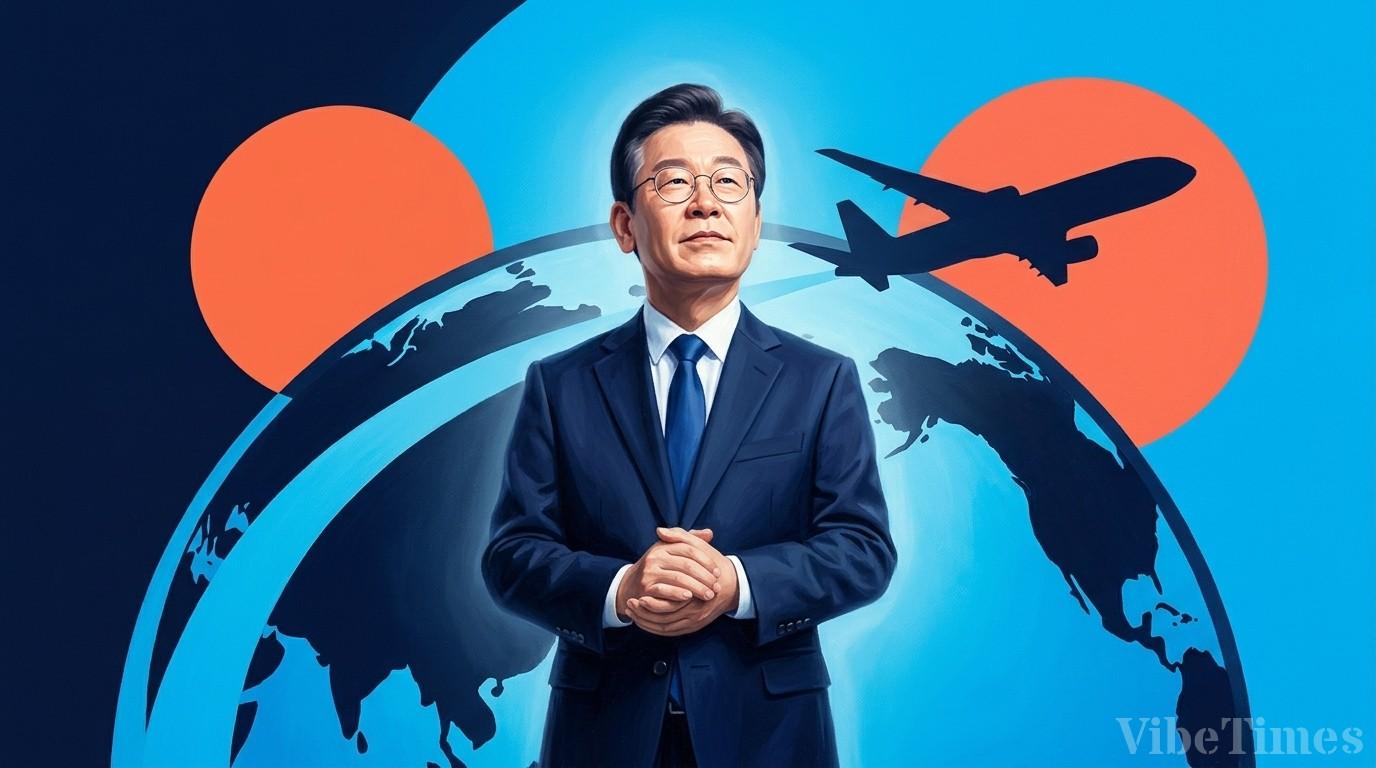
The Report Card of a Seven-Day, Five-Night Trip
President Trump extended his meeting with President Lee Jae-myung, delaying his keynote address by a full 30 minutes. The South Korea-U.S. summit, which ran about 20 minutes longer than scheduled, was the defining moment of the seven-day, five-night trip. President Lee returned to Seoul Airport on the 27th after completing both his visit to the United States to attend the UN General Assembly and the first Mexican state visit by a Korean president in 16 years.
The results are on paper. South Korea and Mexico agreed to study the mutual benefits of a trade agreement and concluded negotiations to revise an investment treaty that had been stalled for seven years. The visit is also credited with opening the door to talks on a Comprehensive Economic Partnership Agreement (CEPA). A CEPA is narrower in scope than a free trade agreement (FTA) but gradually expands coverage across tariffs, investment, and cooperation. Its significance lies in rebuilding an economic link with Mexico, a gateway to North America.
Why Mexico?
Together with the United States and Canada, Mexico forms the USMCA framework. Amid the Trump administration's protectionist trade stance, Mexico offers Korean companies a base for tariff-avoiding production and a bridgehead into the North American market. In fact, President Lee met with roughly 300 government officials and business leaders from both countries at the Korea-Mexico Business Forum, expressing direct interest in the tariff burdens facing Korean companies operating in Mexico.
The trip also carried symbolic weight in economic diplomacy. Under the highest diplomatic courtesy of a state visit, it combined trust-building between the two leaders with corporate salesmanship. As is often the case with trade negotiations, the substance may fall short of expectations. Still, the visit is likely to be recognized as meaningful for at least reopening the negotiating table.
The Subtext of the Korea-U.S. Summit and the Tasks Ahead
President Trump's joke after the summit — telling President Lee to "set up a round of golf" — is read as a sign that the relationship between the two leaders has moved beyond protocol. But personal rapport between leaders does not automatically translate into resolutions on issues like tariffs or defense cost-sharing. The prevailing view is that practical review at each stage of negotiation is needed, rather than hasty expectations.
Challenges await the president at home and abroad upon his return. Domestically, ahead of parliamentary audits in his second year in office, controversies over the vetting of appointees, the renomination of a Supreme Court justice candidate, and judicial and semiconductor issues have emerged as flashpoints. The People Power Party has escalated its pressure over an explosion suspected to have been caused by a landmine in the DMZ, calling it grounds for impeachment if a field investigation was deliberately delayed. Rivalry between the ruling and opposition parties over security and personnel matters had already intensified during the trip. Add to this the declining approval rating for the president's governance, and the task ahead is clear: converting diplomatic achievements into domestic political stability.
Upon his return, President Lee said, "A world without fouls or privilege — where people live as people — comes only when those who genuinely want it act and put it into practice," adding that "a conscience that does not act is on the side of evil." After the tangible achievement of a concluded trade agreement, he must now clear the invisible walls of falling approval ratings and opposition attacks. The season of diplomacy is over; the season of governing has begun.