One Mat Turns a 30-Pyeong Living Room Into a 4-Day-a-Week Home Gym

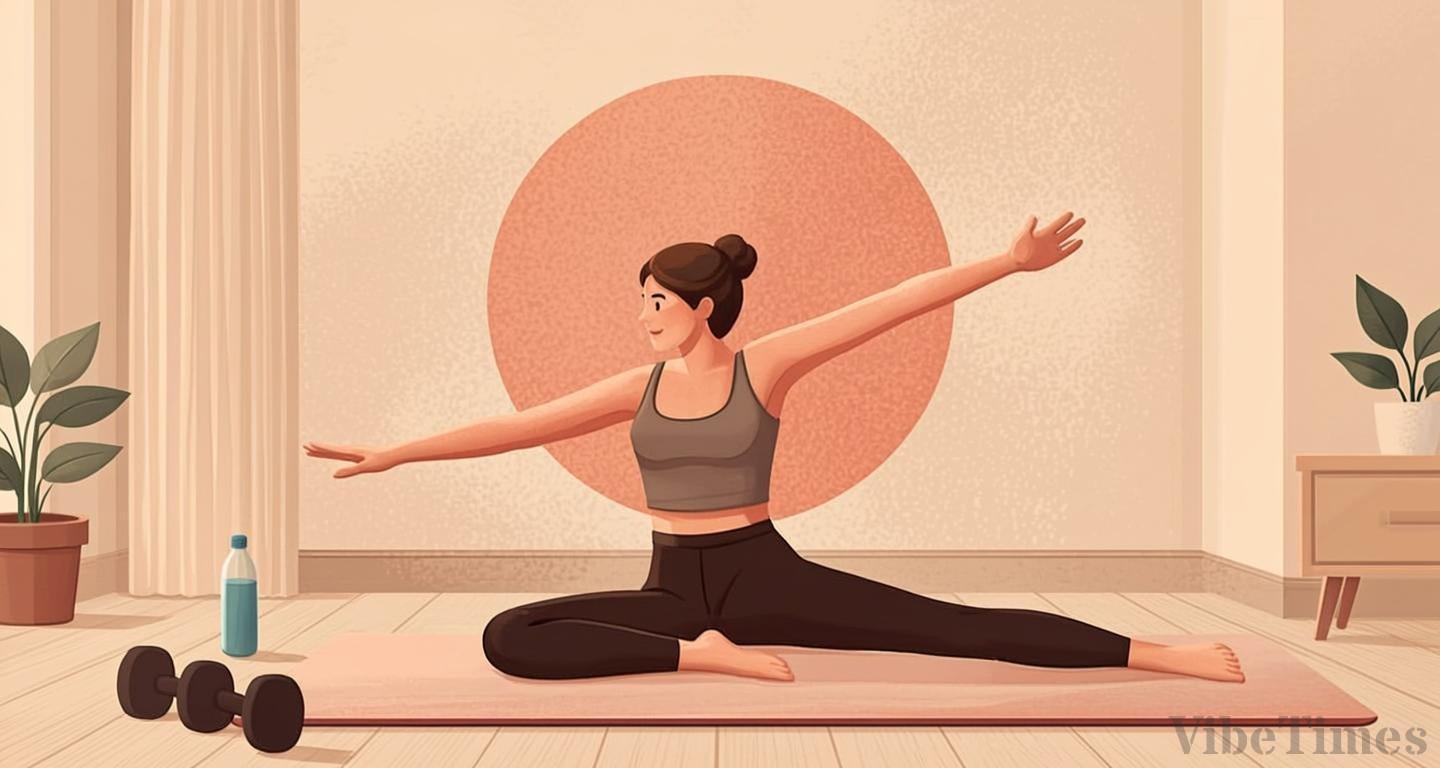
With just one exercise mat, a 30-pyeong living room becomes a gym.
The World Health Organization (WHO) and Korea Disease Control and Prevention Agency recommend that adults get at least 150 minutes of moderate-intensity aerobic exercise per week, plus strength training twice a week. Repeating a 30–40 minute routine four times a week meets this standard exactly. The living room of a 30-pyeong apartment is roughly 10–15 pyeong (33–50 square meters), which offers enough space on a single mat (about 1.8 × 0.8 m) for burpees, mountain climbers, and jumping jacks. Simply switching to no-jump versions of the exercises eliminates any worry about noise between floors.
Setup for Under 50,000 Won — You Need Less Than You Think
A Mat at Least 15mm Thick and Two Bands Make All the Difference
An exercise mat made of TPE or PVC at 10–15mm thick is sufficient, costing around 20,000–50,000 won. A thickness of 15mm or more is better for protecting your knees and spine from contact with the floor. Adding a resistance band (5,000–20,000 won) and a mini band, or hip band (5,000–10,000 won), boosts strength stimulation that bodyweight exercises alone can't provide. Even with all three items, the total stays under 50,000 won.
You don't need dumbbells either. Two water bottles (about 1kg each, based on 500ml) or a bag of rice (4–10kg) can serve as substitutes. Push-up bars (10,000–30,000 won) and dumbbells (20,000–50,000 won) are optional; push-up bars increase your range of motion, while dumbbells are used for progressive overload.
In a 30-Pyeong Living Room, 1.8 Meters Is Enough Space per Movement
Since the mat is about 1.8 meters long, as long as you can clear the space between your sofa and table, you can do everything on the mat: squats in place, lunges, planks, and even mountain climbers, which involve lowering your upper body while stepping. The issue isn't space but noise. From the apartment below, the sound of jump landings carries through even with a mat, so it's practical to replace jumping movements with the no-jump alternatives described below.
Designing a 4-Day-a-Week Routine — Mon, Wed, Fri, Sat, 30–40 Minutes a Day
Monday Lower Body & Core, Wednesday Upper Body & Core, Friday Full Body, Saturday Cardio
Monday is lower body and core day. Proceed in this order: squats, 4 sets of 15 reps; stationary lunges, 3 sets of 10 reps (each side); hip bridges, 3 sets of 15 reps; mini-band hip abductions, 3 sets of 20 reps; planks, 3 sets of 40–60 seconds; dead bugs, 3 sets of 10 reps (each side). Rest of 30–45 seconds between sets is enough. Made up entirely of quiet, no-impact movements, this is the most recommended day for apartment living.
Wednesday is upper body day. Do push-ups, 4 sets of 10–15 reps (kneeling is fine); band rows, 4 sets of 12 reps (loop the band around a door handle); pike push-ups, 3 sets of 8–10 reps; supermans, 3 sets of 12 reps; side planks, 3 sets of 30 seconds (each side). If you add mountain climbers at the end, keep your feet low to reduce noise.
Friday: 30-Minute Full-Body Circuit; Saturday: Low-Impact Cardio
Friday is a high-intensity circuit day. Rotate through four exercises — squats (fast-paced instead of jumping), push-ups, mountain climbers, and plank shoulder taps — for 40 seconds of work and 20 seconds of rest, counting each rotation as one round, for a total of 5 rounds. Rest 90 seconds between rounds. Sticking with a squat–push-up–mountain climber–bridge combination instead of jump squats or burpees greatly reduces impact and noise while keeping your heart rate just as high.
Saturday is recovery-oriented cardio. The basic step workout involves repeating 2 minutes of brisk marching in place plus 30 seconds of squats for 30 minutes, then finishing with 10 minutes of a 1-minute plank, 3 sets of 15 leg raises, and 2 sets of 20 twists. Another option is to follow along with 30–40 minute videos on YouTube using keywords like "apartment quiet home workout" or "no jump workout."
Results and Staying Power — How to Get Past Three Months
Your Exercise Volume Exceeds Official Guidelines
Multiplying 4 sessions a week by 30–40 minutes each gives a total of 120–160 minutes of exercise per week. That's close to or above the WHO and Korea Disease Control and Prevention Agency recommendation of 150 minutes weekly, and strength training happens 3 times a week through Monday, Wednesday, and the Friday circuit — surpassing the minimum recommendation of twice a week. Notably, indoor aerobic exercise 3–4 times a week for 30 or more minutes has been reported to improve blood pressure, so if your goals include weight management and better checkup numbers, this is plenty of exercise.
Home Workouts Avoid the Reason Half of Gym Members Quit Within 3 Months
Statistics show that about 50% of gym members stop exercising within three months. Home workouts, by contrast, involve zero commute time, leaving no room for excuses about weather or schedule. The key to consistency is minimizing the barrier to entry — the workout begins the moment you lay down the mat. Using the scheduling features of home fitness apps like Everyfit, Cali, or Nike Training Club (10,000–20,000 won per month) to lock in your workout days in advance eliminates the question of "what should I do today?" altogether. Beginners are better off following form demonstrations from YouTube channels to reduce injury risk.
Pre-Workout Checklist — Noise, Form, Then Overload, in That Order
No Jumping After 10 P.M.; Distinguish Pain from Soreness
To address noise between floors, avoid jumping exercises after 10 p.m., and layer a doormat or rubber mat under your exercise mat. Five minutes of dynamic stretching before your workout (marching in place, arm circles, hip openers) is essential. For the first two weeks, focus on proper form rather than reps; especially in squats and planks, a sagging lower back leads to injury.
You also need the habit of distinguishing between muscle soreness that fades within a few days and persistent joint pain. Stop immediately if you feel joint pain. To keep building strength, apply progressive overload by increasing your sets, reps, or band resistance by 5–10% every 2–4 weeks. If you have an underlying condition such as hypertension, a herniated disc, or pregnancy, consult a doctor before starting for your safety.