Chief Justice Cho Hee-dee defends refusal to renominate justices for six minutes at parliamentary audit, sparking ruling-opposition clash

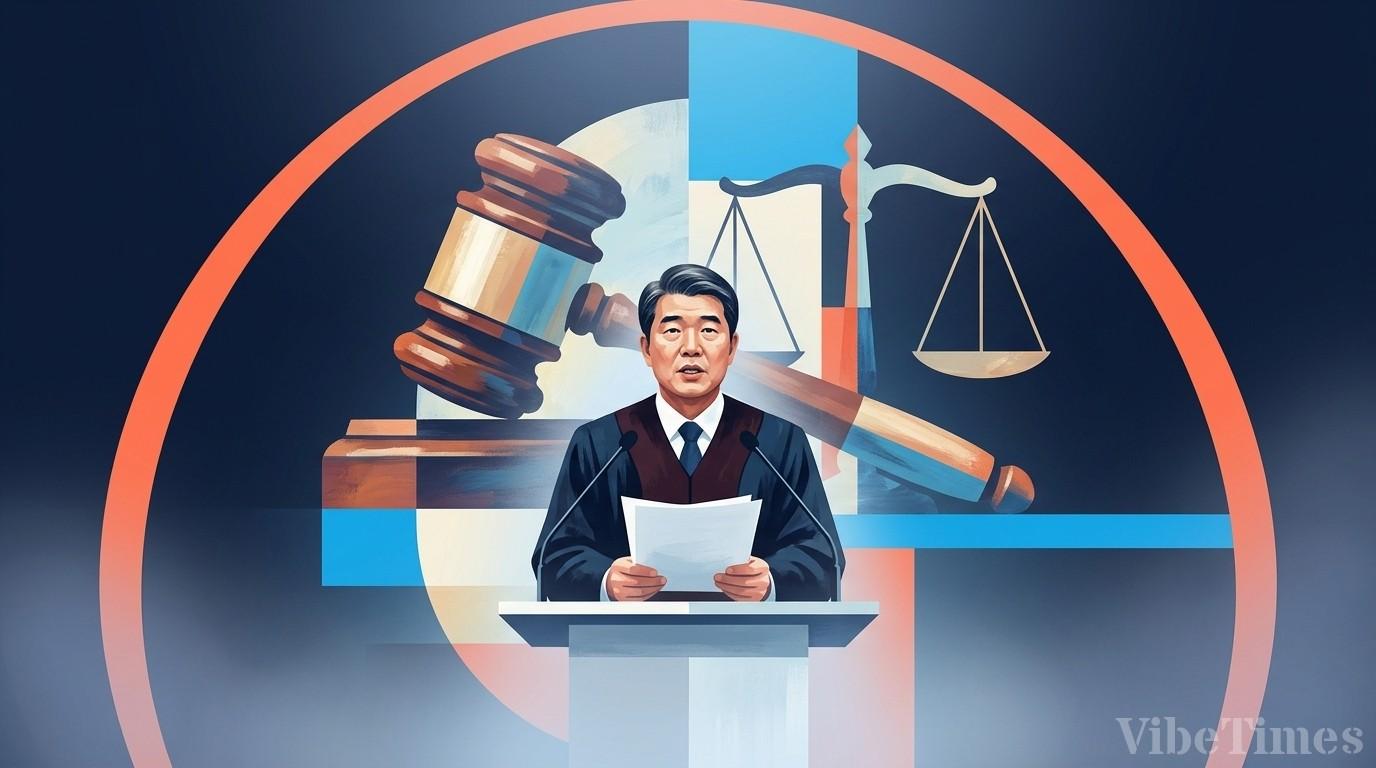
Chief Justice Cho Hee-dee pulled out an A4 document himself and spent about six minutes at the National Assembly's Legislation and Judiciary Committee audit of the Supreme Court on the 6th explaining why he refused to renominate Supreme Court justice candidates. A refusal to renominate means that after the National Assembly sends back the chief justice's motion for the appointment of Supreme Court justices without consent, he will not send it again. It is the first time since the resumption of parliamentary audits in 1988 that a chief justice has stated his position on current issues at an audit, apart from opening remarks.
As he did at last year's audit, Cho also refused to take an oath as a witness. While the Democratic Party demanded that Cho explain the reasons for refusing renomination, the People Power Party countered that he should not answer, in keeping with precedent, and leave the session, as heated exchanges erupted between the ruling and opposition parties. Seo Young-kyo, chairwoman of the Legislation and Judiciary Committee (Democratic Party), said regarding the refusal to take the oath, "Follow-up measures may be taken under the Witness Protection Act and other relevant laws."
Chief Justice Cho pushed back against the National Assembly's demand to renominate the justice candidates. He argued that "the National Assembly's interference with the chief justice's nomination constitutes an unconstitutional act that violates the distribution of authority between branches and the independence of judicial power." He went on to stress the legitimacy of his refusal to renominate, saying, "There is no constitutional problem even if the chief justice does not renominate."
Responses split along party lines. Democratic Party lawmaker Park Kyung-taek countered, "If you believe the nomination power stands above the president's appointing power, you are gravely mistaken," adding, "The refusal to renominate is a concrete violation of the Constitution, so it could well serve as grounds for impeachment." Meanwhile, the very existence of the document became an issue in itself. Noh Kyung-pil, head of the National Court Administration, said in response to a question from Democratic Party lawmaker Kim Eui-gyeom about whether he had seen the document the chief justice explained in advance, "Honestly speaking, I didn't know about it. It was the first time I had seen that document." The director general for personnel affairs and the public affairs officer also responded that the document was not one they had written.
When Progressive Party lawmaker Son Sol asked, "Are you dreaming of being a second Yoon Suk-yeol?" Chief Justice Cho replied, "Such remarks are too insulting and saddening." On questions related to the December 3 insurrection, he said, "The Supreme Court was the first of any institution to call it unconstitutional," adding, "The martial law command asked us to send personnel, or at least a list, and I instructed them not to send anyone or provide the list, as that would be absolutely unconstitutional. There was no cooperation whatsoever with the martial law."
This confrontation shows signs of escalating into a constitutional dispute over the boundary between the National Assembly's right to demand testimony and the chief justice's nomination power. It remains to be seen whether follow-up measures under the witness protection law mentioned by Chairwoman Seo will be taken, and whether the interparty dispute will continue in future National Assembly proceedings.