Samsung Electronics Posts 107 Trillion Won in Profits, Yet Foreign Ownership Hits a Low

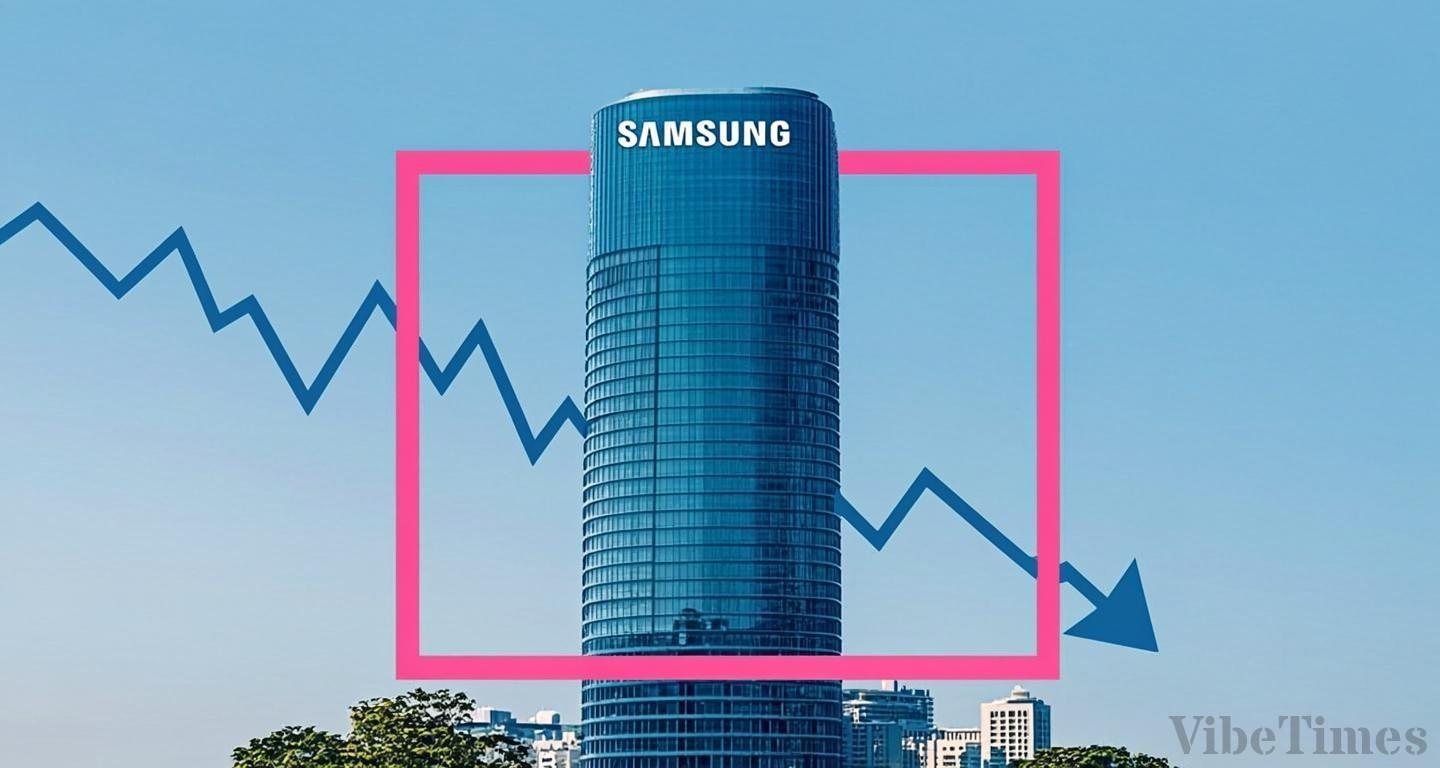
Although Samsung Electronics posted more than 107 trillion won in operating profit in the third quarter, foreign investors' stake in the company has fallen to its lowest level since the global financial crisis. Retail investors have also net sold more than 5 trillion won worth of shares in the domestic market in the second half of the year and moved their money to U.S. stocks.
According to the Korea Exchange on the 11th, foreigners' stake in Samsung Electronics stood at 46.38 percent as of the 8th, after dropping to 46.37 percent on the 6th. This is the lowest level in about 18 years and 9 months since January 11, 2008 (46.35 percent), during the global financial crisis. Foreign ownership had risen from late last year, when the KOSPI rally began, reaching a peak of 52.4 percent early this year. However, after the outbreak of war between the United States and Iran in March, the 50 percent level collapsed, and after slipping to the 47 percent range in July, the decline has continued.
The situation is no different for SK Hynix. According to the Korea Exchange, foreign investors' stake in SK Hynix stood at 49.59 percent as of the 8th, down more than 5 percentage points from its peak of 54.64 percent early this year. Compared with the 56.41 percent it reached in 2024, foreign investors' exodus from large-cap semiconductor stocks stands out.
Retail investors have also changed direction, selling KOSPI shares and piling into the U.S. stock market. According to the Korea Exchange and the Korea Securities Depository, retail investors net sold 5.5902 trillion won worth of shares on the Korea Stock Exchange from July to September. While they net bought 5.3735 trillion won in July and 3.2352 trillion won in August, they net sold 14.197 trillion won in September alone. During the same period, retail investors' net purchases of U.S. stocks reached 7.63224 billion dollars (about 10.1468 trillion won). With the won-dollar exchange rate recently falling to the mid-1,300 won range, the burden of buying dollar assets has eased, and domestic investors' holdings of U.S. stocks surpassed 200 billion dollars for the first time in four months since June.
Kim Jong-min, a senior research fellow at Samsung Securities, diagnosed: "The outperformance of developed markets over emerging markets, and Taiwan's outperformance over South Korea within emerging markets, have combined to channel asset flows toward the U.S. artificial intelligence (AI) value chain," adding, "Domestic retail investors are also actively flowing into the U.S. market, taking advantage of the won's strength."
Amid the widening supply-demand vacuum, brokerage research center heads forecast a gradual upward trend for the KOSPI, backed by corporate earnings. In a survey of five research center heads from Mirae Asset, Korea Investment, Samsung, Kiwoom, and Daishin Securities conducted by the Segye Ilbo on the 11th, fourth-quarter KOSPI forecasts ranged from a lower bound of 6,000-6,400 to an upper bound of 8,000-9,300. They agreed that even if unfavorable external conditions such as high interest rates and high oil prices persist, earnings power centered on semiconductors could offset them.
Lee Jong-hyung, research center head at Kiwoom Securities, projected a range of 6,400-9,000. He said, "Above 7,500, selling pressure from existing investors is considerable, and above 8,000, interest rates and earnings outlooks must be checked together," adding, "Rather than recovering the all-time high in one leap, the index will raise its level step by step as earnings are confirmed."
Yoon Seok-mo, research center head at Samsung Securities, suggested 6,000-8,400. He noted that foreigners have net sold about 190 trillion won worth of KOSPI shares since the beginning of the year. Yoo Jong-woo, research center head at Korea Investment & Securities, offered a forecast of 6,000-8,000, and Park Yeon-ju, head of Mirae Asset Securities' AI Research Center, said, "Given its earnings generation capacity, the KOSPI remains considerably cheap compared with major global stock markets."
The key variables for the fourth-quarter market were summed up as a tug-of-war between interest rates and oil prices on one side and corporate earnings on the other. Lee Jong-hyung emphasized, "What matters is not how high interest rates are, but whether earnings are growing strongly enough to overcome high rates." Yang Ji-hwan also cited international oil prices as the biggest variable, saying of the rise in long-term U.S. Treasury yields, "What should be watched is not the level of rates but the speed of their rise." He added, "Earnings season spanning Samsung Electronics, TSMC, SK Hynix, and U.S. big tech will firm up the KOSPI's downside and lend strength to a breakout above."
All five named semiconductors as their investment strategy. Park Yeon-ju stressed, "Semiconductor supply is highly likely to remain short of AI demand," adding, "This memory cycle, driven by AI innovation, is likely to last longer than in the past, yet domestic semiconductor companies are still trading cheaply." Yang Ji-hwan recommended a "two-track" strategy combining AI-related sectors, defense, and shipbuilding with dividend stocks such as banks and insurers. Yoon Seok-mo highlighted defense stocks, citing demand for weapons stockpile replenishment should geopolitical tensions ease. Lee Jong-hyung recommended securities, defense, shipbuilding, and IT hardware, along with financial stocks that offer protection against rising rates.