Gumi's AI Transformation Reaches Its Textile Factories

The AI transformation of Gumi's manufacturing sector is now reaching its textile factories. According to the city, Gumi was selected for three projects—semiconductors, optical modules, and textiles—under the Ministry of Trade, Industry and Energy's 2026 AI Factory Leading Project, a government program that applies AI to factories to boost production efficiency. The total project budget is 34.6 billion won, including 22 billion won in government funding.
The core of the program is to have AI analyze data from the factory floor to adjust production conditions and reduce equipment failures and defects. Going beyond automation that repeats fixed tasks, the goal is to develop autonomous manufacturing technology that can judge and control processes on its own based on conditions on the ground. In the semiconductor field, Inigee leads the project with participation from KEC and the Gumi Electronics and Information Technology Research Institute, among others. By 2028, 6.7 billion won will be invested to introduce generative AI into the wafer manufacturing process, linking production planning, quality control, and equipment operation while pursuing defect cause analysis and production condition optimization.
The largest segment is the optical module field, involving LG Innotek and others. Led by Wizcore, 15.9 billion won will be invested through 2029 to develop an autonomous manufacturing system for the curing process based on physical AI. The technology combines AI and robots to detect equipment anomalies in advance and autonomously control the process, aiming to unmanned operations and stabilize quality in that process.
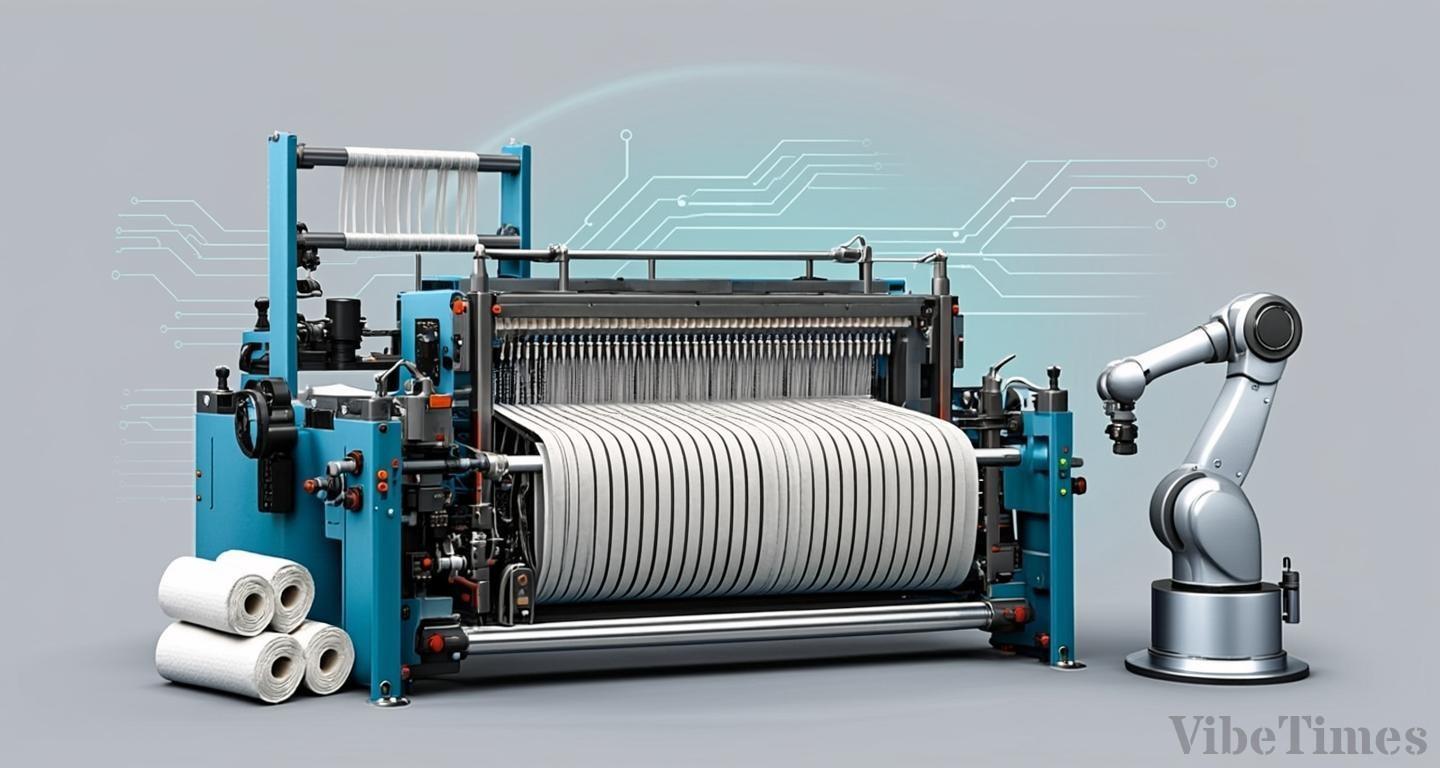
After optical modules, textiles follow. In the textile field, ICN IT leads the project with participation from Wintex, MD Tech, and others, with 12 billion won to be invested through 2029 to integrate sensors and AI into existing production facilities. The goal is to predict equipment failures in advance and manage processes intelligently. The AI manufacturing innovation once centered on electronics has now extended into traditional manufacturing.
Gumi was designated a specialized complex for robots, a national advanced strategic industry, on the 30th of last month. If the designation dovetails with these research and development projects, the Gumi industrial complex could serve both as a hub for robot production and as a proving ground where robots are deployed and validated in actual processes. Challenges remain, however, including technical coordination between companies and research institutions and the sharing of demonstration results.
"We will continuously identify and pursue manufacturing innovation programs such as the AI Factory to accelerate the adoption of AI and robot technology by local companies and actively support them in growing into advanced manufacturers with global competitiveness," said Gumi Mayor Kim Jang-ho.
