10-Year Treasury Yield Rises from 3.92% to 4.26% in Four Months

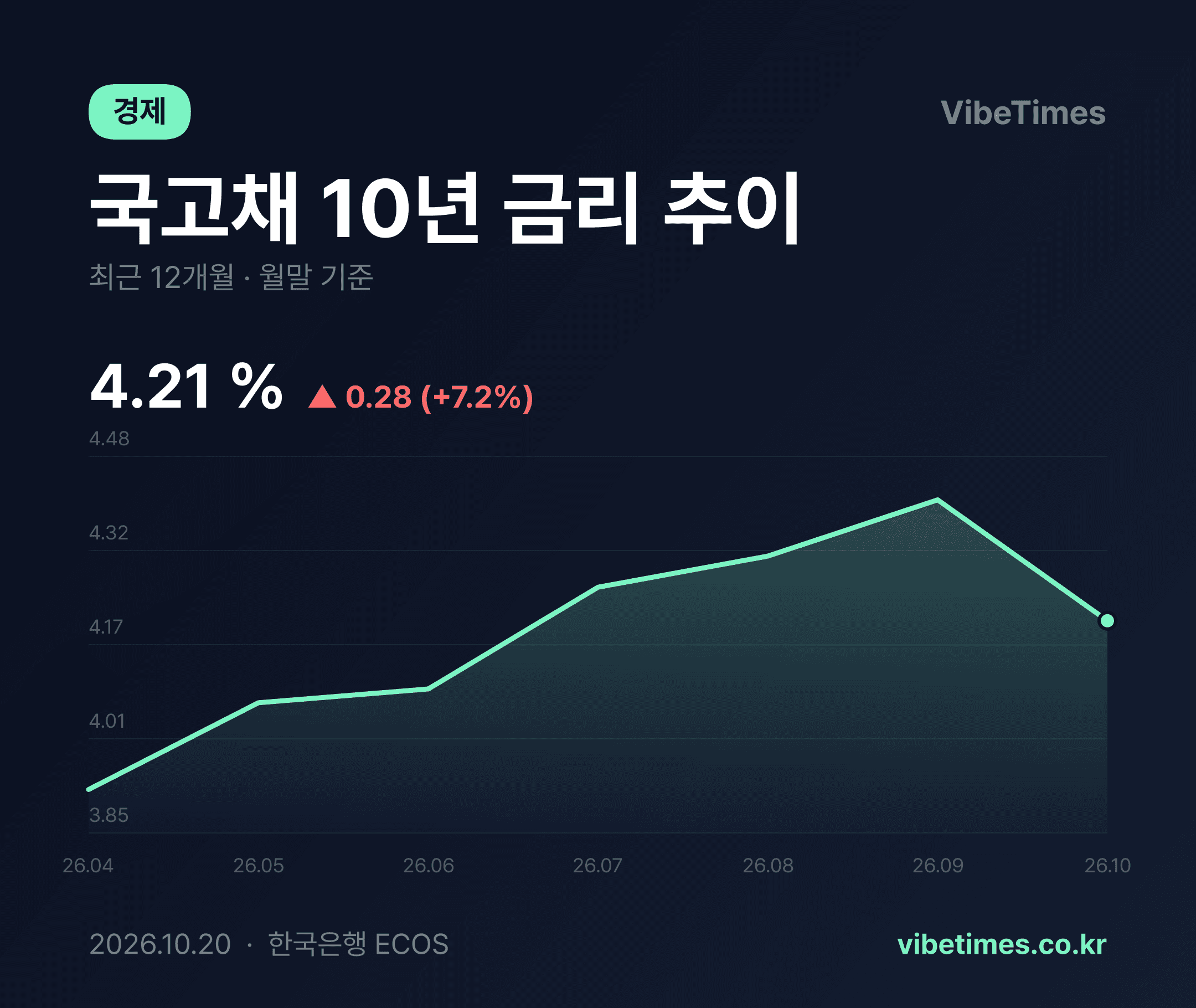
The 10-year Treasury yield changed direction for the first time after surging 0.49 percentage points over six months.
The 10-year Treasury yield, which serves as the benchmark rate for South Korea's bond market, started at 3.92% at the end of April, rising to 4.07% in May and 4.09% in June, then passing through 4.26% in July before spiking to 4.41% in September. In October, however, it edged down to 4.21%, putting the brakes on the upward run. It remains 0.28 percentage points higher than in April.
Background of the Rate Surge and the Meaning of October's Pullback
The steep climb from April through September was unusual in that it marked six consecutive months of increases. July saw the fastest rise, with the yield jumping 0.17 percentage points in a single month. A rise in Treasury yields means bond prices are falling, signaling that market funds are demanding higher returns.
October's decline is significant as the first reversal signal in this upward phase. That said, the 0.20 percentage point drop is roughly similar in size to July's monthly gain, making it too early to call a trend change. The key question is whether the one-month correction will continue or prove to be merely a pullback.
Impact on the Market
The 10-year Treasury yield is directly linked to mortgage rates and corporate financing costs. As long-term rates climbed from 3.92% to 4.41% and entered the mid-4% range, borrowing costs for households and businesses likely grew heavier. The fact that rates stayed above 4% for more than five months suggests mounting interest burdens for households and companies alike.
Investors holding existing bonds accumulated paper losses during the period of rising yields. Conversely, the 4%-range yields could prove an attractive entry point for new investors. From this perspective, October's decline can also be read as a sign that demand for long-term bond investment has returned.
Given that October's drop is small compared with the cumulative gains of the rally, the market appears to have yet to settle on a direction. Whether September's peak of 4.41% marks a near-term ceiling or yields resume climbing after the correction will be the turning point for the fourth-quarter bond market.
If rates rise above 4.4% again, the burden of borrowing costs and pressure on corporate earnings will intensify. On the other hand, if the current decline continues and yields fall to the low-4% range, the strain on rate-sensitive assets, including long-term bonds, is expected to ease. The monthly trajectory over the coming months will serve as the yardstick that determines the market's direction.
