A Lunar Rover Will Carry an AI Language Model to the Moon for the First Time

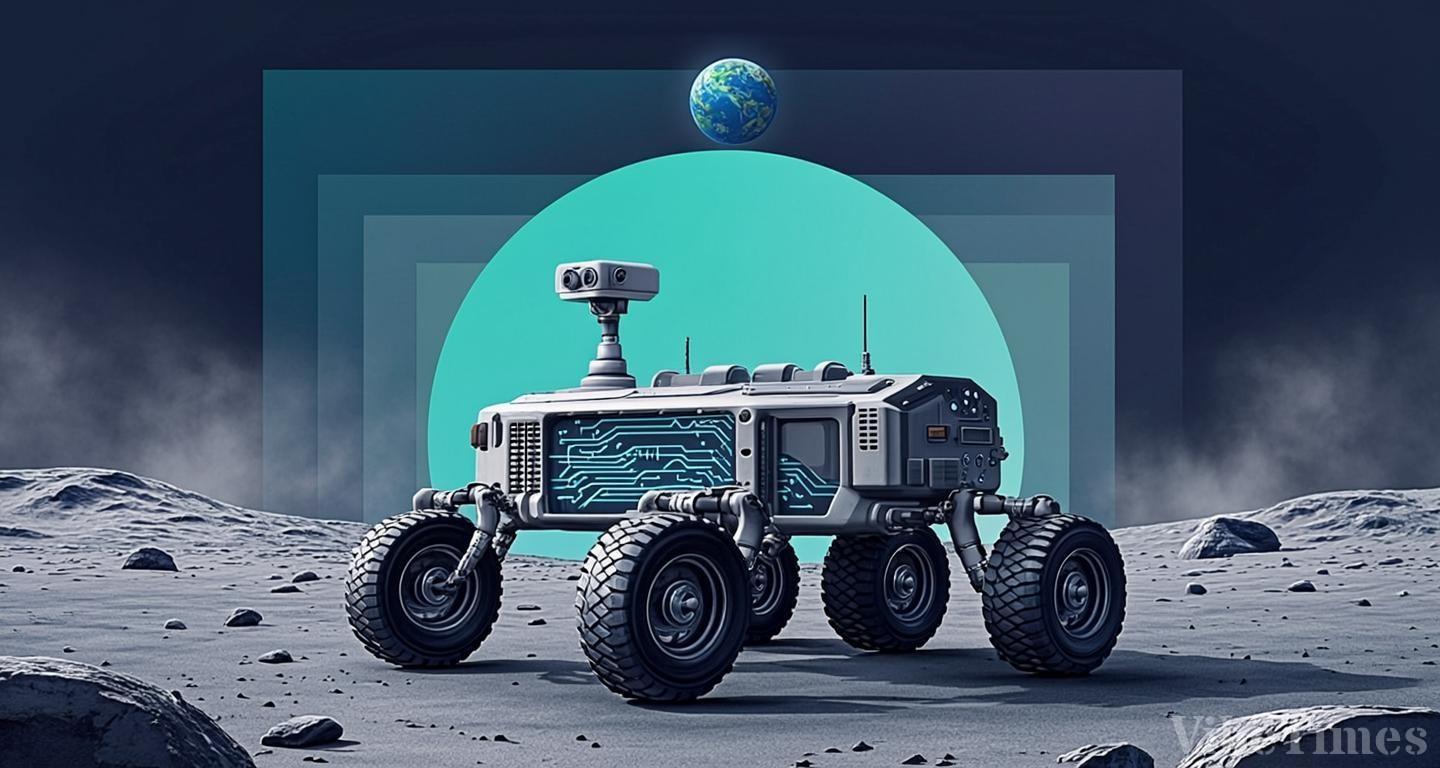
FLIP, a rover launching to the moon after November next year, will run the first large language model (LLM) on the lunar surface. LLMs are AI technology capable of understanding and generating sentences like humans, and in space they could be used to make autonomous decisions and carry out tasks when communications are disrupted or delayed. As part of the FLIP mission, a specialized, custom-built LLM will be tested to prove that the technology can operate reliably in the moon's extreme environment. The LLM will analyze data from onboard cameras and a lidar mapper to support safe navigation across the lunar terrain.
Mark Fernandez, principal scientist and principal investigator at HPE, said, "Communication delays on Mars can reach up to 20 minutes." He explained that using LLMs in space could overcome communication delays and bandwidth constraints with Earth, enabling greater autonomy and real-time intelligent decision-making.
The demonstration carries technical significance for securing autonomy in future space exploration missions. For reference, China's Chang'e 6 lander used basic AI algorithms and neural networks for autonomous navigation when it touched down on the far side of the moon in 2024, reflecting a growing trend of AI adoption in lunar exploration.
