Nurse with 15 Years of Experience Saves Elderly Man Who Collapsed on Subway

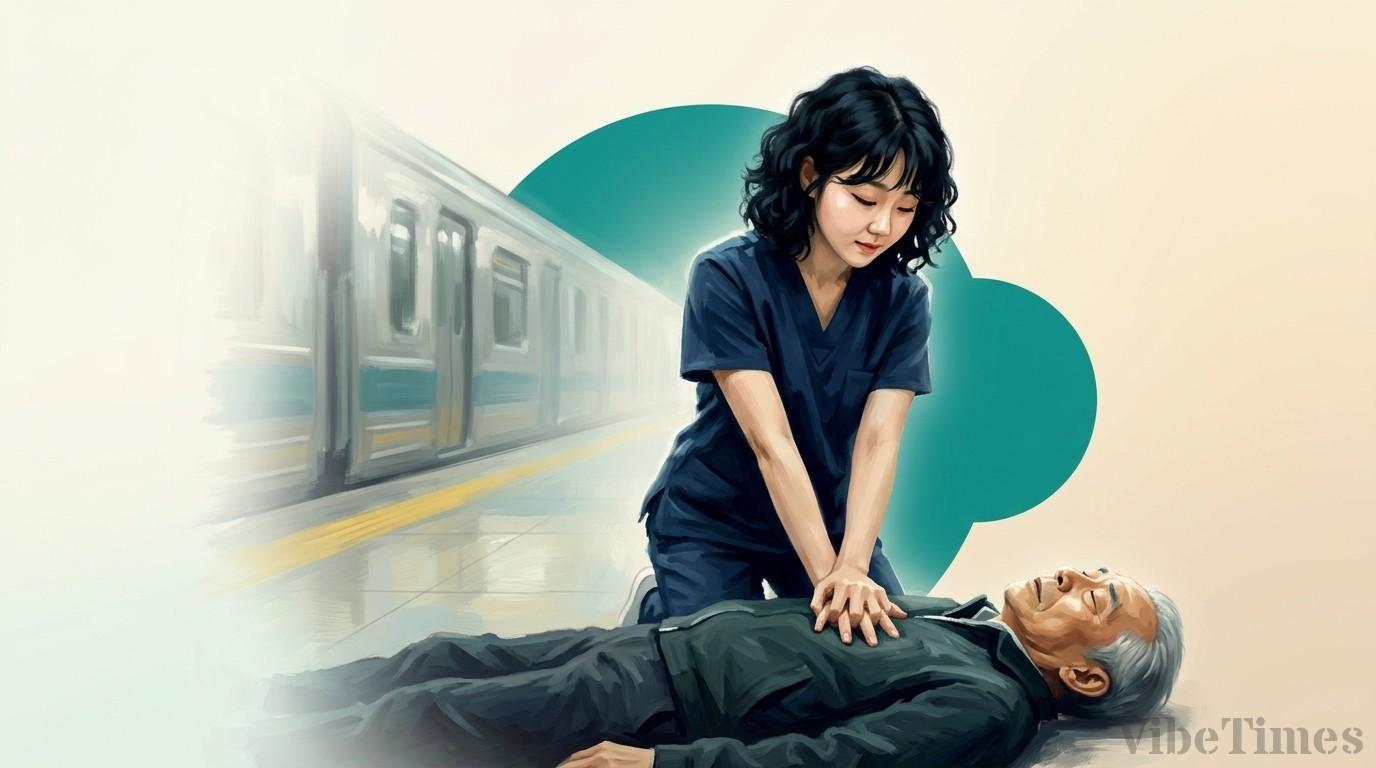
A nurse with 15 years of experience saved the life of a man in his 60s whose heart stopped on a crowded subway train. Seo Hye-won (38), a nurse at Catholic University of Korea Seoul St. Mary's Hospital, boarded the train at Express Terminal Station on Seoul Subway Line 7 during her commute home on the 1st. Near Gunja Station, she heard an announcement that the train was delayed due to a medical emergency, realized something had happened in her car, and immediately pushed through the crowd.
The collapsed man was unconscious and showing signs of a seizure. "I turned his head to the side to secure his airway first," Seo recalled. "The seizure subsided, but his pulse gradually weakened and he showed signs of cardiac arrest, so I performed CPR," an emergency measure of pressing the chest to restore the heartbeat.
"The only thing I thought was that I had to save him. The person who collapsed is someone's precious family member, and if you just leave them until 119 arrives, they usually don't regain consciousness," Seo said. "My body moved right away."
She emphasized that she did not act alone. Before she reached the patient, a man was already performing CPR, and a woman helping nearby stayed by the patient until he regained consciousness. Seo did not hesitate to praise the citizens who stepped in as if it were their own duty, calling them "truly remarkable."
After caring for seriously ill patients in the hematology ward at Seoul St. Mary's Hospital, Seo now works on the outpatient nursing team. She has also helped a woman who collapsed on the subway and rescued a patient suffering an emergency within the hospital. She explained that the CPR training she receives at the hospital every year has enabled her to respond without panicking.
After safely handing over the patient, she said, she worried that "even though I helped in good faith, I could face lawsuits or other liability if the outcome were bad." There is also an institutional mechanism designed to ease such concerns. Article 5-2 of the Emergency Medical Service Act, known as the "Good Samaritan Law," states that a rescuer who provides emergency care to a patient whose life is in danger bears no civil or criminal liability absent intent or gross negligence. In reality, however, the definition of "gross negligence" remains ambiguous, and lawsuits are sometimes filed.
Asked whether non-experts should step in, Seo advised, "The most important thing is calling 119. It's best to point to a specific person and ask them to make the call. In emergencies like cardiac arrest, even non-experts must take action. The survival rate drops the longer you wait." She also urged that for patients having a seizure, it is best to turn their head to the side to keep the airway from becoming blocked.
Her good deed became known when a Seoul Metro employee who was at the scene contacted the hospital. "Even in such a sudden, urgent situation, she calmly carried out the necessary measures," the transit authority said. "Her professionalism was truly impressive. We hope that as this good deed becomes known, more people will find the courage to act in emergencies." Seo smiled broadly as she said, "Nothing is more rewarding than seeing a sick patient regain their health. I'm thinking about studying further to become an advanced practice nurse."
