AI That Reads Brain Waves Corrects Its Own Mistakes... 90% Success Rate

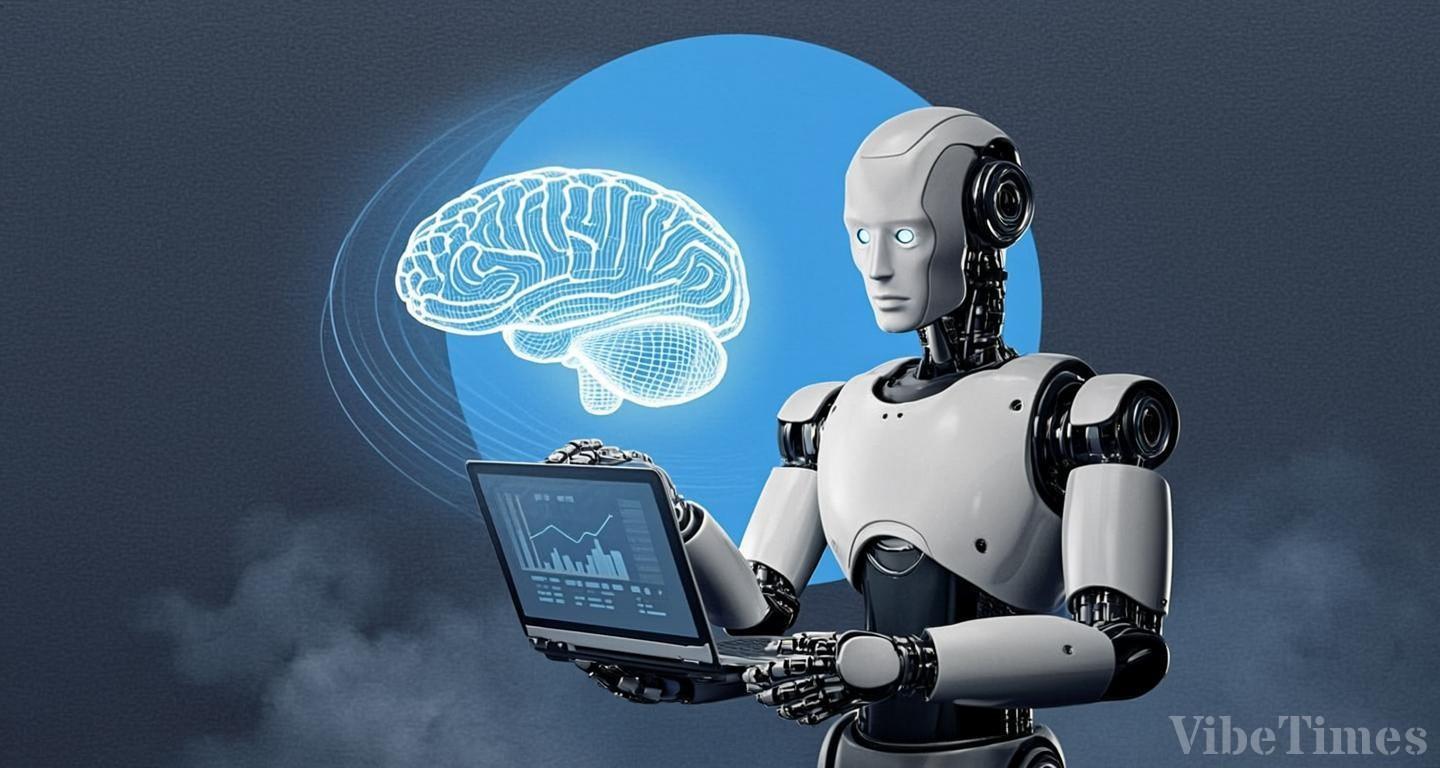
The moment a person silently thinks 'this isn't right,' artificial intelligence (AI) reads their brain waves and corrects its own behavior. Developed by a joint five-year research effort between Professor Lee Sang-wan's team in the Department of Brain and Cognitive Sciences at the Korea Advanced Institute of Science and Technology (KAIST) and Microsoft Research, the technology has been named 'Neural Value Alignment' (NVA).
The technology is based on the brain-computer interface (BCI), which directly connects the brain to a computer. While existing BCI research has focused on decoding direct intentions — what a person is seeing or hearing, or what movement they intend to make — NVA goes a step further. It enables machines to detect the error signals that the brain unconsciously emits when an AI's behavior deviates from expectations.
The key lies in distinguishing between two different prediction error signals. If a robot deployed to a fire scene, ordered to put out the fire, unexpectedly shifts to rescuing people instead, a 'reward prediction error' (RPE) signal is generated, indicating the goal itself has gone off track. If the robot does extinguish the fire but grabs a small fire extinguisher instead of a fire hose, a 'state prediction error' (SPE) signal appears, indicating the goal is the same but the method differs. Since the former requires changing the task itself while the latter only requires adjusting how it is executed, the AI must accurately separate the two signals to determine what to fix and how.
Professor Lee Sang-wan explained, "Experiments were conducted in virtual game and virtual kitchen environments, and the simulation success rate for distinguishing and reading the two signals reached 90 percent." He added that while the success rate may drop in real-world daily life, the probability of misclassification is estimated at 20 percent or lower.
The research team suggested use cases for NVA in settings where humans and machines work together, such as autonomous vehicles detecting driver discomfort through brain waves and adjusting their driving style, or warehouse automation robots recognizing workers' preferences and modifying how they perform tasks.
According to the team, commercialization will require verifying signal recognition accuracy across various environments and advancing integration technologies with robot and AI systems. Brain wave measurement equipment also remains an obstacle. In the past, caps with dozens of electrodes attached to the head were common; today they have shrunk into headband or earphone-style devices, but they are still far from widespread everyday use.
The researchers' ultimate goal is an AI that learns an individual's intentions and value judgments and acts like 'another me.' The professor said, "The AI would figure out what a person wants and how they want things done, and act like another version of that person," adding, "This approach of creating an AI that directly inherits human value judgments is safer than the existing distillation method of using AI to create AI, because it carries a lower risk of going out of control."
