October 25 Legislative Report: Yoo Dong-gyu Co-Sponsors Kim Keon-hee Special Counsel Act While Taking Part in Education Audit

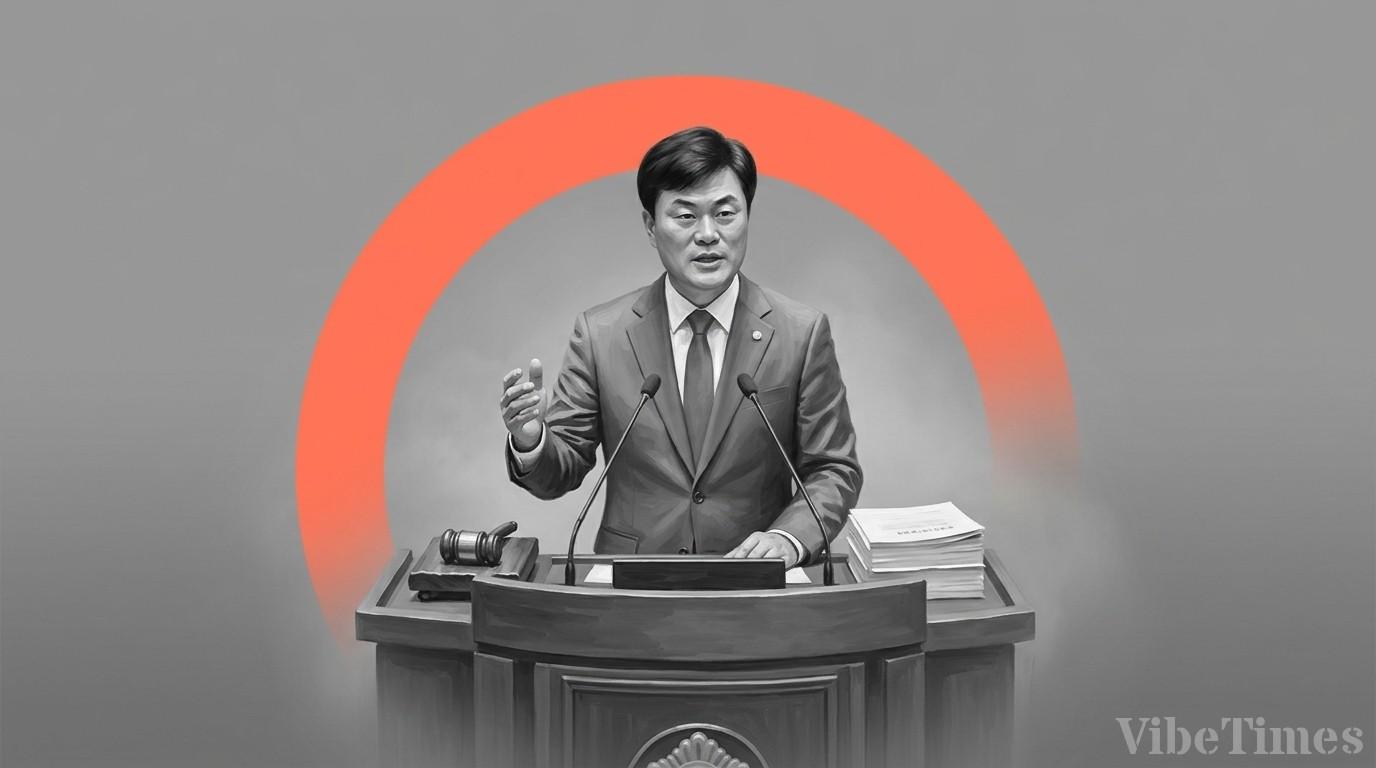
Rep. Yoo Dong-gyu of the Rebuilding Korea Party, whose name appears among the co-sponsors of the Kim Geon-hee special counsel act, is continuing his track record on the stage of the National Assembly's education-sector audit as well.
According to the Public Data Portal and the Open National Assembly Information system, Yoo was assigned to the Education Committee and the Special Committee on Budget and Accounts in the 22nd National Assembly. Fellow party members Jeon Bo-sung, Bin Jun-hwa, Song Jang-seon, An Yeong-ju, Kim Nam-myung, Lee Jae-guk, Lee Ji-ho, and Lee Hyeong-ryeol also serve on both committees, making the Rebuilding Korea Party's density of assignments in education and budget fields notable relative to its bargaining-group size. Serving as a member of the Education Committee, Yoo took part in the Ministry of Education's National Assembly audit, while at the same time joining fellow party members as a co-sponsor of the Kim Keon-hee Special Counsel Act — the twin axes of this analysis.
The Meaning of a Dual Legislative and Audit Track
The co-sponsorship of the special counsel act is less an issue-setting move by Yoo personally than part of the Rebuilding Korea Party's in-house strategy. From its founding, the party has made prosecutorial reform and special counsel legislation its defining identity, and has maintained a structure in which its lawmakers as a whole sign on to related bills. By the Open National Assembly Information count, the concentration of Rebuilding Korea Party members on the Budget and Accounts Special Committee and the Education Committee reads as a calculated effort to maximize visibility by committing its limited seats (around 12) to strongholds on standing and special committees covering education and finance.
Its participation in the Ministry of Education audit follows the same logic. The Education Committee is a stage where socially charged issues converge — university tuition, medical school quotas, and education finance, among others. Securing questioning opportunities there allows even a minor in-house party to set the agenda. Pairing the political support base built through the Kim Keon-hee special counsel act with policy-scrutiny work on education issues appears to be a dual strategy common to Rebuilding Korea Party lawmakers.
The Special Counsel Act's Legislative Environment and the Assembly's Landscape
The Kim Keon-hee special counsel act is not a bill unified solely among opposition parties; it is a measure repeatedly re-voted amid ruling-opposition confrontation. For the Rebuilding Korea Party, having all of its lawmakers join as co-sponsors is a symbolic message demonstrating external party unity. Yoo's signature came within this flow — less an individual legislative achievement than a step confirming the consistent line of the bargaining group.
At the same time, the Assembly as a whole is seeing defection votes within both major parties. In the October 1 plenary session on a revision to the Agricultural and Fishing Villages Structure Improvement Special Account Act, the Democratic Party recorded 86 votes in favor and 16 against, with Reps. Kim Jun-hwan, Eo Gi-gu, Im Ho-seon, Shin Jeong-hoon, Min Hong-cheol, Jeong Chung-rae, Park Ji-won, and Kim Yeong-hwan among those voting against the party line. In the People Power Party, 10 members including Reps. Park Su-yeong, Kim Tae-gyu, and Yun Yeong-seok defected on the alternative Emergency Medical Services Act, while on the agricultural account act only four — Kwon Yeong-se, Kim Yong-tae, Lee Man-hee, and Lee Sang-hwi — voted in favor, effectively collapsing the party line. Reps. Lee Jin-sook, Choi Su-jin, and Kim Min-jeon sided against the broadcasting act revision, and Lee Jin-sook, Han Gi-ho, and Song Eon-seok opposed the alternative Eco-friendly Agriculture and Fisheries Promotion Act.
While both major parties show fractures along regional and ideological interests, the structure of a party like the Rebuilding Korea Party — which rallies its entire membership around the single issue of the special counsel act — is functioning with relative stability. It also follows from this party structure that Yoo's co-sponsorship is highly likely to continue, without defection, as the repeatedly re-introduced special counsel act moves forward.
The Ripple Effect in the Education Audit
The Education Committee's audit stage is a substantive verification forum with a different character from the special counsel act. By holding seats on both the Budget and Accounts Special Committee and the Education Committee, the Rebuilding Korea Party has positioned itself to examine the formulation and execution of education budgets simultaneously. Observers note that the precision of the education finance audit could vary depending on which issues Yoo digs into during the Ministry of Education audit.
Given that People Power Party Rep. Kim Gwang-yeol is also active on the Education Committee — among other things, examining the handling of sexual violence in schools — the Rebuilding Korea Party's audit contributions could gain prominence beyond its committee assignment density within a ruling-opposition cross-check dynamic. Still, as a minor bargaining group, actual passage of its bills inevitably depends on ruling-opposition negotiations with the government.
Given the recurring structure of re-votes and re-introductions of the Kim Keon-hee special counsel act, the co-sponsorship track of the Rebuilding Korea Party, including Yoo, is expected to be renewed several times over. The committee strategy centered on the Education Committee and the Budget and Accounts Special Committee is highly likely to carry over into the next National Assembly audit. This dual track — combining the symbolic weight of the special counsel act with substantive scrutiny of education and budget affairs — appears set to serve as the core pillar sustaining the Rebuilding Korea Party's presence in the National Assembly.
