President Lee Jae Myung accelerates push to make investor relations mandatory for listed companies

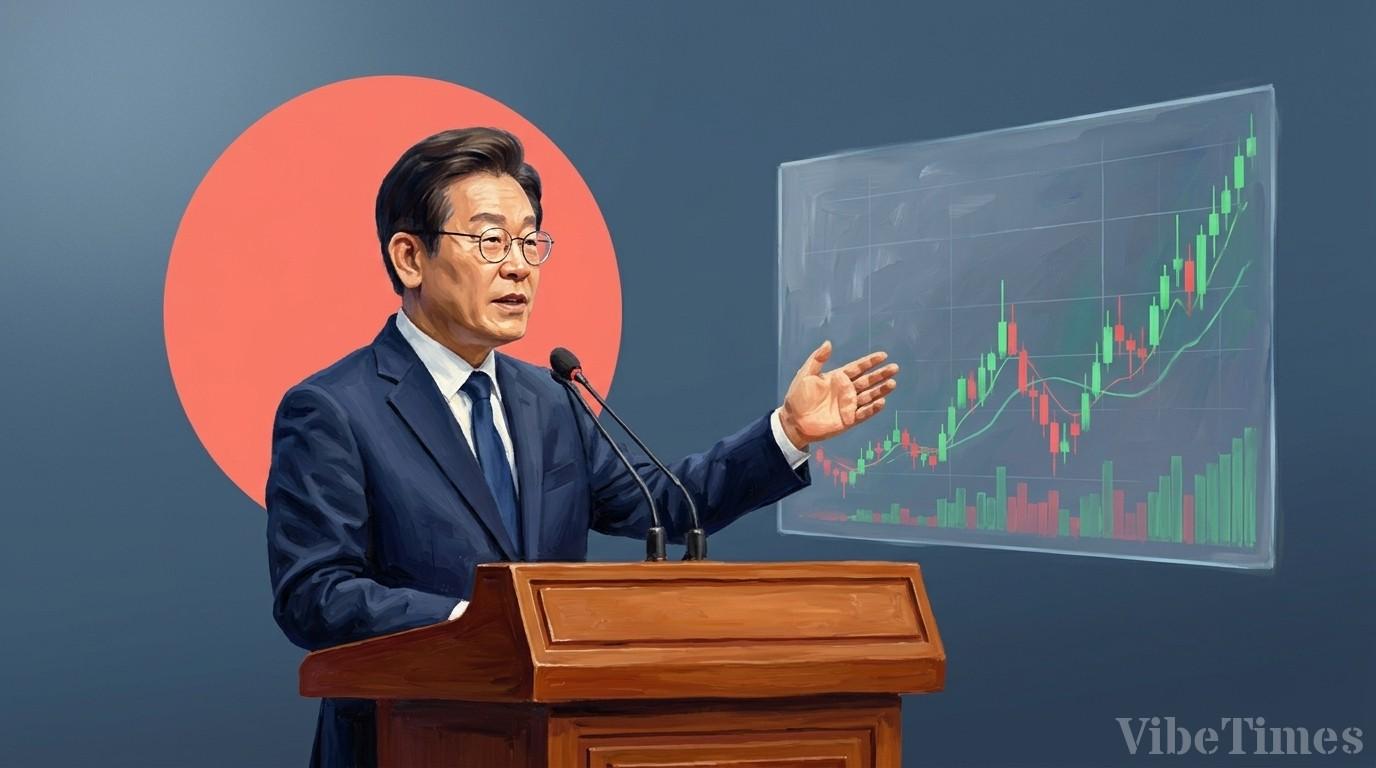
President Lee Jae Myung has personally accelerated the push to make investor relations (IR) mandatory for listed companies.
At a capital market policy roundtable he chaired at the Korea Exchange in Yeouido on the 13th, the president emphasized the need to strengthen listed companies' communication obligations and refine the delisting criteria for financially troubled firms. The roundtable even featured an impromptu show-of-hands vote on the mandatory tender offer threshold. It was an unusual scene, with the president personally checking attendees' raised hands. "Normalizing the capital market is the government's firm policy direction," Lee said, adding, "The policy has once again been put to the test."
From 'Resolving Undervaluation' to 'Overhauling the System'
The core idea behind the roundtable is to tackle the Korean stock market's chronic undervaluation through corporate governance and institutional reform. The president said the government would consider delisting firms where controlling shareholders hold excessive stakes and run them like personal businesses. He also raised the possibility of imposing inheritance and gift taxes on majority shareholders of companies that deliberately depress their stock prices. The move is seen as a resolve to restore shareholder equality and market confidence—the original purpose of going public.
Making IR mandatory follows the same logic. The thinking is that requiring listed companies to regularly communicate with investors would ease the structural problem of corporate value not being properly reflected. The president also stressed the need to invigorate mergers and acquisitions (M&A) and urged that decisions on the mandatory tender offer system not be delayed. Market observers note that the remaining challenge lies in striking a balance between a safeguard against hostile takeovers and a catalyst for corporate restructuring.
Reviewing the Stock Market Stabilization Fund and Stepping Up Enforcement: Two Pillars
Market stabilization measures are also being fine-tuned. The president said the effectiveness and size of the Stock Market Stabilization Fund would be fully reviewed in order to reduce volatility in the domestic market. This aligns with remarks by Rep. Lee Eok-won of the Rebuilding Korea Party, who urged caution in operating the fund. In effect, the government has taken on board concerns that market intervention could instead distort investment decisions.
At the same time, the stance on enforcement is clearly firm. The president called for stronger crackdowns on unfair trading practices such as stock manipulation, making the restoration of confidence in the capital market the top priority. He also ordered the creation of a capital market normalization and advancement task force comprising senior officials from relevant ministries. The move is seen as a strategy to speed up reform by establishing a standing body to coordinate inter-ministerial interests.
Capital Market Reform Meets the Political Calendar
President Lee's capital market reform carries extra weight in that it is also a political choice. Having repeatedly voiced the view that the market "is still undervalued," the KOSPI's trajectory is now directly tied to public confidence in the government. Some observers warn that reform momentum could falter if retail investors' real returns fail to materialize.
Moreover, with political flashpoints such as the special counsel bill on stock manipulation prosecutions overlapping, partisan conflict could become an obstacle to reform legislation. Still, with the president having drawn a line by declaring he "will not fear controversy," the institutional overhaul centered on the task force is expected to deliver visible results within the year. How quickly mandatory IR and tougher delisting rules for troubled firms translate into concrete bills and enforcement decrees will be the first test of this reform.