On First Overseas Trip Since Taking Office, Lee Jae-myung Met With US, China, and Russia Leaders

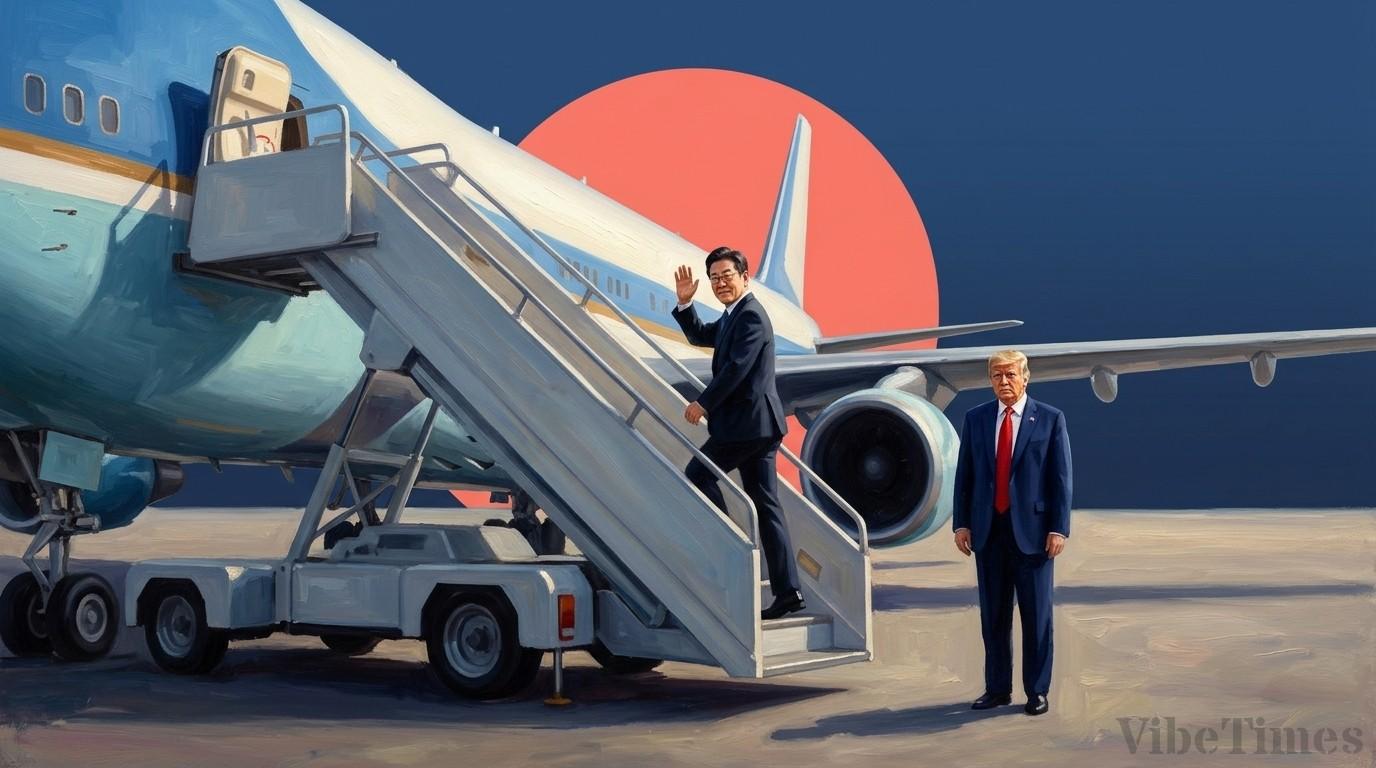
Lee Jae-myung Faces Trump on Back-to-Back Days, but Challenges Await at Home
President Lee Jae-myung departed Shenzhen, China, on the 19th for home after completing all his scheduled engagements at the ASEAN and APEC summits. His back-to-back encounters with US President Donald Trump are seen as the biggest gain of the trip. While the presidential office took a cautious stance on North Korea–US talks, calling them "uncharted territory," observers say that meeting the leaders of the United States, China, and Russia for the first time since taking office is in itself a diplomatic achievement.
What Shenzhen Yielded Diplomatically
At the APEC group photo, President Lee and the First Lady were seated beside President Trump. The seating arrangement carries weight as more than mere protocol—it is a signal of the temperature in leaders' relations. Indeed, at a dinner, President Trump mentioned Korea's $200 billion energy-sector investment in the United States, referencing approval of the Alaska LNG pipeline project. The Korean government, however, distanced itself from the remarks, saying the investment has yet to be finalized.
Relations with China also bore fruit. At the South Korea–China summit, Lee asked for Beijing's support in continuing dialogue with North Korea, while follow-up negotiations on the services and investment chapters of the South Korea–China FTA moved beyond working-level consultations and entered the final stages of agreement. Earlier, at a January press briefing in Shanghai, Lee had directly quoted President Xi Jinping's remark that anti-Korean sentiment in China was "melting away," noting a shift in Beijing's rhetoric. The Foreign Ministry explained that this momentum translated into concrete negotiating progress at the summit. The welcome ceremony upon his arrival—featuring a military band, honor guard, and a delegation of some 120 people—was compared to his reception by Japanese Prime Minister Takaichi, and was cited as a symbol of China's courteous treatment.
Lee also secured his first summit-level conversation with Russia since taking office. In effect, he widened diplomatic space that had appeared to be narrowing between the US and China in three directions at once. On the 17th, he attended the East Asia Summit (EAS) for the first time since taking office, discussing regional cooperation agendas.
Domestic Agenda Awaiting Upon Return
Regardless of diplomatic gains, a raft of issues awaits him at home. The controversy over revoking indictments surrounding the "Fabricated Prosecution Special Counsel Act," which was re-voted during his trip, has drawn opposition backlash and become a flashpoint for political conflict. The People Power Party, meanwhile, is intensifying its criticism of the president's judicial risks, tying the issue to questions over the background of the push to impeach Supreme Court Chief Justice Cho Hee-de.
Economic indicators offer a relatively solid foundation. After Korea became the fourth country in the world to achieve $1 trillion in annual exports, President Lee emphasized "growth for all," calling it "a result made possible by the efforts of every citizen." The trajectory of his approval ratings, however, shows weak grounds for a rebound. According to Gallup Korea, positive job-performance ratings peaked at 64% in the third week of May, then declined from the June 3 local elections onward, sliding steadily through November. Whether the APEC diplomatic achievements can reverse that downward curve will be a point of interest for now.
In addition, with the "Pro-Democracy Activists Act" going to a plenary vote in the National Assembly, the ruling and opposition parties are locked in a contest over legislative initiative, and the reshaping of the party landscape after the first local elections since the presidential election has made the domestic political calendar even more packed. Even during his trip to the Philippines, Lee held an online emergency review meeting on the College Scholastic Ability Test (CSAT), directing officials to consider rewards of at least 100 million won per instance of reported cheating and test-time extensions proportional to any disruptions—an effort to leave no gap in monitoring domestic issues.
Uncharted Territory: The Fate of North Korea–US Talks
The focus going forward lies on the extension of this trip. The first question is whether the North Korea–US dialogue, which the presidential office dubbed "uncharted territory," will actually get underway. The back-to-back contact built with President Trump leaves open the possibility that discussions could extend beyond trade issues to the Korean Peninsula problem, but some worry that, like the Alaska LNG investment negotiations, the gains could be diluted without a binding agreement. As Gandhi said, "Peace is its own reward," but diplomacy is the work of documenting those rewards on paper.
The specifics of the $200 billion investment in the United States, the ratification schedule for the South Korea–China FTA follow-up negotiations, and the vote on the Pro-Democracy Activists Act immediately after his return—the remaining November schedule will determine the report card of this trip. Balancing relations with the US and China simultaneously while managing domestic political risks ultimately remains the task for the days after his return.