Government to Overhaul Power Permit Process for AI Data Centers

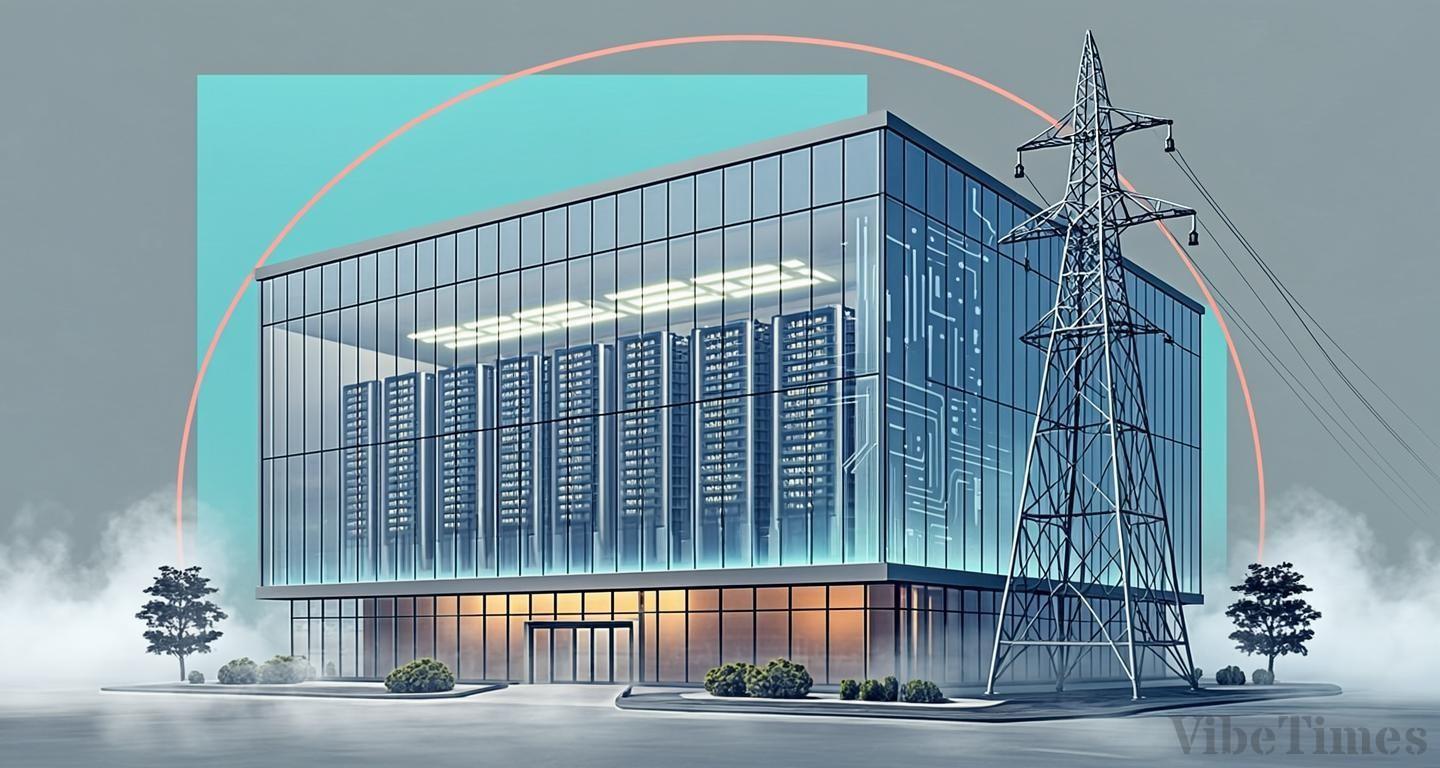
The government will drastically overhaul the power permitting process for AI data centers (AIDCs). On the 20th, the Ministry of Science and ICT and the Ministry of Climate, Energy and Environment announced plans to expedite power permits, which have been cited as a major obstacle to building data centers urgently needed amid the surge in AI computing demand. Accordingly, AIDCs outside the Seoul metropolitan area with contract power (the maximum power an operator can draw at one time) of 50 megawatts (MW) or less will be exempted from the power grid impact assessment (a procedure that reviews in advance the effects of power supply on surrounding areas). The Ministry of Science and ICT announced legislative pre-notice of the enforcement decree of the 'Special Act on the Promotion of the AI Data Center Industry' containing these measures on the same day.
The existing system had limitations: even with the exemption threshold raised to 100MW, most gigawatt (GW)-scale mega projects would still be excluded. Given criticism that operators spend considerable time on largely non-technical assessment preparations, the two ministries decided to pursue, in parallel with the enforcement decree, improvements to the assessment system tailored specifically to AIDCs.
Facilities located within AIDC special zones will be exempt from non-technical assessments regardless of their power scale, with only technical assessments conducted. The Ministry of Climate, Energy and Environment plans to revise its public notice on the 'Regulations on the Operation of the Power Grid Impact Assessment System' for this purpose. In line with the intent of the special act, which stipulates linkage with distributed energy specialized zones upon special zone designation, the ministry aims to strengthen synergy between the two types of special zones.
A fast track for prioritizing power grid impact assessments will apply to facilities qualifying as mega projects and to projects that apply for consolidated permitting under the special act, regardless of scale. The ministry plans to specify the priority assessment provisions in the detailed operational manual it is preparing.
The enforcement decree also explicitly includes third-party-provided facilities, which offer space along with power, communications, and cooling infrastructure for other operators to install and run their AI equipment, in the form of colocation (leasing), within the definition of AIDCs under the special act.
Ryu Je-myung, First Vice Minister of Science and ICT, said, "We have prepared tailored improvement measures in close consultation with the Ministry of Climate, Energy and Environment so that AIDCs can be built in a timely manner." He added that the ministry will work to ensure the improved system takes root smoothly in line with the AIDC Special Act, which takes effect on March 10 next year. Lee Ho-hyun, Second Vice Minister of Climate, Energy and Environment, said, "We will promptly complete the revision of the public notice and the preparation of the detailed operational manual."
