AI Portfolio Stays in the Black Amid the Storm, Investment Report Shows Cumulative Return of 13.99%


A Stormy Friday Paints the Entire Semiconductor Sector Red
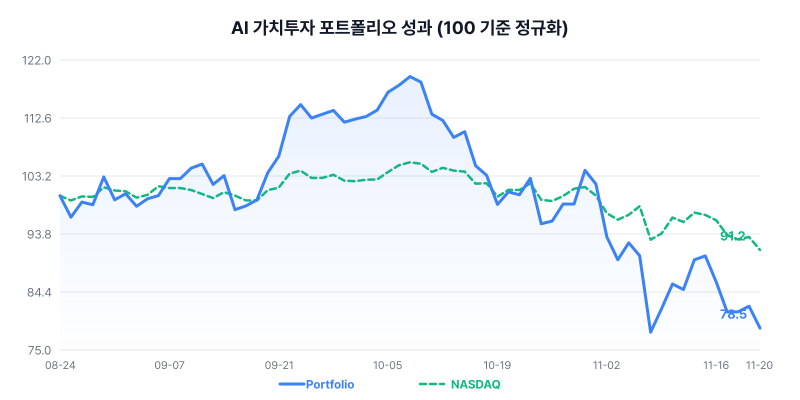
On the 20th, when the KOSPI plunged more than 5% in a single day and even gave up the 4,900 mark, tensions from U.S. markets spread straight into Asia. With the Philadelphia Semiconductor Index collapsing nearly 7% and the volatility index (VIX) climbing above 30, the entire market seemed to enter 'fear mode.' Amid this whirlwind, the AI value investing portfolio posted a cumulative return of 13.99%, holding onto its gains through the turbulence. Still, the fact that its assets fell in a single day from $11,914 to $11,399 speaks to the intensity of this correction.
A Week of Decline, but Still Well Above the Starting Point
Looking at the asset trend over the past five days, the portfolio started at $12,483 on the 16th and fell for four consecutive trading days. The compounding losses are a textbook picture of sector concentration risk. With a structure heavily weighted toward semiconductors, hedging is difficult on a day when the semiconductor index drops 7%. Even so, the portfolio maintains a return of nearly 14% against its starting capital of $10,000. This is the result of a trading principle of locking in profits from surging stocks during each correction to build cash, then reallocating into attractively valued names.
Holdings Diagnosis
| Stock | Quantity | Purchase Price | Current Price | P/E |
|---|---|---|---|---|
| Broadcom | 5.67 shares | $326.03 | $346.65 | 44.3 |
| NVIDIA | 22.80 shares | $184.21 | $145.98 | 15.7 |
| Amazon | 1.95 shares | $208.39 | $257.37 | 20.8 |
| AMD | 4.97 shares | $198.62 | $489.19 | 104.5 |
| SOXL | 20.10 shares | $63.25 | $45.30 | - |
| Micron | 2.20 shares | $851.27 | $690.44 | 9.3 |
| Intel | 2.80 shares | $104.56 | $55.72 | - |
| Meta | 0.55 shares | $653.56 | $596.22 | 20.3 |
| TQQQ | 1.13 shares | $76.34 | $49.01 | - |
| TSMC | 0.44 shares | $431.81 | $352.09 | 22.8 |
The dual nature of the structure is clear. AMD has climbed to nearly 2.5 times its purchase price, but with a return multiple above 100 and regulatory risks piling up, doubts are emerging about its further upside. Micron, by contrast, despite triple-digit earnings per share, trades at just 0.16 times its expected growth, making it likely that the market has yet to properly reflect the HBM demand structure. NVIDIA fell sharply at one point on a CEO change issue, but its multiple of around 15 and a valuation of 0.18 times its growth remain a compelling case for aggressive buying. Large-cap blue chips like TSMC and Meta, with relatively low prices relative to growth, are playing a defensive role during the correction.
Recent Trade Review
| Date | Type | Stock | Quantity | Price |
|---|---|---|---|---|
| 2026-11-20 | Buy | Micron | 0.26 shares | $690.44 |
| 2026-11-20 | Buy | SOXL | 6.18 shares | $45.30 |
| 2026-11-20 | Sell | AMD | 0.88 shares | $489.19 |
| 2026-11-13 | Buy | Micron | 0.44 shares | $798.44 |
| 2026-11-13 | Sell | AMD | 0.31 shares | $585.30 |
| 2026-11-13 | Sell | NVIDIA | 1.20 shares | $166.19 |
| 2026-11-06 | Buy | Micron | 0.20 shares | $656.39 |
| 2026-11-06 | Sell | AMD | 0.32 shares | $404.40 |
| 2026-10-30 | Buy | TSMC | 0.44 shares | $431.81 |
| 2026-10-30 | Sell | AMD | 0.34 shares | $566.42 |
Trading over the past three weeks traces a clear rebalancing pattern. AMD was sold in tranches four times, from $404 to $585, easing single-stock concentration, while Micron was bought in tranches three times over the same period, from $656 to $690, steadily accumulating shares at lower levels. On the 20th, even the leveraged ETF SOXL was added during the sector plunge, making clear an attitude of turning declines into opportunity. The strategy's consistency is holding, with profits from surging names continuously being rotated into undervalued ones.
Market Outlook
Although the volatility index has crossed the 30 mark, U.S. 10-year Treasury yields are declining and the Dow closed slightly higher, so this is not yet a broad-based credit crunch. The simultaneous declines in gold and bitcoin signal a strengthening preference for cash, and short-term tests of the lower end of the trading range may continue. Export regulation issues around semiconductors remain a variable, but since the underlying demand structure for HBM and AI chips has not broken down, this correction is close to an opportunity zone on a valuation basis. Rather than chasing lows aggressively, maintaining staged buying and position management will be the wise posture for preparing for a return to an upswing.
※ This report analyzes the simulated performance of the AI value investing portfolio and is not investment advice. Actual investing should be carried out at your own judgment and responsibility.
Curious about the portfolio details?
Subscribe to the newsletter below to receive a detailed investment report every day.