Trump Says Only Older Chips Allowed for AI Semiconductor Exports to China

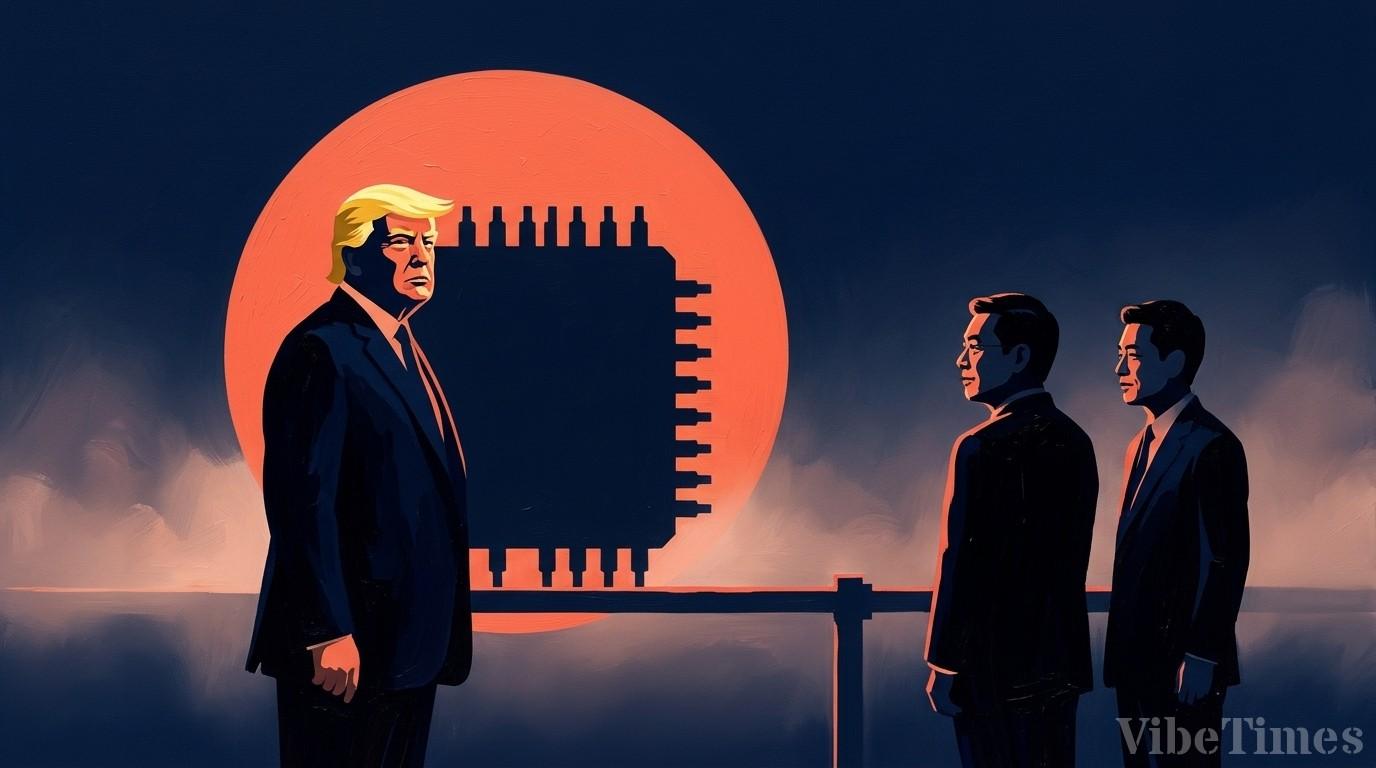
U.S. President Donald Trump has reaffirmed his plan to limit AI semiconductor exports to China to older chips. At a White House press briefing on Monday (local time), Trump, responding to questions following his summit with Chinese President Xi Jinping, said, "We only want the older chips," adding that "we are discussing a very comprehensive deal with China." He said it would not matter if no sales took place at all, explaining that if the U.S. does not sell chips, China will end up producing its own.
The same day, U.S. Treasury Secretary Scott Bessent said in a CNBC interview that there would be no change to the policy on exporting Nvidia's H200 to China. Bessent explained that the H200 has been set as the grade for export approval to China, and that products with lower performance levels are also permitted for export. The H200, released in 2024, remains the U.S. threshold for approved exports to China.
U.S. regulations are expanding beyond sales bans to controlling remote access to computing performance. On the 16th, the U.S. government announced new export rules requiring U.S. approval for providing computing performance from American AI semiconductors and servers installed in overseas data centers to companies in countries of concern such as China.
These policy shifts are expected to bring both opportunities and burdens to domestic semiconductor companies. High-bandwidth memory (HBM), which delivers large volumes of data quickly and determines AI semiconductor performance, is cited as a key potential beneficiary area, with SK hynix and Samsung Electronics named as relevant players. Analysts suggest that the more the U.S. restricts China's access to advanced AI semiconductors, the more competition for high-performance memory driven by U.S. big tech could persist, and U.S.-centered AI data center investment and advanced memory demand could become more important to domestic companies' earnings than China-bound sales.
Meanwhile, in the South Korean market, analysts said U.S. export controls on China and uncertainty over AI investment are dampening investor sentiment in semiconductor and materials, parts and equipment sectors. In a market response note on Monday, Hana Securities pointed out that a plunge in U.S. tech stocks combined with global capital fleeing risk assets could put supply-and-demand pressure on large-cap domestic semiconductor stocks and equipment makers.
As the reshaping of the global AI semiconductor supply chain accelerates, attention is focused on the domestic industry's response strategies and Washington's follow-up export policy announcements.
