SNU captures double fault rupture 0.042 seconds apart using fiber-optic cables

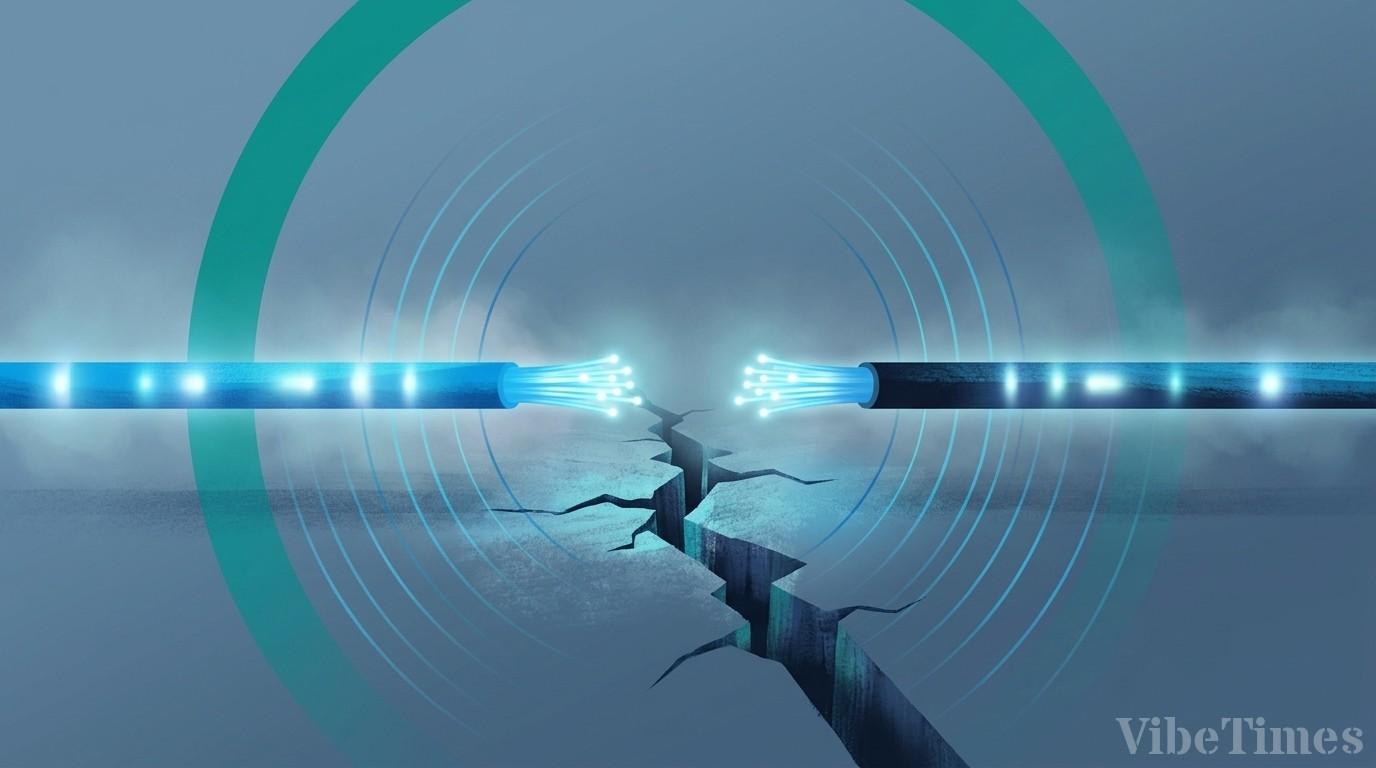
A research team led by Professor Kim Young-hee of Seoul National University has captured the fault rupture process of a magnitude-2 earthquake at 0.001-second resolution using buried telecommunications optical fiber (thin glass fibers that transmit light signals), confirming a 'double rupture' in which the fault broke twice, 0.042 seconds apart. The findings were published in the international journal Science on the 27th, announced alongside a release by the Ministry of Science and ICT.
The team employed distributed acoustic sensing (DAS) technology, which involves firing laser pulses through the fiber and analyzing changes in the reflected light that returns as the fiber minutely stretches and contracts during an earthquake. Applying the technique to roughly 28 kilometers of telecommunications fiber crossing the Brawley seismic zone in Southern California, the team continuously recorded subtle ground deformation at about 7,000 points spaced 4 meters apart along the fiber. The subject of the analysis was a magnitude-2 earthquake that occurred near the fiber in May 2021.
The analysis showed that the rupture did not proceed as a single continuous event, but occurred in sequence in two adjacent, non-overlapping zones. About 42 milliseconds (0.042 seconds) after the first rupture began, a second rupture started anew in the neighboring fault zone to the southwest. Lead author Dr. Han Sang-woo of Seoul National University explained that a low-stress segment between the two ruptures prevented the first rupture from crossing over. The transient stress change created by the S-waves of the first rupture peaked at around 40 milliseconds at the second rupture site. According to the team, this was a case of 'dynamic triggering,' in which the seismic waves from the first rupture set off the rupture in the neighboring zone.
When the team also analyzed 16 small earthquakes that occurred on the same fault plane over roughly three hours, it found that they broke nearly non-overlapping areas within a range of about 500 meters in diameter. Such 'patchy ruptures' had previously been reported in the magnitude-5.3 and 5.4 earthquakes that struck the region in succession in 2012. The team explained that earthquakes whose released energies differ by tens of thousands of times can break in similar ways.
"By using the most common small earthquakes as a 'natural laboratory,' we can bridge the observational gap between laboratory rock experiments and analyses of rarely occurring large earthquakes," said Dr. Han. "Even a common magnitude-2 earthquake hid a complex process in which the rupture stopped and restarted," said Professor Kim Young-hee. "Telecommunications fiber can be used to turn small earthquakes into an observational tool for analyzing how faults operate."