AI Solving Hardcore Math Problems Shakes Up Existing Cryptographic Systems

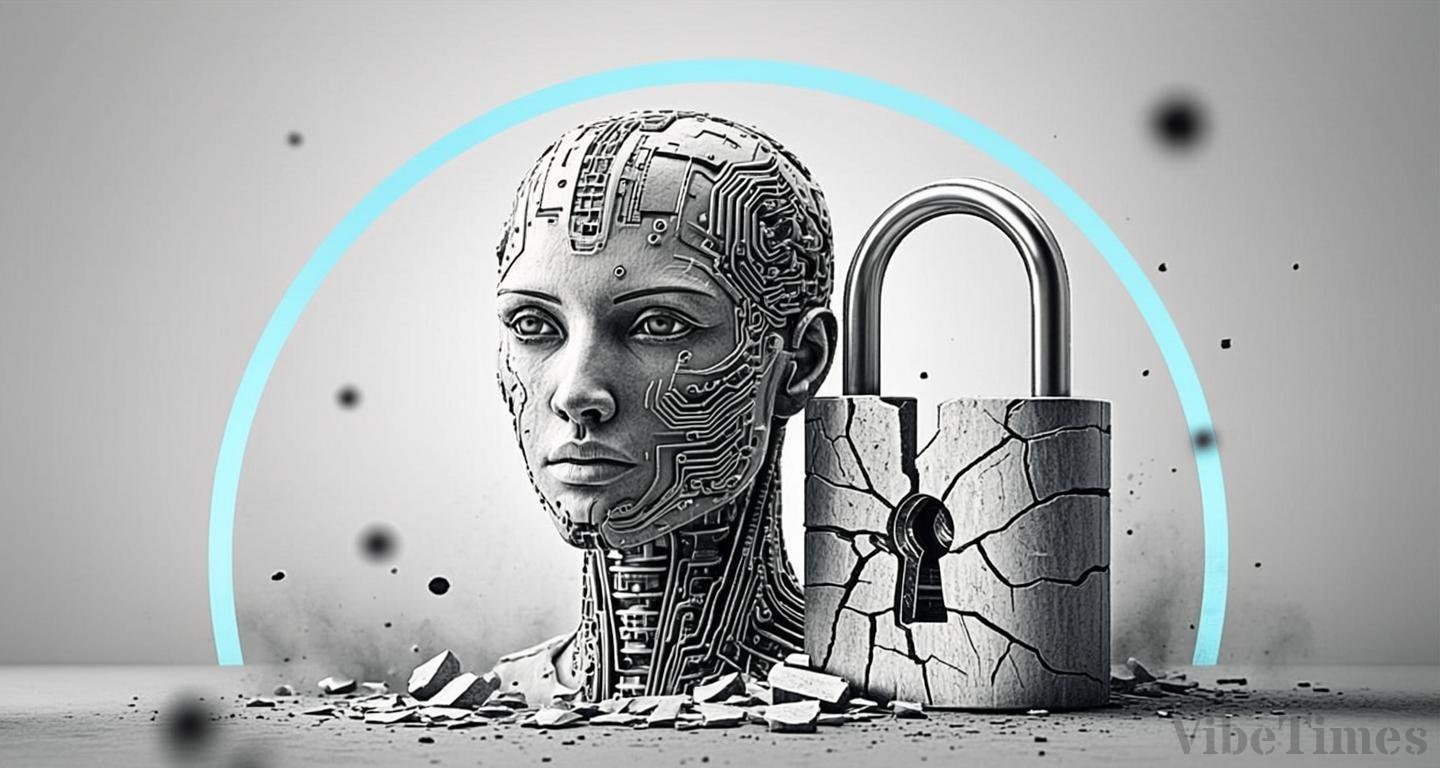
AI is shaking up existing encryption technology. Warnings have emerged that it could threaten the cryptographic technology that underpins internet and financial transaction security. Britain's daily newspaper The Guardian reported on the 28th (local time) that major AI companies such as OpenAI and Anthropic may have made significant research breakthroughs on mathematical cryptography problems that had gone unsolved for decades. Cryptography is a technology that conceals content in order to send information secretly, and the emergence of new algorithms in this field could shake the security of existing cryptographic systems. Scott Aaronson, a computer scientist and professor at the University of Texas, told The Guardian, "There are credible rumors that major AI labs have achieved important results in the field of cryptography."
At the center of this discussion is RSA encryption. RSA relies on the mathematical property that a number created as the product of two very large primes is extremely difficult to factor back into its original primes. As a representative public-key method that uses a pair of public and private keys, it has been used for internet communications, digital authentication, and financial transactions.
However, it has not been confirmed what mathematical breakthrough was made or whether it can actually be used to break encryption, and AI companies have not officially announced that they have acquired code-breaking technology. There has also been no announcement that RSA encryption has actually been broken, nor any verified result of decrypting 2048-bit encryption. OpenAI and Anthropic have published proof results related to difficult problems in computational complexity theory. This concern is distinct from the quantum computer threat posed by Shor's algorithm.
The science journal Nature published a commentary article on the 26th on whether AI has discovered mathematical algorithms capable of breaking internet cryptographic systems. It stated that if an algorithm for breaking public-key encryption is proven to operate in polynomial time, major changes to the existing security framework would be inevitable.
Bank of England Governor Andrew Bailey recently expressed concern about the cryptographic capabilities of undisclosed AI models, taking the position that the risks of cryptographic systems to financial stability should be examined.
South Korea's financial sector is also preparing to adopt post-quantum cryptography (PQC), with the Insurance Research Institute releasing a report titled "Challenges in the Financial Sector's Transition to Post-Quantum Cryptography" on November 9. Toss Payments introduced post-quantum cryptography in April this year for payment windows and customer-facing web service data transmission, and the Korea Financial Telecommunications and Clearings Institute and others are pursuing verification of whether PQC can be applied to joint certificates and electronic signature environments. Internationally, discussions are underway on a schedule to transition core financial systems to post-quantum cryptography by 2030-2032, and all systems by 2035.
The discussion of a cryptographic transition driven by AI and quantum computers is expected to lead to questions about security replacement timelines.