Daejeon Fire Claims 70 Casualties, Mirrors AriCell Disaster

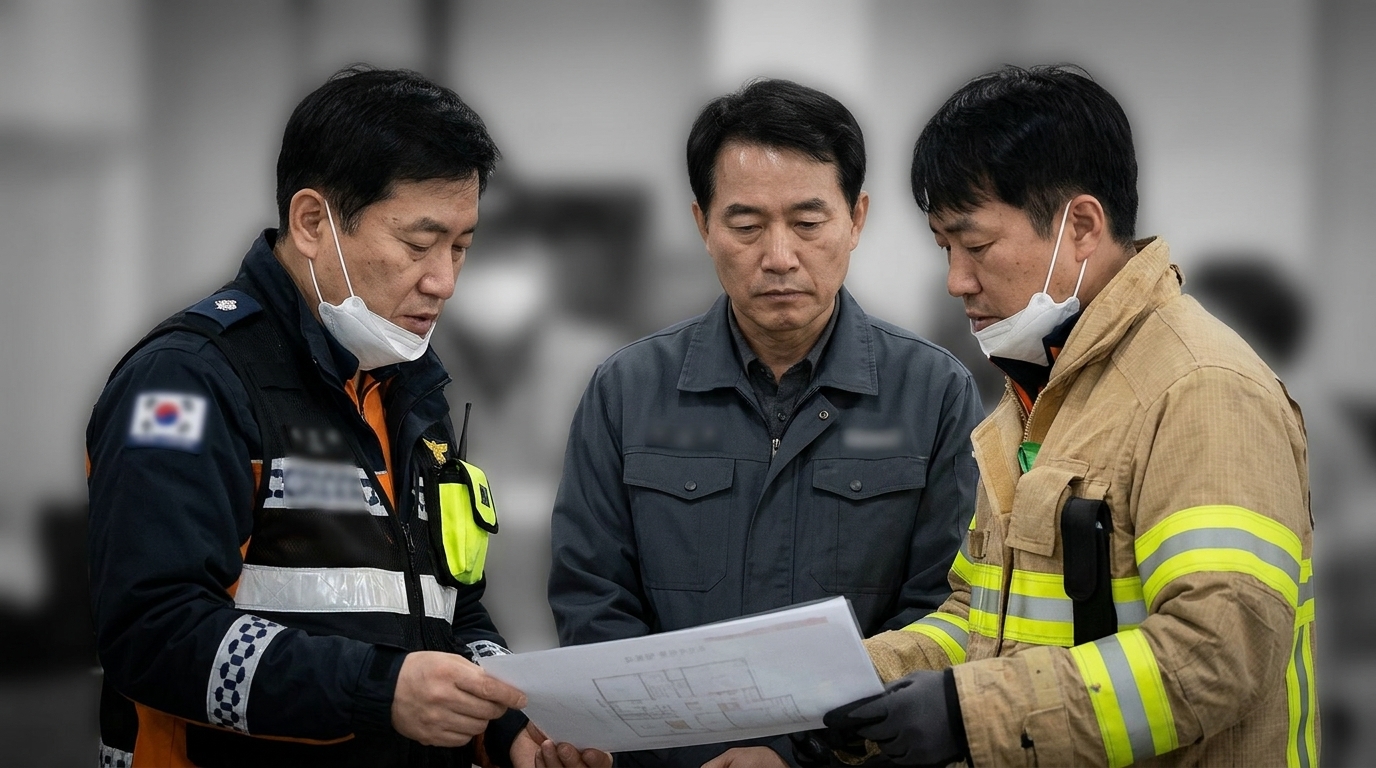
The fire accident at Daejeon Anjeon Gong-up has drawn comparisons to the AriCell disaster two years ago. The current incident, which caused over 70 casualties, has raised questions about lax safety management. At the time of the AriCell disaster, initial firefighting was delayed due to lithium batteries, and the sandwich panel structure worsened casualties, leading to an assessment that the current accident shares similar characteristics.
The Anjeon Gong-up fire was exacerbated by the handling of difficult-to-extinguish chemicals and insufficient safety management. Volatile organic compounds and cutting oil residue were left unattended inside the factory, spreading the fire, while an illegally extended rest area hindered workers' escape. Sodium, a Class 1 hazardous substance that explodes on contact with water, was present at the scene, complicating initial firefighting efforts. The sandwich panel structure, which aids the spread of toxic gases and increases the risk of collapse, was also analyzed as a factor that amplified the scale of the damage. Investigation results indicated that volatile organic compounds, cutting oil residue inside the factory, and the illegally extended rest area contributed to the fire's spread and obstructed escape routes. The sandwich panel structure was also identified as a cause for increased toxic gas diffusion and collapse risk.
Yang Han-woong, representative of the AriCell disaster victims' families, and Kim Mi-suk, representative of the Kim Yong-gyun Foundation, visited the joint memorial altar for the Daejeon Anjeon Gong-up fire victims on the 23rd, pointing to societal complacency regarding safety.
Police are investigating the exact cause of the accident, having raided the headquarters of Anjeon Gong-up and the representative's residence.