AI Finds No Precedent for Spouses Serving Simultaneously as Supreme Court or Constitutional Court Justices

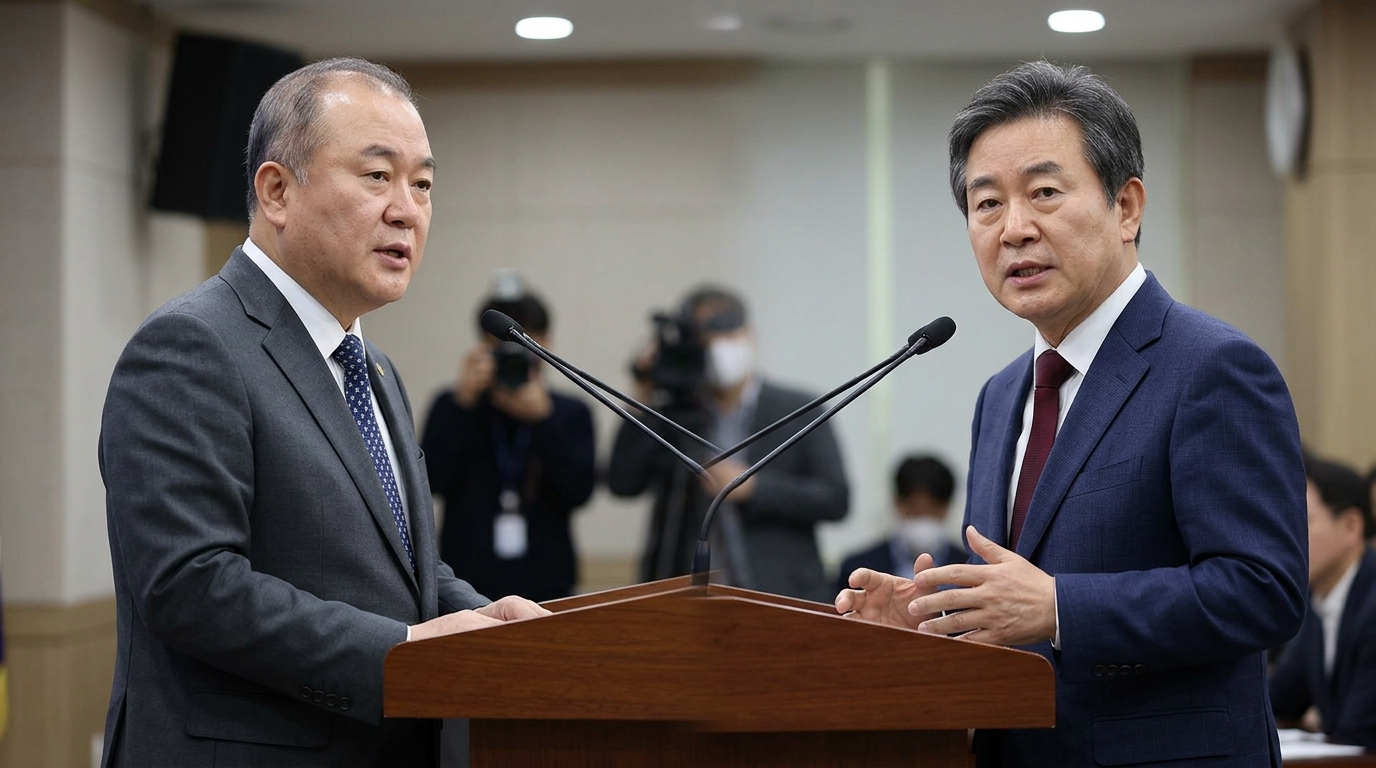
When the latest artificial intelligence (AI) was asked about cases of spouses serving simultaneously as Supreme Court Justices or Constitutional Court Judges in Western democratic countries, it initially displayed errors before ultimately stating that 'no officially confirmed cases were found.' This is being discussed as a backdrop to the ongoing difficulties in South Korea's Supreme Court justice nominations.
The nomination process for a successor to Supreme Court Justice Roh Tae-hak, who retired on March 3, has been stalled for over a month. The candidate pool was narrowed down to Judges Kim Min-ki, Park Soon-young, Son Bong-ki, and Yoon Sung-sik on January 21, but time has passed due to disagreements between the Presidential Office and the Chief Justice.
The core issue is that Judge Kim Min-ki's husband is Constitutional Court Justice Oh Young-joon. Justice Oh is one of two Constitutional Court Justices appointed by President Lee Jae-myung, and Judge Kim was initially considered by the Presidential Office as a candidate for Supreme Court Justice.
In the past, there was a 'common sense solution' for similar situations. During the tenure of Chief Justice Lee Yong-hoon, when Judges Lee Sang-hoon and Lee Gwang-beom, who were being considered for Supreme Court Justice, were brothers, the younger brother, Lee Gwang-beom, expressed his intention to resign, after which Lee Sang-hoon was nominated as a Supreme Court Justice candidate.
Supreme Court Justices are appointed by the President upon the recommendation of the Chief Justice and with the consent of the National Assembly. In reality, the President and the Chief Justice coordinate behind the scenes, and appointments are delayed if the two parties do not agree.