National Assembly Speaker Cho Jeong-sik Signals Constitutional Amendment Talks, Previews Legislative Drive

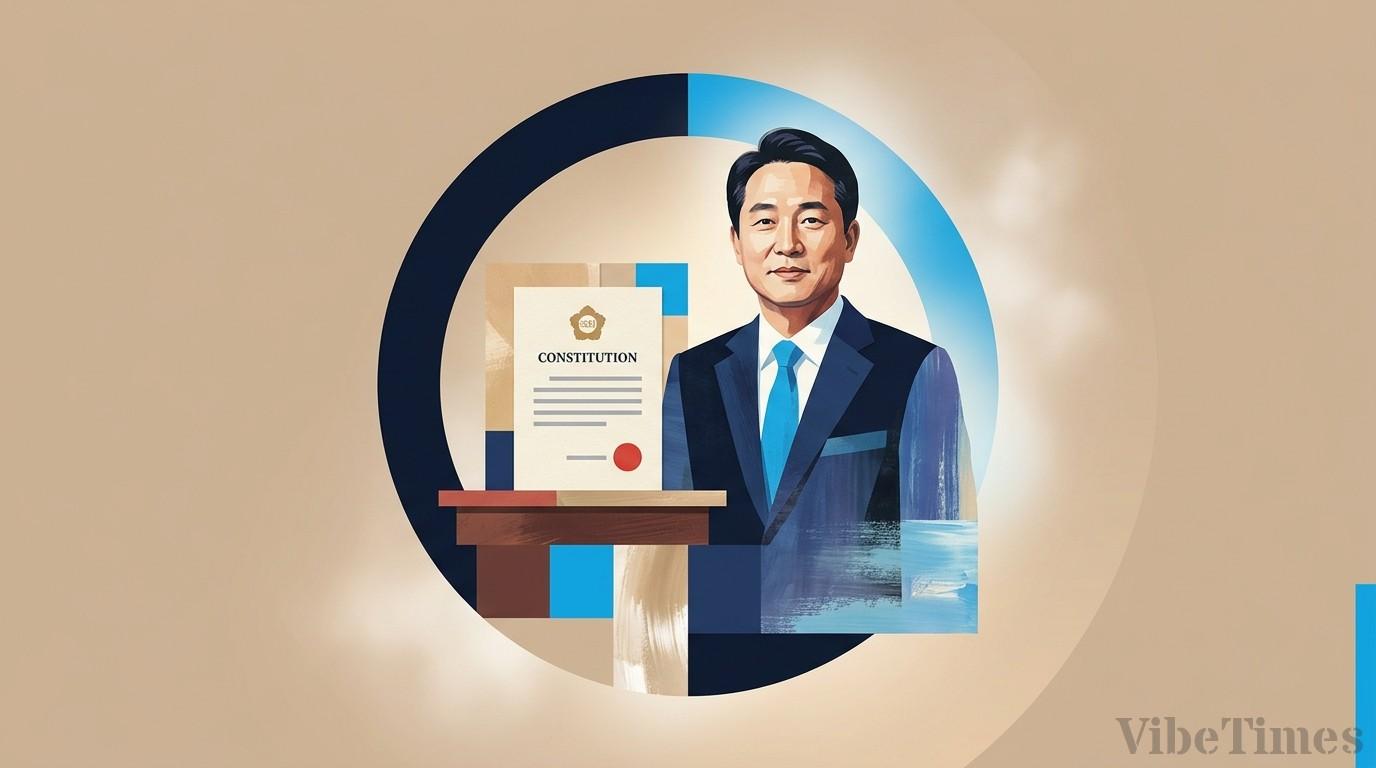
New National Assembly Speaker Cho Jeong-sik Signals 'Constitutional Amendment Discussions,' Announces Legislative Drive
Cho Jeong-sik, a six-term lawmaker from the Democratic Party of Korea, has been elected as the Speaker for the latter half of the 22nd National Assembly. Elected in a plenary session on the 5th with an overwhelming 267 out of 276 votes cast, Speaker Cho will lead the National Assembly for the next two years. His election is anticipated to be a critical turning point amid the political struggle for dominance between the ruling and opposition parties. In particular, the 'constitutional amendment discussions next year,' mentioned by the newly elected Speaker Cho, are expected to become a core issue in the future operation of the Assembly.
Immediately after his election, Speaker Cho stated, "The first half of the Assembly was a constitutional defense body that overcame a crisis akin to internal rebellion." He added, "The latter half of the Assembly will also unswervingly continue its mission as the last bastion of democracy." Cho, who automatically becomes an independent lawmaker by leaving the Democratic Party upon his election as per the National Assembly Act, is classified as a key figure within the pro-Lee Jae-myung faction. Consequently, attention is focused on the impact his tenure as Speaker will have on the Lee Jae-myung administration's state affairs and its legislative agenda. Especially as the Democratic Party has already signaled its intent to pass contentious bills like the 'Manipulated Prosecution Special Prosecutor Bill' and the amendment to the Criminal Procedure Act, which would abolish the prosecution's supplementary investigation rights, following the local elections, it is widely predicted that Speaker Cho's leadership will provide significant momentum for legislation led by the Democratic Party.
During the party's primary, Cho secured his nomination for Speaker without a runoff, garnering support from the pro-Lee faction and progressive first-term lawmakers. This background suggests a strong possibility that, as Speaker, he will vigorously push the pro-Lee faction's policy agenda in the Assembly. Furthermore, in his past legislative activities, Speaker Cho served on the Education Committee, listening to voices from the field regarding education policy and working to draft legislation for future generations and balanced regional development. Such experiences could offer clues to his policy direction as various bills are processed in the National Assembly.
Prospects for Full-Fledged Constitutional Amendment Discussions and Shifts in the Political Landscape
The most significant topic for the new National Assembly Speaker Cho Jeong-sik is 'constitutional amendment discussions next year.' This is likely to go beyond mere political rhetoric and become a core agenda item that will determine the direction of the National Assembly's operations throughout its term. The current South Korean Constitution, amended in 1987, has been in place for a considerable time, and voices calling for its reflection of societal and economic changes and new era demands have consistently been raised. Particularly, considering recent election results and the current political dynamics, constitutional amendment discussions could serve as an important tool to strengthen the legitimacy of a new administration and secure momentum for state governance.
The Democratic Party has already made clear its intention to push for legislation related to the judicial system, such as the 'Manipulated Prosecution Special Prosecutor Bill,' leveraging its victory in the local elections. If these bills are linked with constitutional amendment discussions, it could bring about significant changes to the existing political and judicial order. Speaker Cho's tenure is expected to contribute to creating an environment where such bills can be discussed quickly and efficiently in the National Assembly. While consensus between the ruling and opposition parties is essential for a crucial matter like constitutional amendment, given Speaker Cho's status as a key pro-Lee figure, the Democratic Party's position may be more strongly asserted in negotiations with the ruling party.
Meanwhile, President Lee Jae-myung stated at the Memorial Day ceremony, "Only through punishing betrayal can righteous integration be achieved," urging societal discussion on the criteria for distinguishing between devotion and betrayal. This statement, which can be linked to various social issues such as judicial reform or historical matters, could become an important guideline for future state governance. If Speaker Cho initiates constitutional amendment discussions in earnest, concrete proposals for achieving righteous integration under the current constitutional framework are likely to emerge during the discussions. For example, debates on the separation of powers structure or the guarantee of citizens' fundamental rights, as stipulated in the Constitution, could become active.
These constitutional amendment discussions could impact the entire political landscape of South Korea, extending beyond mere revisions of constitutional articles. A redefinition of party policy lines, the emergence of new political forces, and changes in the role of civil society could all interact. How the constitutional amendment discussions unfold under Speaker Cho's leadership will be a crucial barometer for gauging the future of South Korean politics. As Speaker, he bears the weighty responsibility of coordinating differences between parties, building national consensus, and undertaking the historic task of advancing the South Korean Constitution.
Outlook on National Assembly Operations and the Legislative Environment
The election of Cho Jeong-sik as the new Speaker is expected to clarify the operational direction for the latter half of the 22nd National Assembly. In particular, expectations and concerns coexist regarding the passage of contentious bills led by the Democratic Party. Bills that are currently causing sharp divisions in political circles, such as the 'Manipulated Prosecution Special Prosecutor Bill,' are likely to gain speed under Speaker Cho's direction. This suggests that the National Assembly's function will extend beyond mere bill deliberation to playing a central role in resolving political disputes and mitigating social conflicts. For instance, bills proposed by the Democratic Party, such as 'separation of prosecutorial investigation and indictment' or 'adjustment of investigative authority for the Corruption Investigation Office for High-ranking Officials,' are sensitive issues that could shake the foundations of the judicial system, and intense debate within the Assembly is anticipated. This necessitates meticulous analysis and easy-to-understand explanations for bills that may appear complex to both legal professionals and the general public.
Furthermore, analyses suggest that Speaker Cho will inherit the Lee Jae-myung administration's state philosophy, emphasizing the "combination of growth and democracy" and a "path of livelihood, pragmatism, and expansion." This suggests a potential attempt at a policy approach that seeks to achieve both economic growth and the enhancement of social values, moving beyond simple partisan logic. Indeed, President Lee Jae-myung, at the Memorial Day ceremony, mentioned "establishing a precedent for preventing recurrence through the law on the forfeiture of pro-Japanese collaborator assets," demonstrating an effort to simultaneously pursue historical justice and address current social issues. Such remarks by the President can serve to guide the policy direction for bills to be discussed in the National Assembly, which will in turn influence Assembly operations.
There are also points of attention regarding the efficiency of National Assembly operations. Speaker Cho has previously emphasized the need to create a highly productive Assembly. This can be interpreted as an intention to prioritize the passage of practical livelihood-related bills by enhancing the speed and rationality of parliamentary proceedings. However, it is crucial not to overlook the fundamental principle of democracy, which requires listening to the opinions of minority parties and engaging in sufficient deliberation. The People Power Party and other opposition parties have maintained a critical stance on the Democratic Party's unilateral progress during the Speaker election process and are expected to demand a role of checks and balances in future Assembly operations. Therefore, Speaker Cho faces the challenge of exercising delicate leadership to not only enforce the majority party's will but also respect minority opinions and establish a framework for cooperation.
In conclusion, the election of Cho Jeong-sik as the new National Assembly Speaker is a significant event that will determine the operational direction of the 22nd National Assembly in its latter half. Under his leadership, constitutional amendment discussions are expected to gain momentum, and contentious bills led by the Democratic Party are likely to be pursued. During this process, attention will be focused on whether concrete policies for economic growth and livelihood stability can be shaped, or if the Assembly's functions will stagnate due to political confrontation. The National Assembly must read the public's aspirations based on the results of the June 3rd local elections, which saw participation from over 15 million voters, and serve as a forum for productive discussions for social development.