June 29 Legislative Report: 22nd National Assembly Intensifies Debate on Livelihood, Security, and Reform Bills

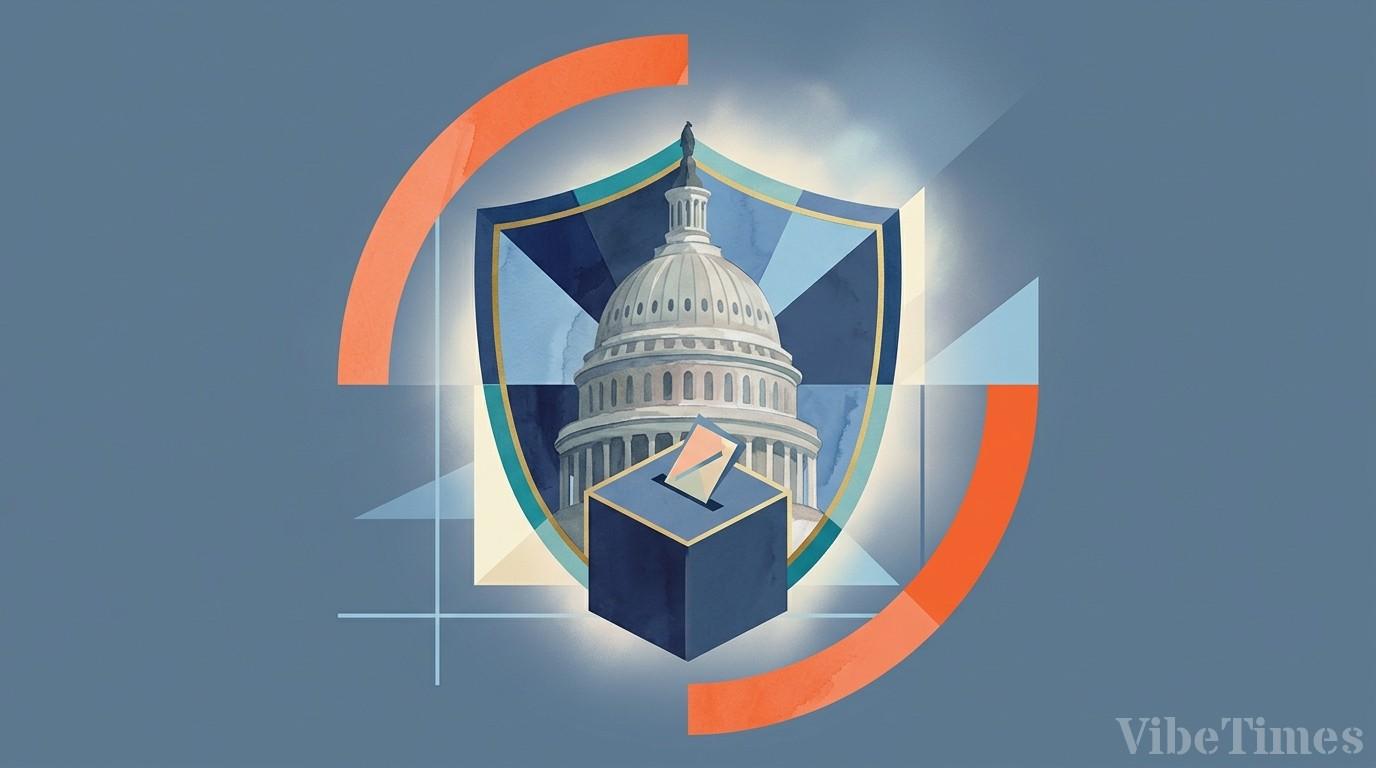
22nd National Assembly Gears Up for Discussions on Livelihood, Security, and Reform Bills
Since the opening of the 22nd National Assembly, both the ruling and opposition parties have faced difficulties in negotiations over parliamentary committee appointments, the first step in parliamentary operations. However, within the various standing committees, discussions on a range of bills encompassing livelihood stabilization, national security enhancement, and social/economic system reforms are intensifying. Notably, lawmakers from the Democratic Party of Korea are actively pursuing legislative activities, including urging the swift passage of bills to resolve labor issues like the 'Yellow Envelope Bill,' participating in policy inquiries on science and technology, and engaging in debates for the approval of livelihood-related legislation. The People Power Party is also vying for legislative influence by proposing prosecutorial reform bills and focusing on advocating for the party's stance.
The 22nd National Assembly has seen numerous bills proposed or enter the deliberation process, particularly those aimed at stabilizing the livelihood economy and securing future growth engines. Representative Lee Woo-jin (Party for the People) of the Science, ICT, Broadcasting, and Communications Committee is working to establish institutional foundations for strengthening national future competitiveness by participating in policy inquiries related to science and technology. Additionally, the push for the speedy passage of the amendment to the Trade Union and Labor Relations Adjustment Act, known as the 'Yellow Envelope Bill,' is underway, with participation in discussions to find a balance between labor market flexibility and stability. Representative Lee Ji-yoon (Party for the People) presented strengthening penalties and expanding protections for crimes against children and adolescents as her general election pledge and has begun reviewing related legislation since the opening of the 22nd National Assembly, leading efforts for institutional improvements to protect the socially vulnerable. As legislative activities unfold across various sectors, the outcomes of bills expected to have a significant impact on people's daily lives are drawing attention.
Meanwhile, discussions are actively underway in the National Assembly to ensure transparency and fairness in the election management system. Following the recent 'ballot paper shortage incident,' the Democratic Party is pursuing a plan to dissolve the National Election Commission (NEC) and change its name and composition through constitutional amendment. Representative Song Ki-heon (Democratic Party of Korea) stated at the 6th session, "We will dissolve the National Election Commission through constitutional amendment," vowing to transform it into a constitutional body that broadly guarantees citizens' right to participate. A plan to include the NEC under the Board of Audit and Inspection's audit scope to ensure transparency in its overall finances and operations has also been proposed. The NEC currently operates under a system maintained since democratization in 1987, and the Democratic Party's proposal signals a fundamental re-evaluation of this system. The People Power Party also shares a consensus on the necessity of 'reform at the level of dissolution' for the NEC, but maintains a stance that prioritizing an independent counsel investigation to uncover the truth over constitutional amendment is more appropriate, showing a stark difference in positions between the ruling and opposition parties. These discussions on NEC reform are highly likely to emerge as a significant contentious issue in the National Assembly moving forward.
US Congress Moves to Strengthen Security and Election Systems
Legislative activities aimed at protecting national security and democratic systems continue steadily in the U.S. Congress. In 2021, Representative Eric Swalwell (Democrat) co-sponsored a bipartisan amendment to the National Defense Authorization Act (NDAA), which included measures to counter China's military threats and strengthen cooperation with allies. This is evaluated as a significant move to maintain regional security order and outline the direction of U.S. foreign and defense policy. Furthermore, in 2019, Swalwell introduced the Election Security Act, aiming to protect U.S. elections from foreign government interference online, thereby striving to block external forces threatening the foundations of democracy.
The introduction of such legislation is interpreted as part of broader congressional activities aimed at ensuring U.S. domestic political and social stability, extending beyond mere foreign and security policy. Swalwell's role as a member of the House Permanent Select Committee on Intelligence contributes to the collection and analysis of national security information. His experience on the House Committee on the Budget also allows him to exert influence over the allocation of defense and security-related budgets. This demonstrates Congress's systematic commitment to responding to the complex security threats facing the United States. Notably, the fact that the 2021 NDAA amendment garnered bipartisan support suggests that cooperation between parties is possible on security issues. This is expected to include strengthening cooperation with allies, expanding information sharing, and establishing joint response systems, which will likely have a considerable impact on the international security environment.
Meanwhile, the possibility of reintroducing legislation mandating stronger voter identification checks has been mentioned in the U.S. House of Representatives. Speaker Mike Johnson (Republican) stated in an appearance on Fox News that he intends to reintroduce this bill by including it in the budget reconciliation process. This bill mandates voter identification or proof of citizenship when casting a ballot, aiming to enhance election fairness and voter confidence. However, such moves could spark political debate alongside concerns that they might restrict voting access. The debate surrounding voter ID laws has been a persistent issue in U.S. politics for years. This decision to reintroduce the bill reflects Congress's commitment to strengthening the election system and preventing electoral fraud, while simultaneously carrying potential elements of social division.
Analysis of Key Bill Votes and Member Dissent
Major bills, including the "Amendment to the Korea Rural Community Corporation and Farmland Management Fund Act (Alternative Bill)" and the "Amendment to the Act on Promotion of Saving and Recycling of Resources," were recently put to a vote in the National Assembly plenary session. In particular, the "Amendment to the Korea Rural Community Corporation and Farmland Management Fund Act" passed with 64 votes in favor and 10 against. However, during this process, 10 lawmakers from the People Power Party voted against or abstained, deviating from the party line and showing signs of internal dissent. Lawmakers such as Kim Jang-gyeom, Park Soo-young, Lee Chul-gyu, Seong Il-jong, Yoon Han-hong, Park Dae-chul, Kim Do-eup, and Kang Min-guk were included in the list of those who dissented. This suggests that differing views exist within the party regarding farmland management and the corporation's operations.
Similarly, in the vote for the "Amendment to the Act on Promotion of Saving and Recycling of Resources," 8 People Power Party lawmakers showed dissent from the party's position. Shin Dong-wook, Kim Mi-ae, Yoo Sang-bum, Kang Seung-kyu, Lee Chul-gyu, Kim Seung-soo, Park Soo-young, and Kim Eun-hye took actions different from the party line in this vote, which can be interpreted as reflecting diverse opinions within the party on resource recycling promotion policies. Notably, Lee Chul-gyu and Park Soo-young participated in dissenting from the party line on both bills, which is analyzed as a representative case of voting according to conviction on specific issues or internal party disagreement.
Such instances of internal dissent demonstrate that even when the ruling party can pass bills unilaterally in the 22nd National Assembly, individual lawmakers' judgments, considering the substantive content and societal impact of the bills, come into play. Furthermore, this suggests that the inherent right of National Assembly members to vote according to the interests of their constituencies, the positions of specific industries, or their personal convictions is being exercised, separate from the party's unified decision-making system. If similar dissent from the party line occurs in future votes on contentious bills, it will serve as an opportunity to deepen the analysis of parties' decision-making processes and the role of lawmakers, along with highlighting the need for societal discussion on those bills. Amidst the ongoing difficulties in negotiations for the formation of parliamentary committees, such as the Democratic Party considering monopolizing all 18 standing committee chairmanships, these internal divisions could also act as a variable in future bill processing.