President Lee Jae-myung's Controversy Over 2.9 Billion Won Sale of Bundang Apartment and Continued Circumvention of Regulations

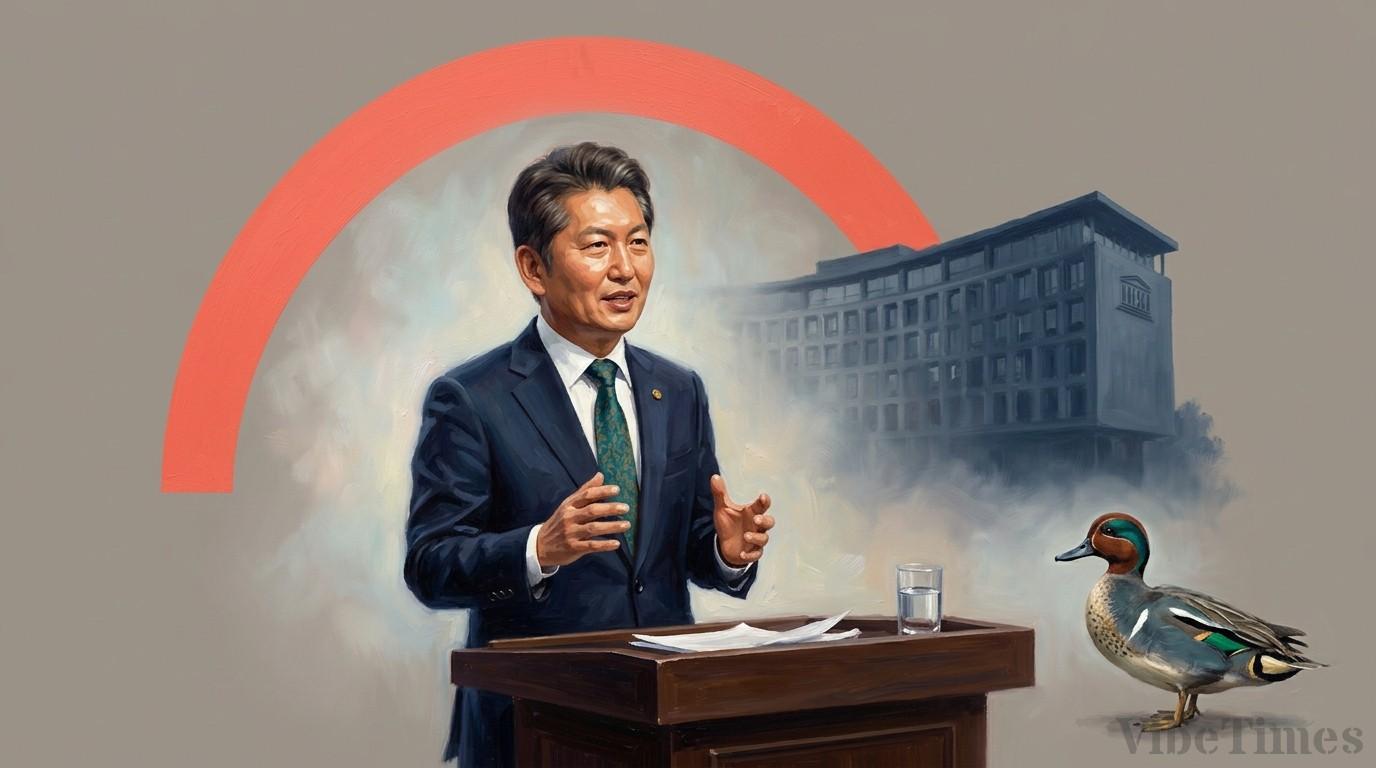
The Essence of the Controversy Over President Lee Jae-myung's 2.9 Billion Won Sale of a Bundang Apartment
Social repercussions are mounting after President Lee Jae-myung sold an apartment in Bundang-gu, Seongnam-si, Gyeonggi Province, for 2.9 billion won. In particular, the revelation that he established a maximum mortgage claim of 1.77 billion won to accommodate the buyer's financial situation has sparked a controversy over fairness regarding real estate market regulations. Rep. Song Eon-seok of the People Power Party strongly criticized this transaction on Facebook on the 20th. The criticism highlights that while ordinary citizens struggle even to sell their homes—let alone buy one—due to loan regulations, the President himself has chosen a method that bypasses these rules.
The current real estate market finds itself in a situation where transactions by actual end-users are stifled under the government's strong policy of suppressing loans. Rep. Song pointed out that even if the transaction is legally permissible, it is unlikely to gain public sympathy. This comes at a time when doubts are being raised about the effectiveness of policy, as housing prices in Seoul are actually rising, and apartments in Gangbuk areas are frequently trading for over 2 billion won. Ultimately, this sale is being criticized as an event where the ruling power directly revealed the distorted reality of the real estate market. The opposition is intensifying its attacks, arguing that this amounts to an admission of failure for a government housing policy that was solely focused on blocking loans.
Variations in Presidential Eligibility and the Achievement of the '3·4·5 Vision'
This political standoff is expected to have a significant impact on future state administration and the next political landscape. According to a Gallup Korea opinion poll, President Lee Jae-myung's recent approval rating stood at 52%, down 1 percentage point from the previous week. In a Realmeter survey, positive assessment fell to 48.4% and negative assessment rose to 48.0%, turning state affairs support downward for the first time in three weeks. As public frustration with real estate policy accumulates, the controversy over high-level real estate transactions could act as a decisive trigger for a decline in approval ratings.
To achieve the government's presented '3·4·5 Vision'—a potential growth rate of 3%, a top 4 ranking in exports, and a national income of $50,000—national unity and thorough trust in policy are prerequisites. However, if policy consistency is compromised by suspicions of regulatory circumvention, the achievement of economic goals may inevitably be delayed.
From an economic analysis perspective, stabilizing the real estate market is a core task directly linked to household debt issues. It has been proven that short-term demand suppression measures, such as blocking loans, cannot resolve the fundamental instability of the market. There is a concern that the President's method of selling his apartment may be recorded as a representative case that negatively affects the market. The longer the controversy over fairness persists, the greater the likelihood that the political momentum to push for livelihood economic policies will rapidly dissipate.
Budget Bureau Chief Jo Yong-beom's Promotion to Vice Minister and Fiscal Strategy Direction
Amidst this, the administration has made a personnel change, replacing the overall baton of fiscal management to restore economic vitality. On the 20th, President Lee Jae-myung appointed Jo Yong-beom, the current Budget Bureau Chief, as the new Vice Minister of the Ministry of Economy and Finance. This appointment is interpreted as an intention to further solidify the current government's fiscal policy stance. By elevating the key figure in budget planning to the position of Vice Minister, the administration's will to focus limited resources on strategic investment areas is being analyzed.
To manage the political fallout triggered by the real estate regulation controversy, immediate improvements in real economic indicators are urgent. The new Vice Minister, Jo Yong-beom, is expected to be tasked with inspecting the government's expenditure structure to maximize efficiency. However, fierce criticism from the opposition party suggests that political conflict during the fiscal deliberation process is inevitable. Overcoming the opposition's offensive and opening channels for communication will be a major task for the Vice Minister.
Ultimately, the controversy over the sale of the Bundang apartment is serving as a political test bench that goes beyond the simple exercise of individual property rights. The key issue is how to consistently implement in policy the philosophy of 'guaranteeing basic living conditions for all citizens' emphasized in the President's inaugural address. This is a time that calls for sophisticated follow-up measures to mitigate economic and political ripple effects and quell market anxiety. If improvements are not made to correct the equity of real estate regulations, there is a high probability that the center of gravity for state administration will be shaken.
