AIDC Power Solution: Solar and ESS Main with Gas Backup

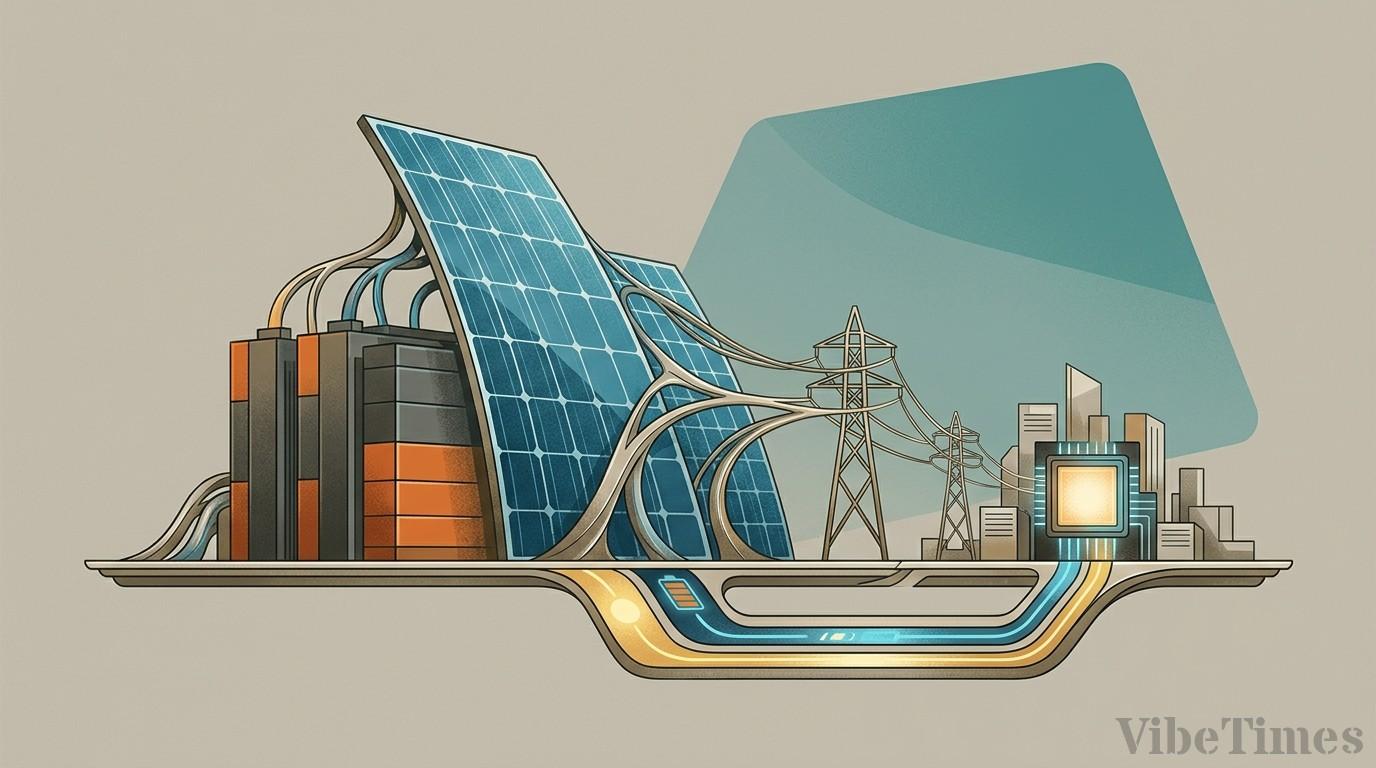
Amidst rapidly changing power demands due to the surge in Artificial Intelligence Data Centers (AIDCs), a flexible power supply method—utilizing solar and Energy Storage Systems (ESS) as primary sources and operating natural gas power plants only for emergencies—is gaining traction. This is because existing large-scale power plants, which operate at constant levels, struggle to handle the drastic power fluctuations caused by AI infrastructure.
According to Federal Energy Regulatory Commission (FERC) data, the cumulative data center capacity in the U.S. is expected to reach approximately 50GW by the end of 2025. The scale currently under construction has surpassed 30GW, and the additional pipeline is calculated to be over 200GW. Professor Hong Jong-ho of Seoul National University’s Graduate School of Environmental Studies and Han Byung-hwa, Director at Eugene Investment & Securities, diagnosed that this massive demand is revealing the limitations of existing power grids, with power shortages and delays in infrastructure expansion acting as key bottlenecks.
The power consumption pattern of AI data centers is starkly different from typical industrial facilities. When users query AI and graphics processing units (GPUs) begin inference, power usage surges instantaneously, only to plummet again once data transmission is complete. This unstable consumption pattern repeats hundreds of thousands of times a day. While the sheer shortage of power is an issue, controlling the rapid volatility of peak power occurring on a second-by-second basis has emerged as the core of system operations.
As constructing new power grids proves difficult, integrated models optimizing existing power infrastructure are rapidly emerging. A representative example involves collaboration between U.S. idle gas power plants that have already secured grid connection permits—known as Gas Peaker plants—and data center developers. This approach covers over 80% of daily power demand with solar and ESS, operating the peaker plant as auxiliary power only during instantaneous shortages. This allows for the recycling of the plant's grid connection authority while reducing grid load. Director Han Byung-hwa analyzed that the economic feasibility of combining solar and ESS has entered a level similar to, or lower than, existing combined cycle gas power generation.
AIDC-related mega-projects are essentially targeted at overseas demand. Approaches are being discussed to balance the economic impact on local communities with the increasing power burden.