Kwon Chongyang Special Counsel Indicts Four People Power Party Lawmakers, Including Na Kyung-won, Without Detention

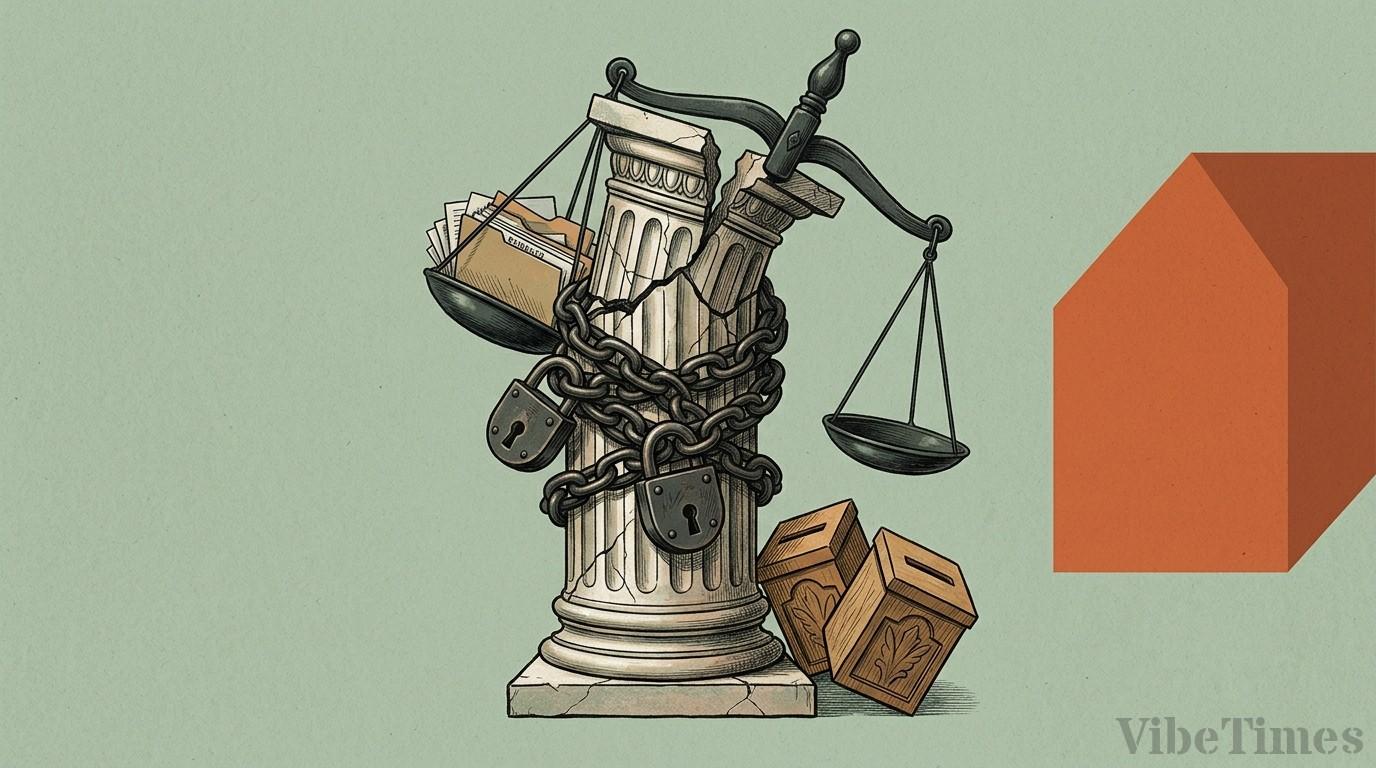
Tension Rises Between Judiciary and Parliament: Special Counsel Indicts PPP Lawmakers Amid Political Fallout
On the 14th, the second team of special prosecutors, led by Special Counsel Kwon Chongyang, referred four People Power Party lawmakers—Na Kyung-won, Kim Gi-hyeon, Yoon Sang-hyun, and Kwon Young-jin—to trial without detention on charges of obstructing the execution of an arrest warrant for former President Yoon Suk Yeol. This indictment overturns a previous dismissal by the special counsel regarding Cho Eun-seok’s insurrection allegations, signaling a judicial intent to strictly apply the law to physical interference by political figures in the execution of official duties by investigative agencies. Through a public statement, the special counsel team announced that it applied charges of obstruction of justice to these lawmakers, a move seen as directly targeting the series of obstructions to judicial procedures that occurred following the December 3 martial law declaration.
The legal and political communities are focusing on the symbolism of this indictment. A fierce legal battle is anticipated over whether the collective response by ruling party lawmakers to the sensitive issue of a former president’s arrest constitutes legitimate political activity or a criminal act undermining the rule of law. The indicted lawmakers immediately pushed back, denouncing the investigation as political suppression and a rampage by a "zombie" special counsel. This confrontation is expected to significantly impact the ruling party’s political standing and the landscape of inter-party relations, depending on future court rulings. With a series of indictments also targeting military figures, such as former Ground Operations Commander Gen. Kang Ho-pil, on suspicion of participating in insurrection, the scope of judicial responsibility appears to be expanding across the political spectrum.
Launch of NEC Special Counsel and Full-Scale Probe into Voting Rights Violations
As the candidate pool for a special counsel to investigate the ballot shortage and bid-rigging allegations from the June 3 local elections narrows, a high-intensity investigation into the National Election Commission (NEC) is anticipated. On the 14th, the NEC Special Counsel Public Recommendation Committee held its second meeting and recommended former Seoul Southern District Prosecutor Lee Tai-han and former Seoul High Prosecutor Lee Hyuk as final candidates. The President is required to appoint one of them as special counsel within three days under relevant laws, paving the way for the special counsel team to officially launch within the month. This investigation will focus on determining whether citizens' voting rights were infringed upon due to mismanagement or intentional interference by state institutions, going beyond simple administrative errors.
The market and civil society are noting that this special counsel investigation includes allegations of bid rigging within the NEC. If opacity is revealed in the paper supply and system construction processes within an institution meant to guarantee election fairness, it could lead to a decline in trust across the public sector. Experts predict that the NEC’s organizational restructuring and a comprehensive overhaul of the election management system will be inevitable based on the investigation's results. How the cooperation system between the Joint Investigation Headquarters and the special counsel is established will be a key variable determining the speed and efficiency of the investigation.
Legislative Battle Intensifies Over Education Issues and Historical Perception
Amid growing legal risks for politicians, legislative movements to protect educational authority and prevent historical distortion are gaining momentum in the National Assembly. Rep. Lee Nam-ho of the Rebuilding Korea Party announced five major education pledges aimed at unifying teacher groups and substantially strengthening educational rights, launching a policy brand. The bill explicitly codifies rights protection measures that teachers can actually feel, such as the effective abolition of zero-hour and eighth-period classes and a first-phase salary increase to improve teacher treatment. This holds significant policy meaning as it aims for supra-partisan strengthening of educational rights, moving beyond the existing framework dividing the education sector into conservatives and progressives.
The Democratic Party of Korea increased pressure by proposing the so-called "Lee Jin-seok Prevention Bill," which suspends the duties of public officials who denigrate the May 18 Democratization Movement for up to a year, targeting past remarks by Broadcasting and Communications Commission Chairman Lee Jin-sook. While the intent is to exclude historical distortion from the public sphere, the ruling party strongly opposes it, citing potential violations of freedom of expression and career choice. Legislative amendments to the high school credit system and the Private School Act, pushed by Reps. Yang Young-seok and Ban Jeong-mi, are also expected to face difficult negotiations in the legislative process as the justification of strengthening the public nature of education clashes with counterarguments regarding the infringement of school autonomy.
Political Uncertainty and Outlook for Legislative and Judicial Schedules
As the special counsel’s indictment of lawmakers coincides with the appointment of the NEC special counsel, the political landscape for the second half of 2026 is slipping into extreme uncertainty. The first trial for the lawmakers indicted on the 14th is expected to begin as early as next month, overlapping with the schedule of the regular National Assembly, where audits and budget deliberations are concentrated, further deepening inter-party confrontation. In particular, since the judiciary’s decision could directly determine whether the lawmakers retain their seats, a sense of crisis is inevitably heightening within the People Power Party. Depending on the impact of the special counsel’s results on public opinion, fluctuations in support rates for each party are expected to widen.
Regarding future legislative procedures, concerns have been raised that bills in the education and social sectors might be overshadowed by the special counsel political situation. Despite the Teachers’ Rights Protection Act and high school credit system legislation being directly linked to public livelihood, there is a risk they will be pushed down the priority list if the ruling and opposition parties focus on political battles over the investigation and indictments. However, if the transparency of the election system is secured through the NEC special counsel, it could serve as an opportunity to strengthen political legitimacy in the long run. Experts analyze that judicial accountability and policy solutions must proceed simultaneously to resolve political polarization and achieve substantial improvements in people's livelihoods.
