KOSPI Falls 25% from June Peak Despite Samsung Electronics, SK Hynix Tailwinds

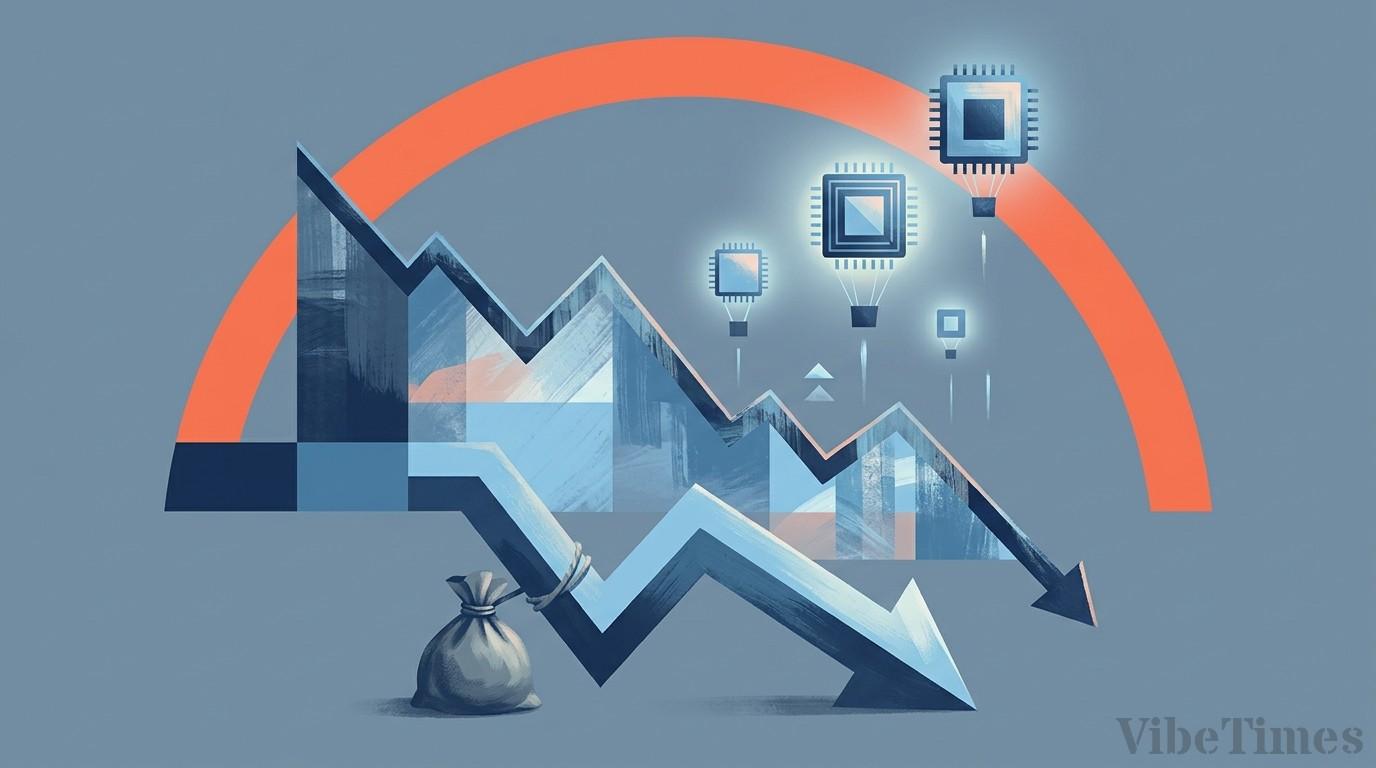
The reason the Korean stock market has fallen more than 25% from its June high, despite a steady stream of positive news regarding semiconductor stocks, lies in the surge in U.S. long-term treasury yields. Stock experts advise that in such times, investors must broaden their horizon beyond individual stocks to read the macroeconomic environment surrounding companies and industries.
The invisible force currently weighing down our market is U.S. long-term treasury yields. The succession of bullish news from Samsung Electronics and SK Hynix failed to translate into stock price gains. On August 17 (local time), the U.S. 30-year treasury yield surpassed 5.3%, marking the highest level in 19 years since 2007. Despite signs of cooling inflation and a weakening U.S. labor market reducing the likelihood of further Federal Reserve rate hikes, long-term rates have instead surged.
The fundamental cause lies in a decline in market confidence—specifically growing skepticism over whether the U.S. government can fully repay the principal. U.S. federal government debt surpassed $40 trillion as of August, and the annual fiscal deficit reaches approximately $1.8 trillion, or 6% of GDP. With the tax cut policies from the Trump administration combined with pledges to increase defense spending by over 50% to $1.5 trillion annually, the fiscal burden is deepening. Kit Juckes, Global Head of FX Strategy at Société Générale, stated, "With U.S. public debt hitting 100% of GDP and the fiscal deficit continuing to soar, the willingness of foreign investors to buy will become an increasing issue," adding, "Eventually, the U.S. will be forced into a situation where it must either tighten fiscal policy, accept high borrowing costs, or allow a weaker dollar."
Treasury bonds are also facing more competitors. Big Tech companies, pouring astronomical funds into AI infrastructure, are buying up Nvidia AI chips and high-performance memory from Samsung Electronics and SK Hynix by issuing large-scale corporate bonds to raise capital. As U.S. government treasuries and Big Tech corporate bonds compete for the same pool of capital, an environment has been created where treasuries struggle to sell without raising rates.
U.S. treasury yields serve as a benchmark for global bond markets. Consequently, South Korea's 30-year government bond yield also hit a record high of 4.751% on the 18th, Germany's 30-year yield reached its highest level in 15 years, and Japan's 30-year yield approached an all-time high.
Amidst this, the U.S. Department of the Treasury announced on the 19th (local time) that starting next month, it would double the size of its long-term treasury buyback operations from $2 billion to $4 billion per session. On the 20th, when the news broke, the KOSPI index surged by 5.89%. However, the effect was fleeting. As structural issues regarding the fiscal deficit and oversupply of treasuries remained unresolved, the 30-year yield, which had dropped immediately after the announcement, returned to the mid-5% range within a day.
When holding government bonds alone yields significant interest income, the need to take on the risk of buying stocks diminishes. Rising interest rates further depress the present value of growth and tech stocks, which heavily rely on future growth expectations. Since 5-year and 10-year treasury yields serve as the benchmark for setting bank mortgage loan rates, they act as factors pressuring rising loan costs and depressing the housing market.
Lee Yoon-su, a professor at the Graduate School of International Studies at Seoul National University, explained, "This is not a temporary phenomenon but a trend that must be viewed as such. It is a matter of trust regarding the ability to repay national debt, and with the U.S. also facing a decline in confidence in the dollar, the interest burden on treasuries has already risen to surpass defense spending."
South Korea also faces difficulties in lowering long-term bond yields due to rising government debt and consecutive record highs in treasury issuance. Professor Lee added, "With the increased supply of treasury bonds, funds from institutional investors are tilting more towards stocks, causing a supply-demand mismatch. When supply increases but demand to absorb it fails to keep up, rising rates are a natural phenomenon."