Government to Address 'Marriage Penalty' System; President Lee Jae-myung to Host Lunch for All Democratic Party Lawmakers on the 28th

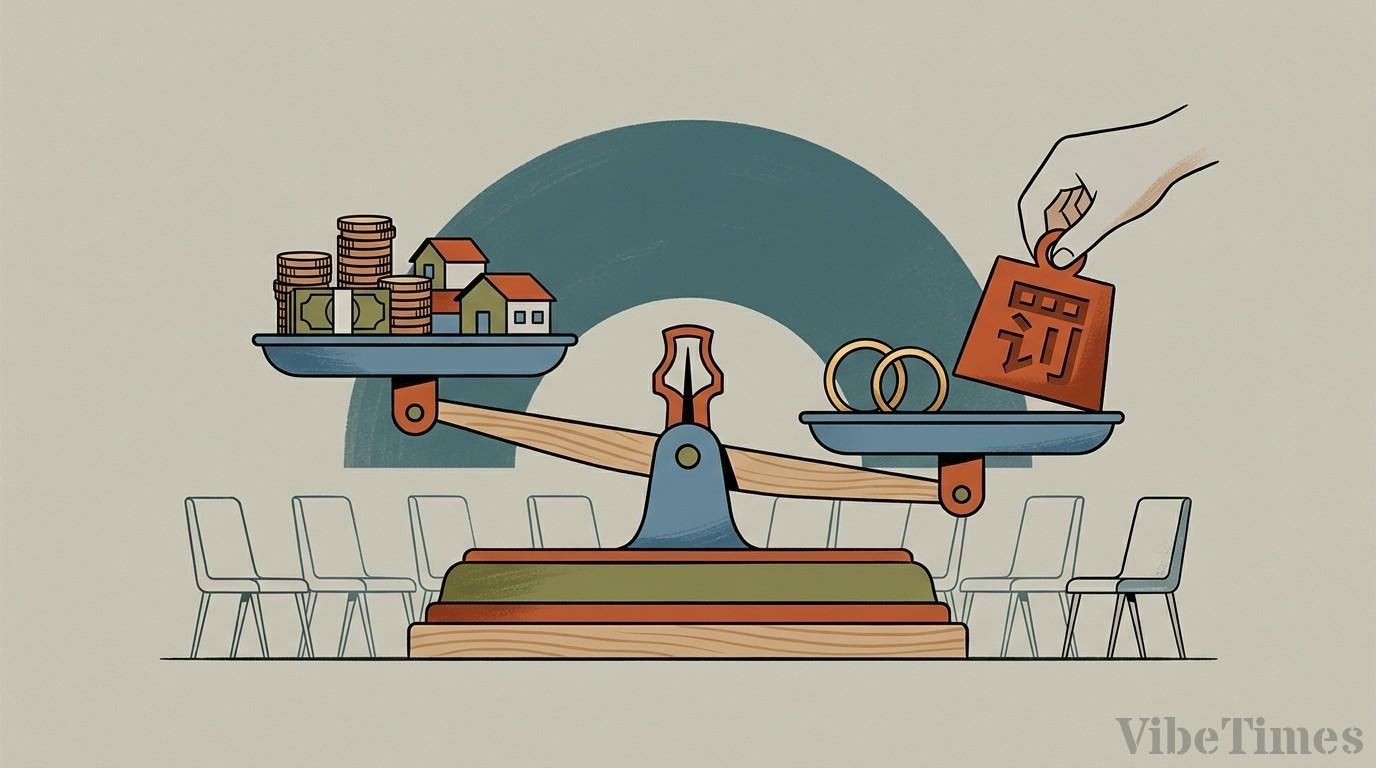
The presidential office has officially pointed out the problem of the so-called "marriage penalty," where married couples and families with children are actually placed at a disadvantage compared to unmarried or single-person households in terms of ultra-low interest rate loans and various tax benefits. The administration is now moving to amend the system. Following President Lee Jae-myung's recent demand for the resolution of the marriage penalty, he has invited all Democratic Party lawmakers to the presidential office for a luncheon on the 28th to accelerate related legislation.
What is the Problem with the Structure that Penalizes Marriage?
The term "marriage penalty" refers to a phenomenon where rational financial management and loan utilization become more difficult after marriage than when living alone, due to current regulations that apply based on the combined income and assets of two people. A prime example is mortgage loans. Regulations that are either not applied or are relaxed for single households become applied on a combined basis for spouses after marriage, reducing loan limits and increasing the burden of interest rates. According to an investigative report by News Prism, the lending review structure within the banking sector structurally embeds these disadvantages, causing many engaged couples to face institutional barriers from the very stage of planning apartment subscriptions and loans.
Analysts suggest that this outcome reflects the administration's policy direction since its inception to shift the paradigm of low birth rate countermeasures from "coercion and regulation" to "choice and support." The government plans to respect marriage and childbirth as personal choices, while redesigning the system to ensure that individuals do not suffer losses for making those choices. In fact, President Lee has consistently cited overcoming the low birth rate as the nation's top priority, and the marriage penalty has been identified as the first target for reform.
Luncheon with All Ruling Party Lawmakers on the 28th to Check Party-Administration Cooperation
Systemic improvements cannot be achieved through executive orders alone. Easing loan regulations and revising tax laws require the legislative consent of the National Assembly. President Lee has decided to invite all Democratic Party lawmakers to the presidential office for a luncheon on the 28th to solidify legislative cooperation. Previously, on the 19th, at a meeting with party leaders and candidates, he emphasized that "the party, the government, and the presidential office are a community of destiny sharing the calling of the times and partners in state affairs." As the party-administration relationship is restructured, the invitation of all lawmakers to this formal event is interpreted as an intention to secure legislative momentum for key issues such as the low birth rate and real estate.
However, the environment for governance is not without challenges. According to a Gallup Korea poll (3rd week of August, 18-20), President Lee's approval rating for state affairs stood at 45%, up 1 percentage point from the previous week, but positive and negative evaluations remain tightly matched at 45% each. With data suggesting his approval ratings are hitting daily lows and downward pressure persists, analysts argue that tangible livelihood policies, like easing the marriage penalty, are politically necessary to rally the ruling party's support base.
Ripple Effects on the Market and Industry
If loan regulations are eased, the benefits will flow directly to the banking sector and the housing market. As loan accessibility improves for newlyweds and engaged couples, the demand for first homes is expected to flow into the subscription and resale markets, potentially revitalizing a stagnant housing transaction sector. Conversely, the challenge remains to precisely design limits and eligibility criteria to avoid conflict with the macroprudential policy goal of managing total household debt. The key will be structuring the system to focus on actual demand to ensure that alleviating the marriage penalty is not perceived as stimulating real estate speculation.
The credibility of the overall low birth rate policy will likely depend on how much tangible relief the government can secure for married couples and families with children through this reform. The task of modifying the combined standards for loans and taxes requires coordination among relevant agencies, including the Financial Supervisory Service, the Ministry of Land, Infrastructure and Transport, and the Ministry of Economy and Finance. Therefore, a significant push is needed to unveil the outline of the detailed plan within the year. The extent to which the ruling party lawmakers' legislative roadmap is concretized at the luncheon on the 28th will serve as the first indicator for gauging the future timeline.