August 23 Legislative Report: Rep. Jeong Jin-woo of Rebuilding Korea Party Proposes Amendment to Introduce Bail System for Unsentence Detainees

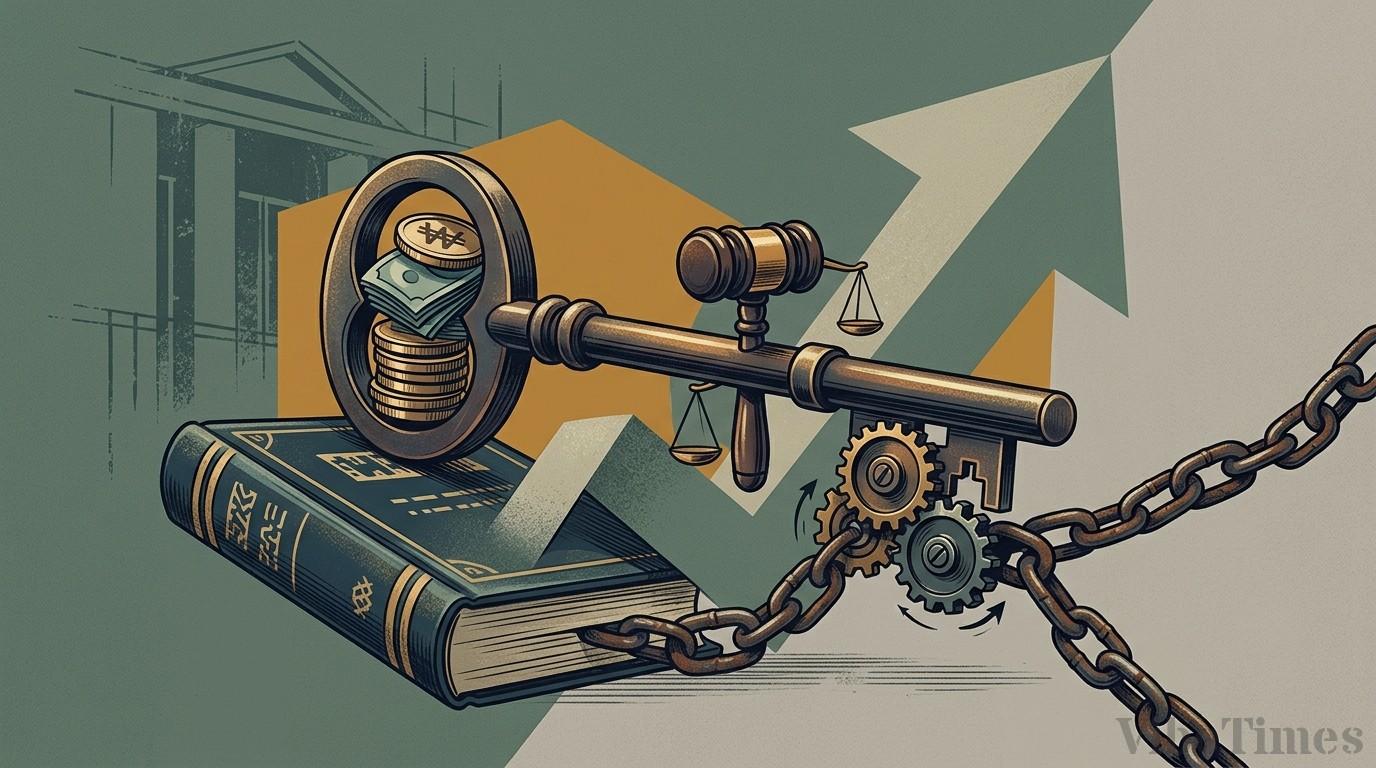
Release Bail System for Unsentence Detainees... Criminal Procedure Code Amendment Proposed
Rep. Jeong Jin-woo of the Rebuilding Korea Party has proposed an amendment to the Criminal Procedure Code centered on the introduction of a 'release bail system' that collects bail as a condition for the release of criminal unsentence detainees. Unsentence detainees refer to individuals incarcerated in detention centers and similar facilities before a final verdict has been reached. Rep. Jeong serves on the National Assembly's Education Committee and the Special Committee on Budget and Accounts, and is known to have been focusing his legislative efforts on reforming the criminal justice system amidst his activities.
The current Criminal Procedure Code includes habeas corpus reviews (warrants of detention validity) and the bail system as ex post facto checks on detention. However, there has been consistent criticism that the bail system—i.e., releasing a suspect in exchange for money or security—has a low acceptance rate in practice. Rep. Jeong's amendment is designed to fill this gap. If the release bail system is introduced, courts will have broader options to release unsentence detainees deemed to have a low risk of flight or evidence destruction upon the provision of financial security. This aligns with the constitutional value of the presumption of innocence, meaning everyone must be treated as innocent until a guilty verdict is finalized.
Key Analysis: Significance Amidst Criminal Justice Reform Trends
The significance of this amendment can be found in the broader trend rather than the institution itself. Recently in the National Assembly, discussions regarding reforms of criminal and judicial institutions have been concretizing; for instance, an amendment to the National Assembly Act aimed at accelerating legislative speed passed the plenary session. A representative example is the reduction of the 'fast-track' (expedited processing) review period from a maximum of 330 days to 90 days. Passed with 153 votes in favor out of 234 members present, this revision divides the review limit into 60 days for standing committees and 30 days for the Legislation and Judiciary Committee.
The Rebuilding Korea Party, to which Rep. Jeong belongs, is a party that has strongly pushed for reform legislation in the criminal justice sector, including prosecutorial reform. The background includes the party's active legislative activities, such as Rep. Kwon Hyuk-tae of the same party influencing the agenda operation as a member of the National Assembly Operating Committee, and Rep. Choi Moon-soon representing the revision of the Elementary and Secondary Education Act. The release bail system can also be seen as being in line with the party's policy line aimed at curbing excessive detention.
Market and Social Impact and Legislative Prospects
From an economic perspective, excessive detention leads to the cessation of the unsentence detainee's economic activities. Considering the ripple effects where business operations halt and employment becomes unstable, conditional release with security can reduce the social costs resulting from the detention of economic agents like entrepreneurs. Of course, counterarguments regarding the lack of management measures for flight risks are possible. The criteria for calculating the bail amount and the review procedures for security compliance are likely to emerge as key issues during the bill review process.
The possibility of legislative passage depends on the conflict structure between the ruling and opposition parties. In the National Assembly, partisan confrontation is intensifying, exemplified by the Democratic Party of Korea submitting a disciplinary motion calling for the expulsion of People Power Party Rep. Lee Jin-seok over a controversy regarding the disparagement of the May 18 Democratization Movement. Meanwhile, internal fissures within the People Power Party have also been confirmed, with seven members, including Kim Hee-jung, Park Dae-chul, and Park Soo-young, casting opposing votes against the party line during a vote on the Public Health Management Act. Similarly, 10 members, including Yoon Han-hong and Park Dae-chul, voted against the alternative bill for the Korea Rural Community Corporation Act, and eight members, including Kang Seung-kyu, Yoo Sang-beom, and Kim Eun-hye, opposed the revision of the Resource Recycling Promotion Act, complicating the voting landscape.
For Rep. Jeong Jin-woo's amendment to pass the plenary session hurdle, it must undergo review by the Legislation and Judiciary Committee. Unless it is a solely opposition-initiated measure, negotiations between the ruling and opposition parties are essential. However, given the social consensus on the need to improve the detention system, if details regarding security management and refund procedures are refined to achieve cooperation, there is a possibility of progress during the next regular National Assembly session. Ultimately, if this bill passes, it is expected to lead to tangible changes, such as a decrease in the population of unsentence detainees and an alleviation of the burden on detention facilities.