AI's Climate Impact: Greenhouse Gas Emissions Outpace Benefits

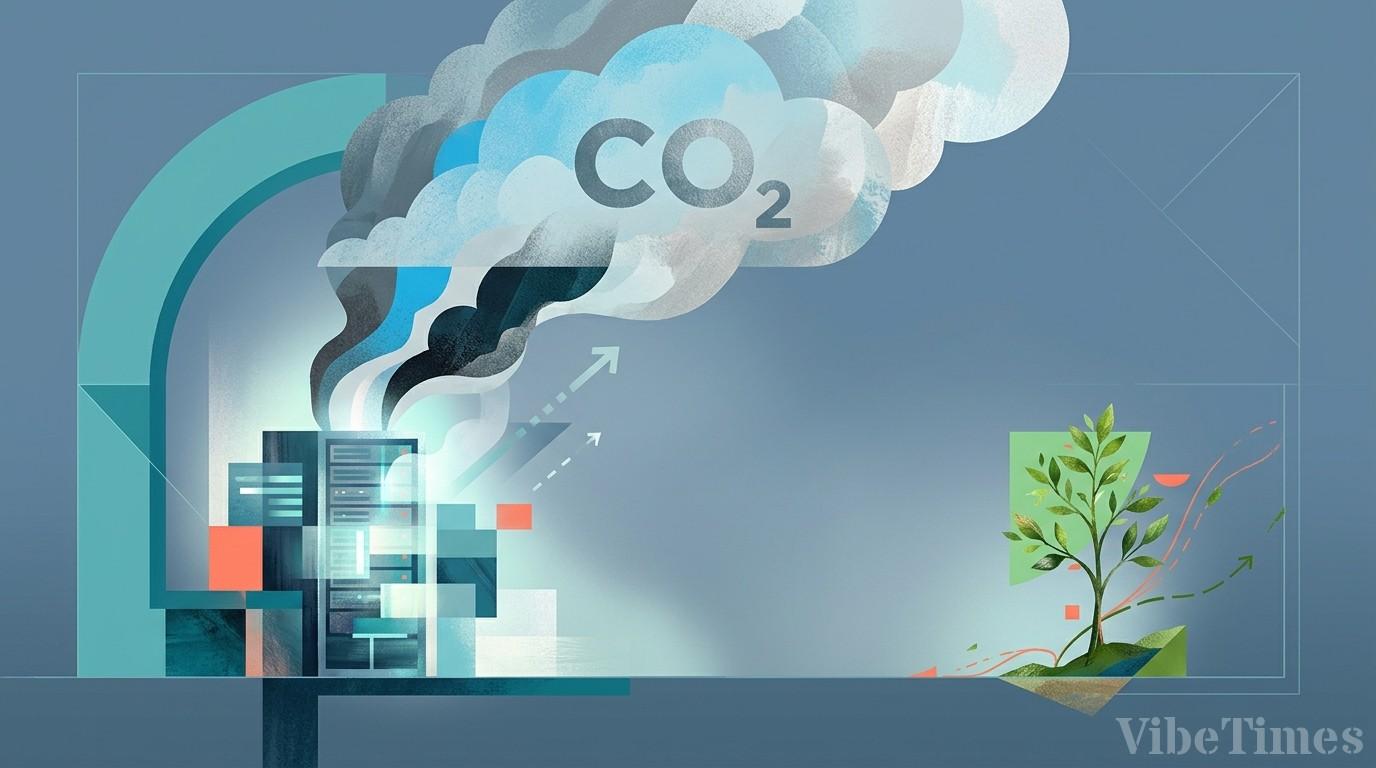
Greenhouse gases generated by AI are increasing faster than the amount AI can reduce. According to a recent analysis by researchers at the Massachusetts Institute of Technology (MIT), the rate of increase in greenhouse gas emissions from the artificial intelligence (AI) industry is far outpacing the emission reductions that AI technology can facilitate. A report released on the 12th (local time) warned that carbon emissions from AI and data centers are exacerbating climate change and that their scale is expanding rapidly.
Big tech companies like Microsoft, Google, and Amazon argue that as AI advances, power efficiency improves and the costs of adopting technologies such as carbon capture and nuclear power decrease, ultimately reducing greenhouse gases. In response, MIT Sloan researchers rebutted this, noting that even if AI develops innovative reduction technologies, actual implementation could take decades. The International Energy Agency (IEA) predicted in its energy outlook report that AI technology could increase technically recoverable reserves of oil and gas by about 5% compared to previous forecasts. Rystad Energy, an international energy think tank, also projected that AI would create significant economic value for fossil fuel exploration and production companies, indicating that AI is having the side effect of encouraging emissions in the oil and gas sectors.
MIT Sloan School of Management estimated that the AI industry will raise global temperatures by 0.1 degrees Celsius above pre-industrial levels by 2100. The Paris Agreement, signed in 2015, aims to limit global temperature rise to below 1.5 degrees compared to pre-industrial levels. According to the World Meteorological Organization (WMO) estimate, the Earth's temperature has already risen by 1.4 degrees above pre-industrial levels as of 2026.
Studies with similar findings have also followed one another. Research by the non-profit organization 'Enabled Emissions,' published on the 11th (local time) in 'npj Climate Action,' a sister journal of Nature, projected that the development of the AI industry could increase global energy sector greenhouse gas emissions by up to 4.8% above existing predictions. Will Alpin, a former Microsoft AI product manager and lead author of the paper, emphasized, "A self-reinforcing effect linked by supply and demand is appearing between Big Tech and the fossil fuel industry," adding, "We can no longer treat these two independently."
Saudi Arabia's state-owned oil company Aramco improved its domestic oil production efficiency and increased the number of wells available for additional extraction last year by incorporating AI technology. Equinor, the Norwegian state-owned energy company, also explained during a market briefing in June that it had discovered 27 new oil fields in the Norwegian continental shelf, noting that AI played a key role from automated data interpretation to efficient well planning.
Independent climate analyst Ketan Joshi stated that simply asking companies to invest small amounts in renewable energy projects is not enough to guarantee the safe operation of the AI industry.
