Chief Justice Jo Hee-de refuses to take the oath at National Assembly audit hearing

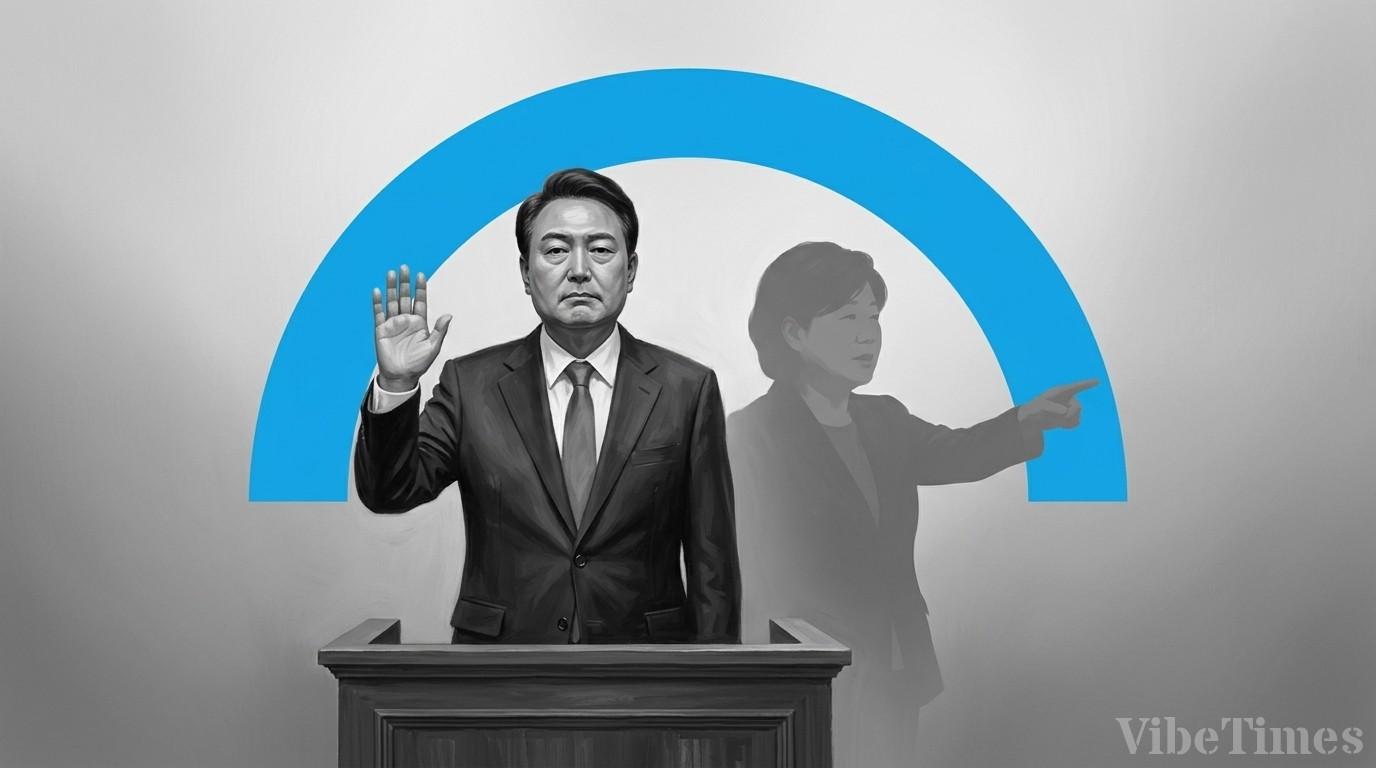
Chief Justice of the Supreme Court Jo Hee-de refused to take the oath at the witness stand during a National Assembly audit.
It was an unusual scene: during the parliamentary audit marking the second year of the Lee Jae-myung administration, which began on October 6, 2026, the head of the judiciary stood in direct confrontation with the National Assembly, a constitutional body, over its demand for testimony. Seo Young-kyo, chairwoman of the Assembly's Legislation and Judiciary Committee, said of the Chief Justice's refusal to be sworn in that day, "If there is no justifiable reason, we will take follow-up measures." Under the National Assembly Testimony Act, refusing to testify without justifiable cause is subject to criminal punishment, opening the possibility that the clash between the judiciary and the legislature could escalate into a legal dispute.
Jo Hee-de's rebuttal, statement in hand
Before refusing the oath, Chief Justice Jo took out a prepared statement himself and argued his position for about six minutes. "The National Assembly and the President cannot be involved in the nomination of the Chief Justice," he said, reiterating his refusal to submit a new nomination. The core of the dispute is the procedure for appointing a successor Supreme Court justice. It has been pointed out that President Lee Jae-myung previously requested a re-nomination without substantive consultation with Chief Justice Jo regarding the selection of a new justice. The judiciary maintains the constitutional interpretation that nominating justices is the Chief Justice's exclusive authority, while the executive branch and the ruling majority in the National Assembly argue for checks on appointment powers.
Lawmakers of the ruling Democratic Party pressed Chief Justice Jo, asking, "Are you trying to stand above the President's appointment power?" Since he was adopted as an audit witness in connection with his court's remand ruling in the election law violation case against President Lee, this audit has become a venue where the nomination conflict and suspicions about the case's investigation surfaced simultaneously. Reports that the Supreme Court showed signs of concealment in its handling of allegations about Chief Justice Jo's "somac dinner" have added to the pressure, and scrutiny of the court's administration is expected to intensify.
Public opinion deadlocked… concerns over prolonged inter-branch tension
No resolution to the conflict is in sight. A poll found that support and opposition to Chief Justice Jo's refusal to re-nominate stood at 39.3 percent versus 39.2 percent, effectively split within the margin of error. This shows the dispute is a confrontation over the constitutional order itself, one that cannot be settled by the one-sided logic of any particular camp. Political commentators share a similar diagnosis: the longer the conflict drags on, the more public trust erodes in both the judiciary's impartiality and the President's leadership in personnel matters. As Robert Teeter pointed out, when voters assess officeholders, they look above all at 'style of leadership.' Whether Chief Justice Jo's stance—clutching his statement and defending institutional logic—and the ruling party's stance—wielding the banner of restoring normal governance—come across to the public as genuine leadership will be the decisive variable.
Follow-up measures and the political calendar
All eyes are on how far the follow-up measures foreshadowed by Chairwoman Seo will go. If the National Assembly proceeds with a criminal complaint over the refusal to testify, Chief Justice Jo, as the sitting head of the judiciary, would face criminal proceedings. On the other hand, if the Assembly stops at moral pressure, it could invite a hardline backlash within the ruling party, leaving the floor leadership with few options. President Lee recently called for investigations into the launch of the Corruption Investigation Office for High-ranking Officials, urging that "crimes by the leadership be thoroughly investigated regardless of party lines." If the new practice of regular attendance by the heads of investigative and prosecutorial bodies at State Council meetings takes hold, the executive's tools for checking the judiciary will grow accordingly.
Over the three-week audit period, a renewed summons by the Legislation and Judiciary Committee, the reigniting of the re-nomination dispute, and the schedule for the remanded election law trial are all set to overlap, making a swift resolution of the standoff between the President and the Chief Justice unlikely. Given that what ultimately sustains the constitutional system is the public's trust, the two branches must show, before institutional arguments, a willingness to compromise responsibly.