Manipulating the Brain and Breath to Make 5 Hours of Sleep Feel Like 8

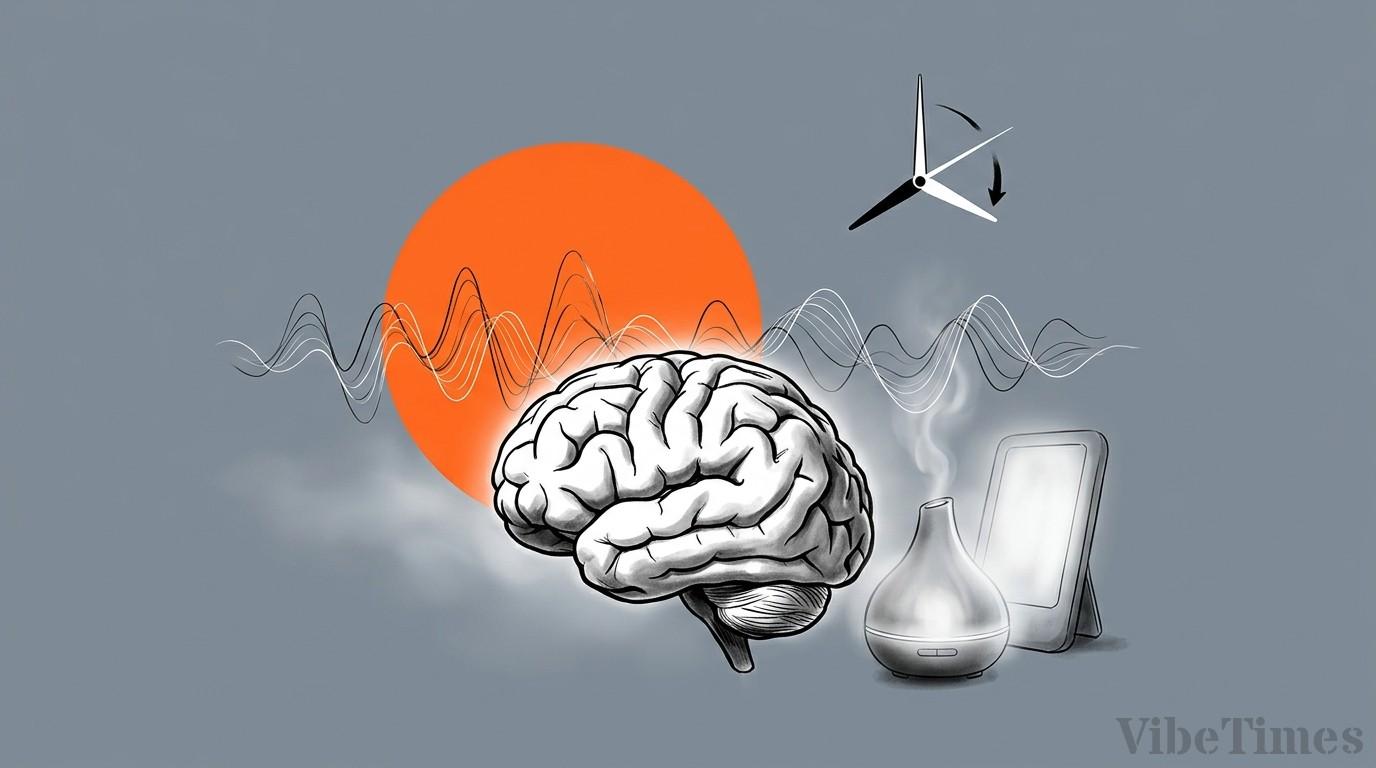
Eight hours is now merely an option. The core of the high-efficiency sleep strategy is that by controlling light wavelengths, scent, breathing, and body temperature, one can elicit recovery effects similar to 8 hours of sleep with only 5 hours.
The so-called 'biophysiological sleep routine' is not about recklessly cutting sleep time, but about intentionally manipulating the body's biorhythm, specifically the circadian rhythm, to maximize the proportion of deep sleep in a short time. If the brain's signal for sleep is pre-set with light and scent, the density of recovery increases even if the time spent with eyes closed is short. According to Harvard Medical School research, switching to warm color temperature lighting 2-3 hours before sleep reduced the time taken to fall asleep by an average of 15%. A 2022 study published in the 'Journal of Sleep Research' also showed that the group inhaling lavender scent saw their heart rate variability stabilize faster and their proportion of deep sleep increase compared to the placebo group.
Two Gates Deciding Sleep: Light and Scent
Severing Blue Light and Switching to Red Light
The sleep switch lies in the hypothalamus of the brain. The retina reads the wavelength of incoming light to inform the nervous system of day and night; blue light of 460-480nm induces arousal and inhibits the secretion of melatonin, the sleep hormone. Conversely, red light above 600nm delivers a signal to the brain that night is deep without interfering with melatonin secretion. The first step is to change indoor lighting to warm light of 3000K or below—in other words, a red and warm color—and lower the illuminance to 20-50 lux or less starting 2 hours before sleep.
Olfaction Goes Directly to the Brain
Unlike vision or hearing, smell is a sensory channel that goes directly to the amygdala and hypothalamus, immediately regulating emotions and the autonomic nervous system. This is the scientific basis for using aroma as a sleep tool. Floral scents like lavender and chamomile inhibit the sympathetic nervous system and activate the parasympathetic nervous system, while woody scents like sandalwood and cedarwood increase alpha brainwaves, creating a state of deep relaxation similar to meditation. If a specific scent is repeated in the same order daily, the brain switches to relaxation mode as a conditioned reflex, so it is effective to fix one 'sleep marker' rather than changing scents frequently. Inhalation methods show faster effects at the onset of sleep than diffusers.
The Final Stamp on 5-Hour Sleep: Breathing and Body Temperature
Turning Off the Sympathetic Nervous System with 4-7-8 Breathing
The quality of sleep depends on how many complete cycles of REM and non-REM sleep one achieves within the limited time. The '4-7-8 breathing method,' which involves inhaling for 4 seconds, holding for 7 seconds, and exhaling for 8 seconds before bed, temporarily increases carbon dioxide concentration in the body, releasing tension in the sympathetic nervous system. As a result, unconscious awakenings during sleep decrease, and the proportion of REM sleep, essential for brain recovery, relatively increases.
Raise Body Temperature Then Lower It
The rate at which body temperature drops determines the speed of sleep onset. If you raise your body temperature by 0.5-1 degree via a shower or half-body bath about 1.5 hours before sleep and then move to a cool room, your body temperature plummets, sending a powerful drowsiness signal to the brain. Rather than just keeping the room cold, the process of 'raising and then lowering' itself acts as a key to increase sleep pressure, making the depth of 5 hours of sleep approach that of 8 hours.
Timeline to Apply from Tonight Onwards
From 3 Hours Before Sleep Until Just Before Bed
Three hours before sleep, block blue light from smartphones and monitors and use citrus scents like lemon or bergamot to lower cortisol, the stress hormone. One hour before sleep, lower illuminance by 50% or more and reduce brain overload with sandalwood. Just before bed, leave only complete darkness or a soft red lamp and finish with lavender. If accompanied by 4-7-8 breathing and 432Hz delta wave-inducing music, brainwaves transition more quickly from a relaxed state to a drowsy state.
The 20 Minutes After Waking Decide the Next Night
The success or failure of shortened sleep is determined in the morning. Exposing yourself to sunlight of 10,000 lux or more for at least 15-20 minutes immediately upon waking breaks down melatonin in the body and releases cortisol, the arousal hormone, resetting the biological clock to 24-hour mode. Adding peppermint or eucalyptus scent here amplifies the effects of brain arousal and cognitive function improvement. Since this morning light exposure precisely sets the start time for the next night's sleep, missing the final stage of the routine causes the whole system to collapse.
Effects and Limitations: What to Expect
Compared to general sleep habits, the difference is clear. While existing methods of using smartphones until bed lead to delayed sleep onset and more light sleep, reducing sleep efficiency, the optimized routine brings rapid sleep onset and an increased proportion of deep sleep stages. As the global sleep market is expected to grow to approximately $600 billion by 2027, smart aroma light devices combining lighting and diffusers are also emerging one after another.
However, the 5-hour shortened sleep is not a cure-all. The essence of this routine is to improve the efficiency of given time, not to eliminate the need for sleep itself. If one recklessly reduces time while the circadian rhythm is disrupted, daytime fatigue accumulates, so the routine must be applied under the premise of keeping bedtime and wake-up time consistent every day. Improvements in sleep onset time and morning awakening are felt from the first week, while changes in deep sleep proportion typically appear after 2-3 weeks of consistent repetition.