Chinese Media Claims 'KF-21 Falls Short of J-10C' Due to Lack of Internal Weapons Bay

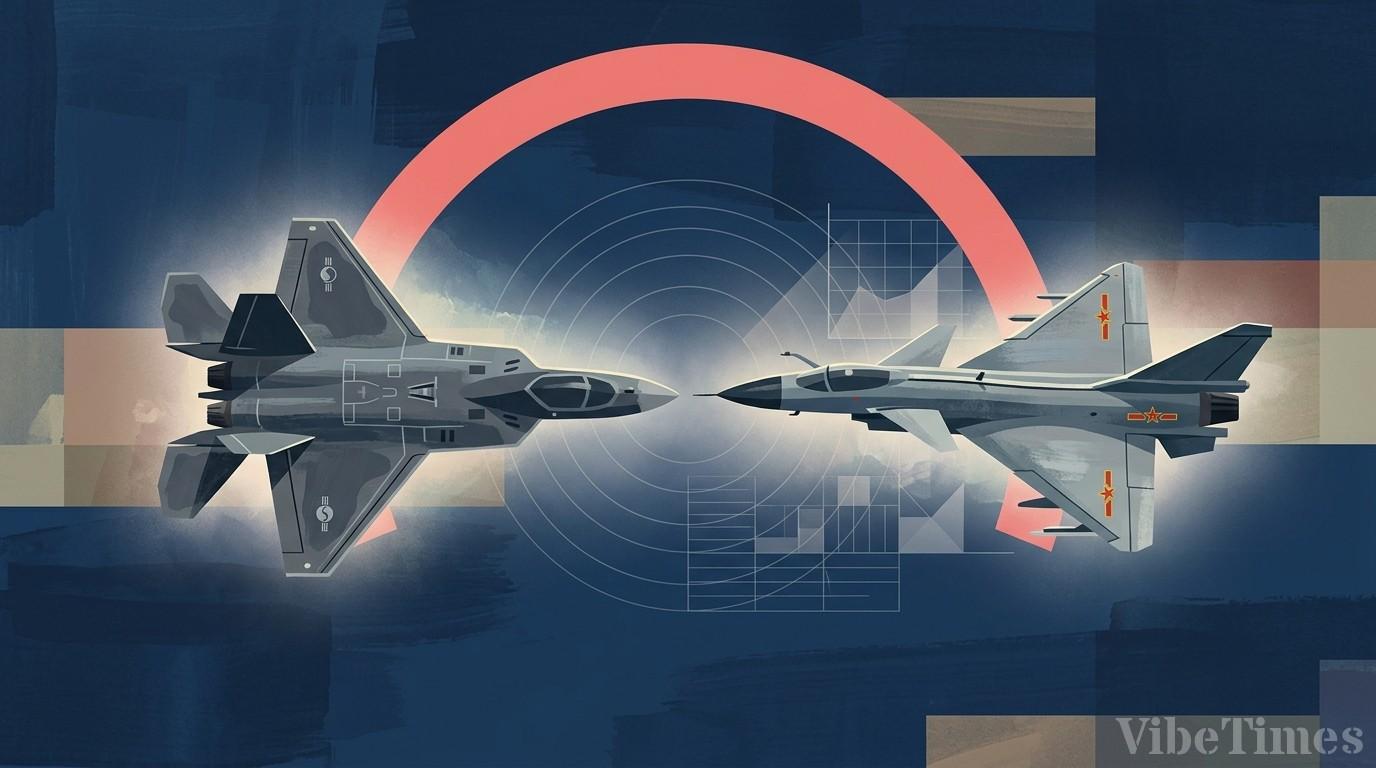
Claims have emerged in China that South Korea's KF-21 Boramae, which is nearing combat deployment, is inferior to the Chinese J-10C in aerial warfare. A military expert blogger on the Chinese portal Sohu based this argument on the fact that the KF-21 lacks an 'internal weapons space (internal weapons bay)' within the fuselage, which is advantageous for evading enemy radar, noting that it is difficult to view the KF-21 as a full 5th-generation stealth fighter. The analysis also suggests that the KF-21 is at a relative disadvantage in systematic air warfare capabilities, which combine AWACS, ground radar, and data links.
Both aircraft are typically classified as 4.5-generation fighters. The KF-21 features twin engines and is equipped with a domestically developed Active Electronically Scanned Array (AESA) radar and Infrared Search and Track (IRST) system, with the initial Block I utilizing air-to-air missiles such as the Meteor. Meanwhile, China's domestically developed 4.5th-generation J-10C fighter is equipped with a single engine, an AESA radar, and long-range PL-15 air-to-air missiles, touting network-centric warfare as a key strength.
The challenge, however, lies in the difficulty of determining the outcome of actual aerial combat solely based on aircraft specifications. This is because factors beyond radar and missiles—such as AWACS, data links, electronic warfare capabilities, and pilot proficiency—play a combined role. Neither South Korea nor China has disclosed the actual detection range of their AESA radars, electronic warfare performance, or precise Radar Cross Section (RCS). This is why it is impossible to definitively conclude that the J-10C overwhelms the KF-21 based solely on public data.
The criticism regarding the internal weapons bay is not entirely wrong if looking only at the current configuration. Block I lacks an internal bay, creating a difference from full-fledged 5th-generation stealth fighters like the F-35 or J-20. However, Block I is not the final form of the KF-21. Korea Aerospace Industries (KAI) has been examining concepts for the KF-21EX or Block III, which would apply an internal weapons bay and enhance stealth performance. Storing weapons inside the fuselage can reduce radar reflection caused by external mounts. However, this has not yet been confirmed as an official government system development project.
Research targeting the successor to the KF-21 is also already underway. The Agency for Defense Development (ADD) has prepared conceptual configurations for future fighter aircraft. The Defense Acquisition Program Administration (DAPA) is also conducting concept research for a Korean next-generation fighter incorporating AI, broadband stealth, and manned-unmanned complex combat systems.
The KF-21's armament capabilities are set to expand as well. The KF-21 plans to increase its air-to-ground capabilities in Block II and subsequently considers strengthening internal weapon bays and stealth performance.