President Lee Jae-myung Rejects Supreme Court Justice Nomination for First Time in History

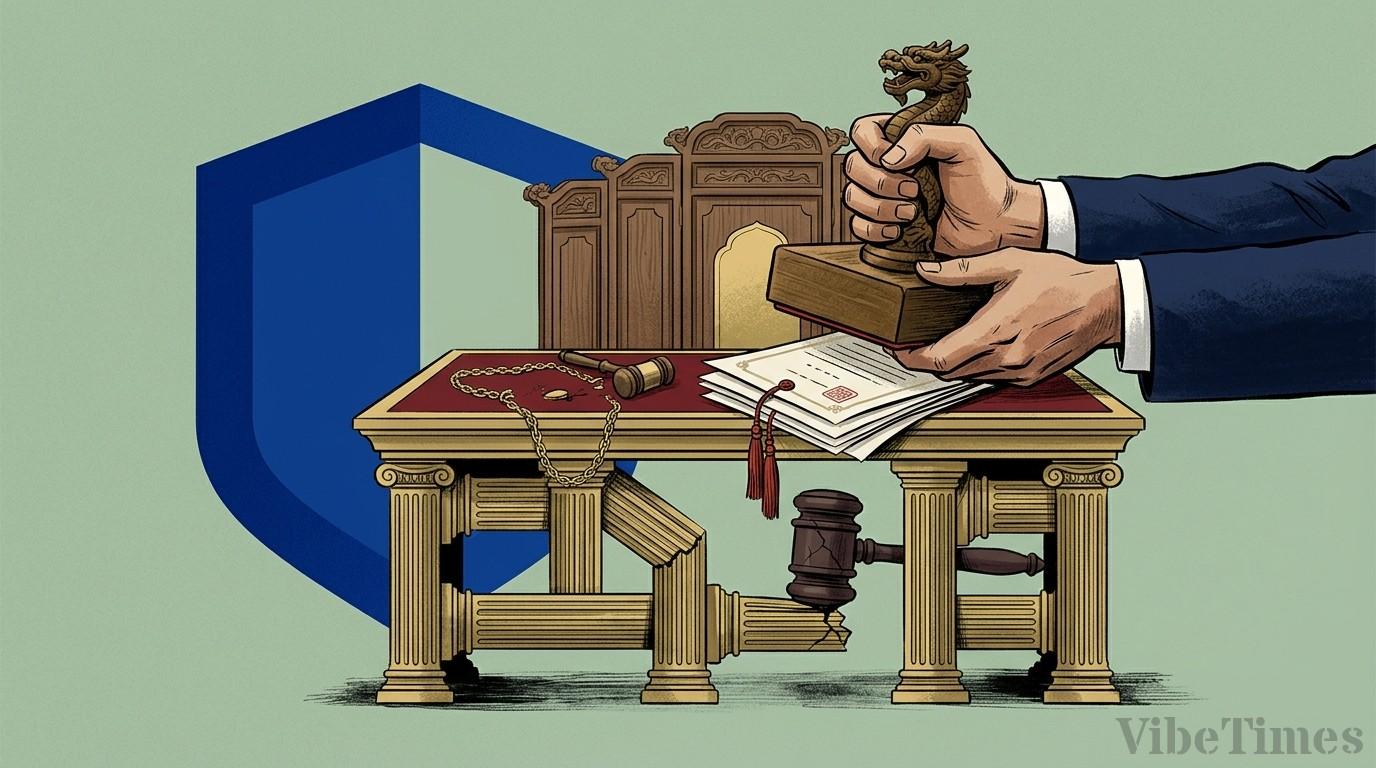
For the first time in history, the President has rejected the Supreme Court's nomination of a Justice. The presidential office refused to accept the appointment consent proposal for Daegu District Court Chief Judge Son Bong-ki, submitted by Chief Justice Jo Hee-dae, and demanded the recommendation of a new figure. This is a decision without precedent in constitutional history. The presidential office has stated its position that the Chief Justice cannot infringe upon the President's exclusive personnel authority.
Triggered by Supreme Court Vacancy... A War of Narratives Over Procedures
The starting point of the incident was a single vacancy on the Supreme Court. Chief Justice Jo Hee-dae nominated Daegu District Court Chief Judge Son Bong-ki as a candidate and proposed him to the President. President Lee Jae-myung's side returned the nomination without proceeding with the appointment process. Under the Court Organization Act, Supreme Court Justices are appointed by the President with the consent of the National Assembly following the Chief Justice's proposal. It is the first time since the founding of the government that an appointer has rejected a proposed nominee.
The President's appointment power cannot be undermined.
This is the logic the presidential office presented as the justification for demanding a re-nomination. The interpretation is that since the appointment authority belongs to the President, they can refuse an individual deemed unsuitable. The judiciary stood in direct opposition. The Supreme Court side stated that a meeting with the President itself could not be held, while the presidential office countered that there had been no consultation between the two institutions to begin with. It is an unusual situation where the explanations of the highest judicial body and the presidential office differ regarding the same circumstances.
Appointment Power vs. Proposal Power... A Collision with No Legal Answer
Legally, this situation erupted at a point where neither the Constitution nor the Court Organization Act provides a clear answer. The Chief Justice's proposal power is a device designed to ensure judicial personnel appointments proceed without interference from the administration. The appointment power literally belongs to the President. There is no provision stipulating which takes precedence when these two powers clash. Therefore, it is difficult to definitively declare the presidential office's measure illegal, yet it is also difficult to leave it as is from the perspective of judicial independence. A gray area in the system has led to a clash between the highest-level institutions.
Looking beneath the surface, political calculations are also entangled. Opposition figure Jang Dong-hyuk argued that everything began with the suspension of President Lee's trial, stating he would "fight tooth and nail" for impeachment. The diagnosis is that the conflict surrounding the Trial Suspension Act has escalated into a personnel dispute within the judiciary. The Democratic Party of Korea countered by demanding the immediate resignation of Chief Justice Jo Hee-dae. The simultaneous surfacing of pressure for the Chief Justice's resignation and a warning of presidential impeachment implies that the judiciary itself has been placed at the center of a political battle.
Trial Burden and State Affairs Disruption... The Magnitude of the Impact
The immediate burden falls on the operation of the Supreme Court. With one vacancy out of 13 Justices, the conditions for bench deliberations narrow accordingly. This increases the concern that in cases where opinions diverge, delays in rulings could lengthen or conclusions could become unstable. As the appointment vacancy prolongs, uncertainty regarding judiciary personnel overall will also grow.
The shadow cast on state affairs is also significant. With the autumn regular National Assembly session facing a mountain of tasks requiring cooperation, such as budget review, both sides are holding up the cards of resignation and impeachment. The legislative schedule is bound to be delayed, and the expansion of political uncertainty could place a burden on corporate investment decisions and market sentiment.
