September 10 Legislative Report: Rebuilding Korea Party Charges Into Teachers' Rights Legislation

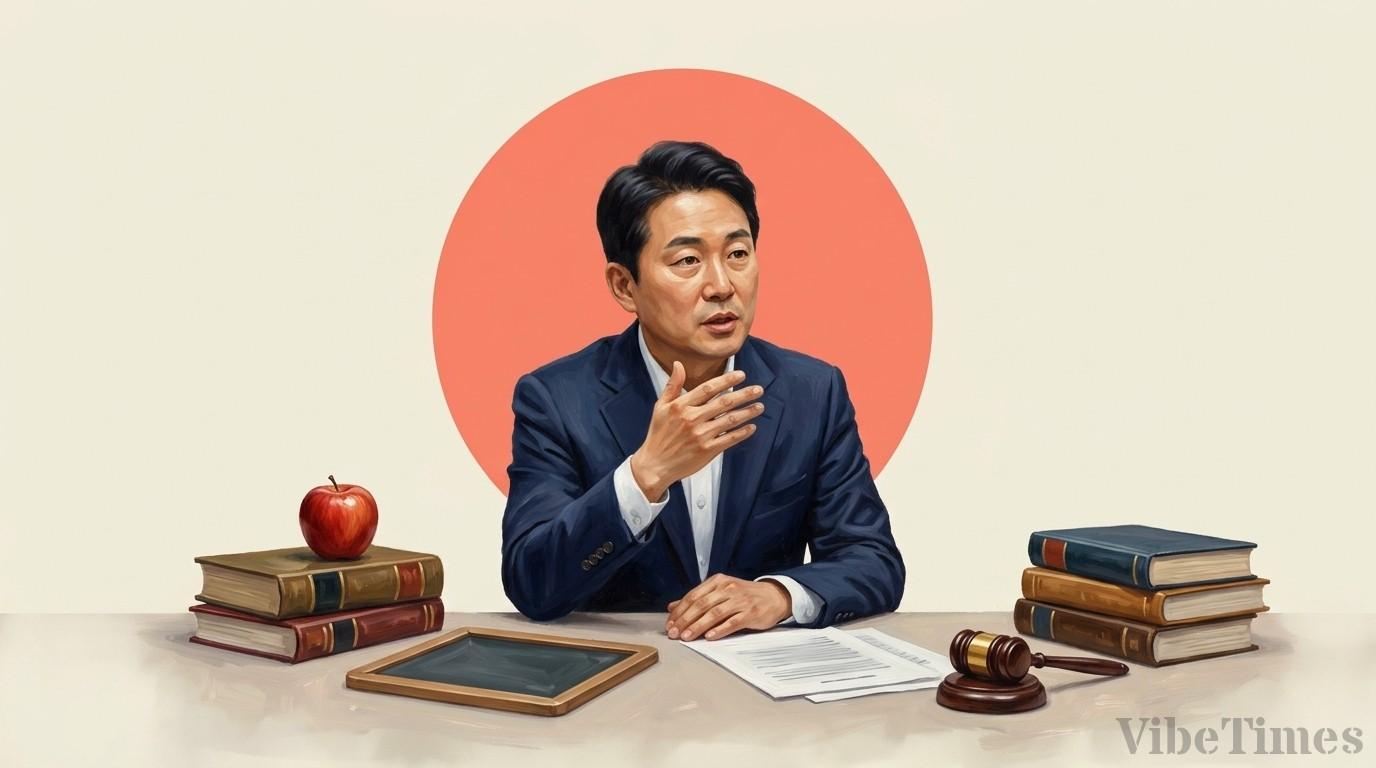
The Rebuilding Korea Party is stepping up legislation to protect teachers' rights by mobilizing all eight of its seats on the Education Committee.
Rep. Yoo Deok-won of the Rebuilding Korea Party attended a debate and roundtable on countermeasures against teacher rights violations held at the National Assembly, launching an effort to turn voices from the field into legislation. According to Open Assembly Information (open.assembly.go.kr) on the public data portal, eight lawmakers from the party — Yoo, Yoon Ki-wook, Lee Geun-yong, Kang Sang-yoon, Lee Myung-soo, Yoo Sang-jae, Ga Se-ro, and Lee Yong-bae — were assigned to the Education Committee of the 22nd National Assembly. All eight also hold seats on the Special Committee on Budget and Accounts, giving them a hand in both bill review and budget deliberations. Yoo is also active on the deputy floor leadership team, adding a role coordinating the party's education legislative agenda. Because countermeasures against teacher rights violations are tied to budget-requiring tasks such as expanding counseling staff, the budget committee posts are seen as a strategic advantage.
What Will Change Under the Lower Elementary Teachers' Rights Bill
The party's legislative moves are also taking concrete shape. Rep. Lee Yong-bae took part in sponsoring a bill to legally guarantee the rights of lower-grade elementary homeroom teachers on the premise of the single-teacher homeroom system, while Rep. Lee Geun-yong also lent his name to education-related bills. In lower elementary classrooms, a single homeroom teacher alone shoulders instruction, student guidance, and administrative work, so parental complaints all too often get passed straight through to the individual teacher. The approach of explicitly protecting teachers' educational activities in statute aims squarely at this point. If teachers' rights regain their footing, teacher turnover could fall and trust in public education could recover, potentially easing the burden of private education spending. The caveat, however, is that if the bill's language remains a mere declaration of protection, its impact on the ground may be limited.
The success of teachers' rights legislation hinges not on the number of bills introduced but on how concretely it spells out procedures for handling parental complaints and mechanisms for excluding teachers from duty.
A Map of Defections Revealed in Votes on School Land and Construction Bills
The economic ripple effects of education legislation are far from small. The Special Act on Support for Complex Development of School Sites, which passed the plenary session on August 20, creates a legal basis for putting idle school land to complex development — and the construction and real estate industries read it as a new source of demand. A closer look at that day's roll calls, however, shows cracks within parties in sharp relief. On the substitute bill to the Framework Act on the Construction Industry, the People Power Party allowed 23 ayes against 15 nays from its ranks, a defection rate approaching 40 percent. Opposition votes also continued on the school site special act (20 for, 5 against), the act compensating those connected to the May 18 Democratization Movement (18 for, 6 against), and the substitute bill to the Housing Act (41 for, 4 against). In the midst of this, Rep. Lee Jong-wook broke with the party line on all four bills, and Rep. Joo Ho-young also joined the opposition on three. Reps. Kim Mi-ae and Kim Eun-hye, who voted against the school site special act, also opposed the construction industry bill, laying bare a temperature gap over development-related legislation. Defections persisted on August 26 with the substitute bill to the Agriculture and Fisheries Councils Act (35 for, 8 against) and the revision to the Personnel Hearing Act (54 for, 3 against). The ruling Democratic Party, too, failed to stop three of its own — Reps. Jeon Jin-sook, Seo Mi-hwa, and Moon Jeong-bok — from voting against the revision to the National Intelligence Service Act on September 3, while on the same day the People Power Party's Joo Ho-young, Lee Jong-wook, Kang Seung-gyu, and Kim Jang-gyeom cast nays on the revision to the Itaewon Disaster Special Act.
Regular Session Processing Speed and the Variables That Remain
The pace of plenary sessions themselves is picking up. According to Yonhap News, the ruling and opposition camps have agreed — with the People Power Party on board — to handle follow-up prosecution reform legislation in one batch at the plenary session on the 17th. Against this backdrop, the Rebuilding Korea Party's dense presence on the Education Committee is expected to accelerate its review of teachers' rights bills as well. Frequent breaks from the party line, however, act as a variable that makes vote-by-vote management difficult. Unlike teachers' rights legislation, which enjoys thick bipartisan consensus, bills entangled with budgets and interests, such as school site complex development, are highly likely to see repeated defection votes. For the construction and real estate industry, it is safer to gauge the timing of related projects by the voting terrain rather than by the speed of bill processing. Whether the teachers' rights bills clear the regular session in a form close to their original text, or go through revisions over effective enforcement mechanisms, is the remaining point to watch.