Creative Hobbies Beat Exercise for Stress Relief

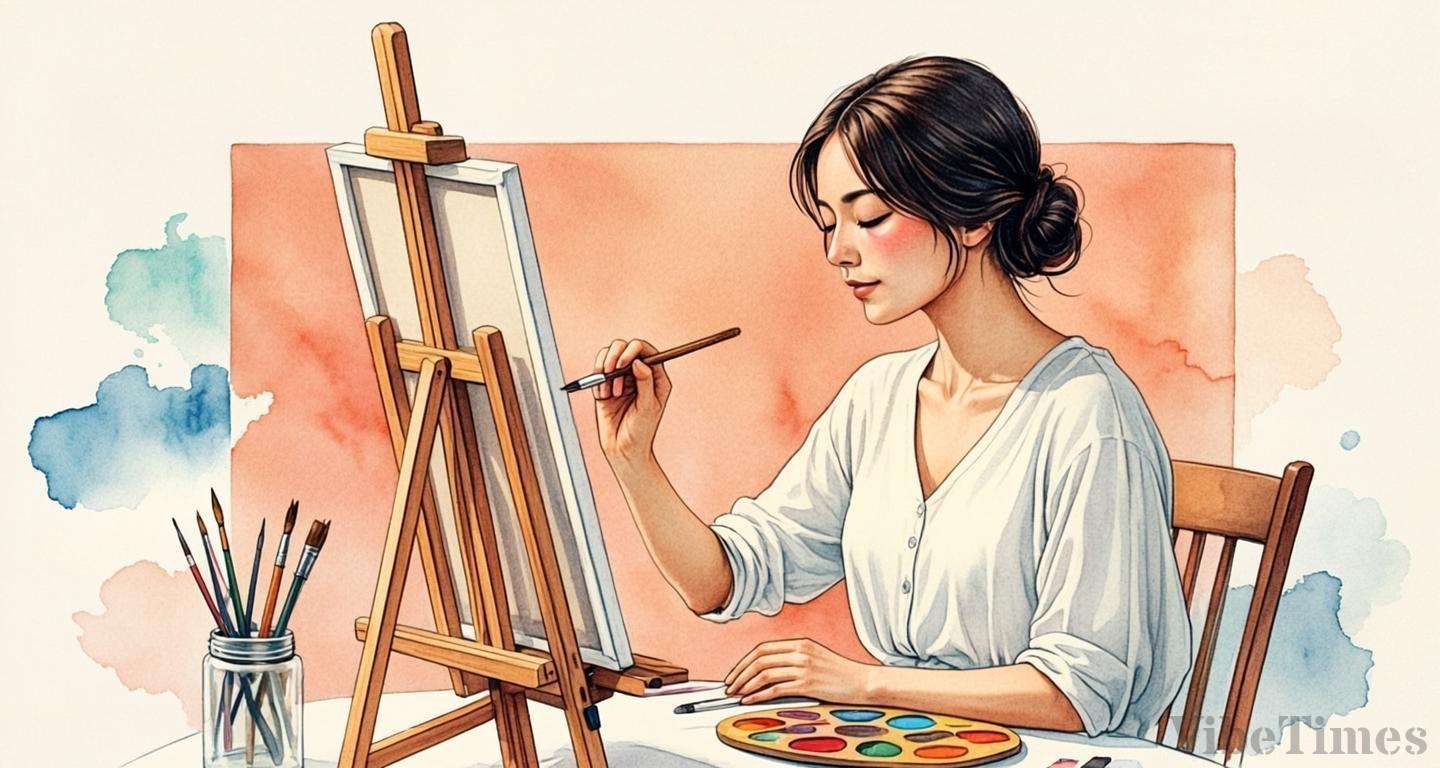
Exercise 'Resets Hormones' While Creativity 'Cuts Off Thinking'
Cortisol Reduction and Runner's High: The Biochemical Pathway of Exercise
The answer to stress relief lies not in the type of hobby, but in the type of stress. Exercise and creative activities work on stress through different neurobiological pathways, so neither is absolutely superior.
First, consider how exercise works. Aerobic exercise lowers cortisol, the stress hormone, and promotes the release of endorphins, serotonin, and dopamine. The so-called 'runner's high' is the result of this biochemical reaction. In addition, increased BDNF (brain-derived neurotrophic factor) improves brain cell recovery and neuroplasticity — the brain's ability to adapt to new stimuli. In short, exercise resets the body's stress response system itself.
Flow State: How Creativity Blocks Stress
Creativity works differently. When you enter a flow state — a concept established by psychologist Mihaly Csikszentmihalyi — the distractions that are a core cause of stress come to a halt. In neuroscience terms, the activity of the default mode network (DMN), the circuit that replays negative thoughts when the mind wanders, is regulated. If exercise approaches through the body, creativity approaches through cognition — through thought itself.
Creative activities also offer an emotional release effect. In a 2016 study at Drew University, 39 adults participated in art activities for 45 minutes, and about 75% showed significantly lower cortisol levels than before. They didn't need to be good at drawing. The process itself produced the effect.
What the Science Says: Exercise for Depression, Creativity for Burnout
The Power of Exercise Shown in a 2023 BMJ Meta-Analysis
In terms of the volume and strength of evidence, exercise leads. A large-scale meta-analysis published in 2023 in the British Journal of Sports Medicine (BMJ) synthesized 97 studies and more than 1,000 trials, concluding that exercise showed effects comparable to or greater than antidepressants or cognitive behavioral therapy in reducing depressive symptoms. The WHO has also recommended non-pharmacological interventions such as exercise before medication for mild depression since 2019. This means exercise is the first-line option for mild to moderate depression.
Creativity Strikes at the Heart of Rumination-Based Stress
However, when stress stems from 'repetitive thinking,' the story changes. This applies to burnout, where the same worries circle in your head before sleep or there is no thread to sort out your emotions. Creative activities that induce flow directly intervene in the rumination circuit and break the loop of thought. They also serve as a channel for healthy self-expression, drawing out suppressed emotions, making creativity better suited for processing emotions.
Psychiatrists also generally distinguish their recommendations: "Exercise for preventing depression and anxiety, creativity for emotional processing." It is not a question of superiority, but of purpose.
Diagnose Your Stress Type First
Is Your Body Tired, or Is Your Mind Cluttered?
The criteria for choosing are clear. When stress manifests in the 'body' — physical tension, excess energy, insomnia, or lethargy — exercise is effective. On the other hand, when mental fatigue and cognitive overload are the cause, or when you need emotional processing and self-understanding, creativity is advantageous. Creativity is also an alternative when injury or illness makes physical activity difficult. It is an established principle in art therapy that the process itself is therapeutic, regardless of the quality of the outcome.
The sustainability variable: flow doesn't come easily
The drawbacks should be addressed fairly. The effects of exercise are usually felt within 4 to 6 weeks, and the sense of achievement builds quickly, so adherence rates are high. In contrast, while creativity has a low barrier to entry, failing to achieve flow halves its effects, and if perfectionism or concern about others' judgments creeps in, it can become a new source of stress. Outcome-focused goals reduce sustainability, so it is safer to aim for 'immersion in the process.' With exercise, too, overtraining actually raises cortisol, and the compulsion to 'must exercise' can itself become a burden, so adjusting intensity is essential.
Practical guide: a combined strategy is the optimal solution
A Hybrid Design of Exercise 3 Times a Week + Creativity Twice a Week
Hormone resetting and cognitive blocking are not mutually exclusive. An ideal setup would involve 30–45 minutes of moderate-intensity exercise (walking, running, home workouts, hiking, etc.) three times a week to manage the body's stress response, and creative activities such as drawing, expressive writing, playing an instrument, or cooking about twice a week to clear mental clutter. According to research by psychologist James Pennebaker, expressive writing that freely records emotions has been shown to reduce stress with just 15–20 minutes a day. Since creative activities done alone can lead to isolation, joining clubs or communities is recommended.
Test Your Response with a 4-Week Experimental Protocol
The fastest way to find your ideal mix is to measure it yourself. Spend 2 weeks focusing on exercise, then 2 weeks focusing on creativity, recording your sleep quality and morning mood scores daily to compare. If you use a smartwatch, also tracking heart rate variability (HRV) lets you see changes in your body's stress response in numbers. Because individual differences are large, only your own data is the definitive answer sheet. However, if severe depression or an anxiety disorder is suspected, do not substitute hobby activities — seek professional consultation first.
Ultimately, the answer to "which is better" lies in the cause of your stress and your neural response. Exercise resets the body; creativity stops the thinking. What the data shows is not superiority, but the fact that the two activities relieve stress through different circuits — and those who use both together come out ahead.