A Low-Noise Home Workout Routine That Burns Calories After 10 P.M. Without the Noise

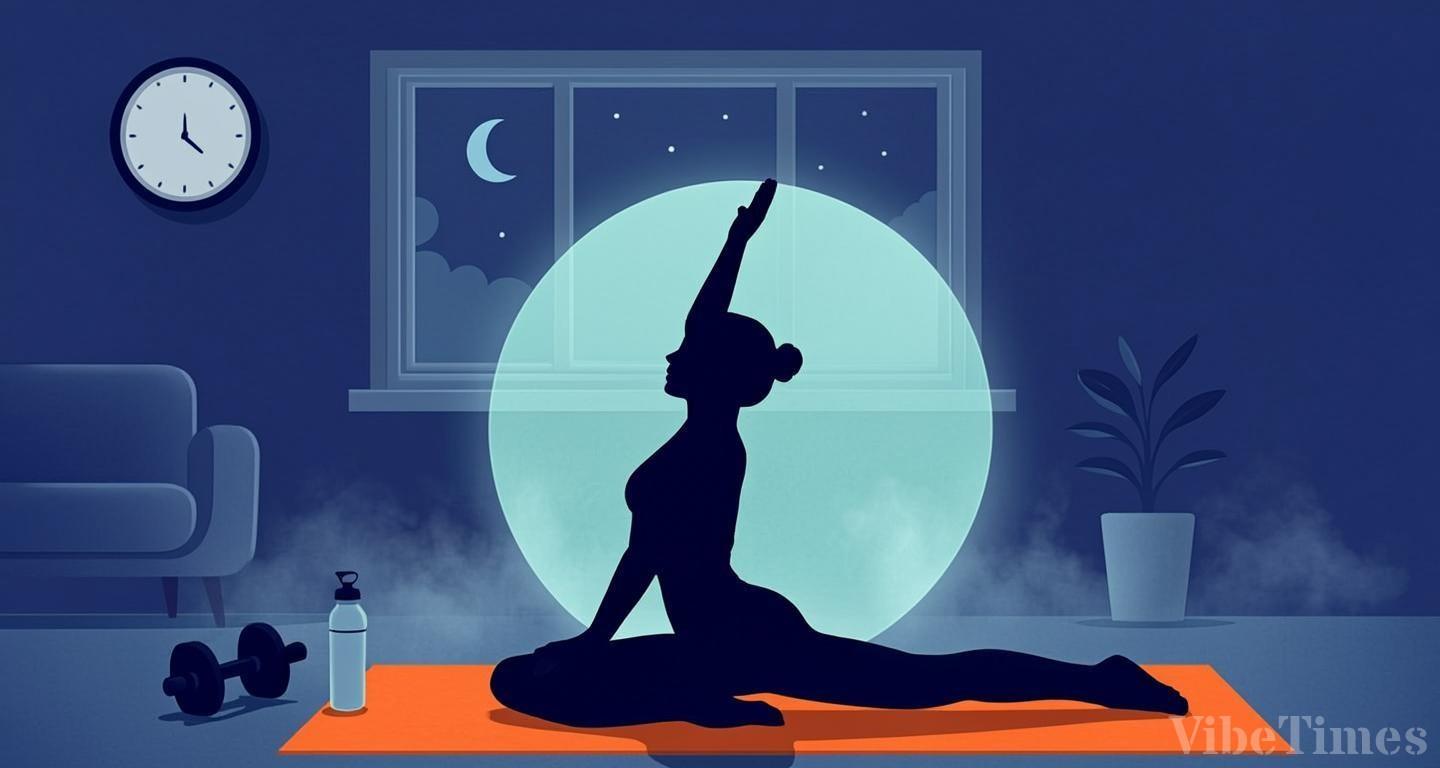
It is possible to burn 200 kcal in 30 minutes after 10 P.M. with a home workout that involves no jumping at all. The keys are static movements that don't transmit impact to the floor, slow tempos, and intensity kept at or below moderate levels so sleep isn't disrupted.
With the spread of remote and hybrid work, more office workers and parents are only able to exercise late at night after work. According to a survey by the Korea Health Industry Development Institute, the rate of regular exercise among adults remains at only around 20 percent, with lack of time cited as the main reason. Meanwhile, with residents of apartments, officetels, and multi-family housing making up more than 60 percent of the population, inter-floor noise has become the biggest constraint on nighttime home workouts.
Why Nighttime Workouts Require Managing Both Noise and Intensity
10 P.M. Is a High-Risk Window for Inter-Floor Noise Disputes
Tens of thousands of inter-floor noise cases are filed with the Noise Dispute Mediation Committee each year, and the risk of disputes rises especially after 10 P.M. Under the Environment Ministry's living noise guidelines, the nighttime standard for floor impact noise is a strict 35 dB, compared to daytime. Walking or light jumping alone can reach 50–70 dB, making jumping movements essentially unusable at night. By contrast, floor-based movements like planks and stretches mostly register below 30 dB, transmitting almost no noise to the apartment below.
Revisiting the Myth That Pre-Bed Workouts Ruin Sleep
A 2021 meta-analysis published in Sleep Medicine Reports found that low- to moderate-intensity exercise within 1.5 hours of bedtime does not significantly harm sleep. Sports medicine experts likewise recommend keeping intensity at or below moderate levels that moderately elevate heart rate, rather than going all-out. In short, a post-10 P.M. routine only needs to meet three conditions: silent movements, a no-jump structure, and an intensity that doesn't harm sleep.
Design Principles for Preserving Calorie Burn at Low Volume
Remove the Jumps, Make Up for It With Tempo
Jumping jacks and burpees burn 250–300 kcal in 30 minutes, but they are far too noisy for nighttime use. The alternative is to extend time under tension. Slow squats—four seconds down, four seconds up—and isometric holds like wall sits keep muscles under strain for longer, substantially raising calorie burn without a single jump. For a 60 kg adult, a 30-minute low-noise circuit burns 150–220 kcal, not far off a standard home workout circuit (200–250 kcal).
Use Heart Rate to Gauge Intensity
With high-intensity moves out of the picture, intensity management becomes all the more important. Pairing a wearable like an Apple Watch with a workout app lets you check real-time heart rate and calorie burn right on your wrist. Aim to stay in the moderate-intensity zone of 50–70 percent of your maximum heart rate; if your heart rate climbs too high, slow down your movements and insert recovery intervals.
The Practical Routine: A 30-Minute Silent Program
Routine A: Completely Silent Full-Body Circuit (20 minutes, approx. 120–180 kcal)
On a mat, perform bicycle crunches for 40 seconds, glute bridges for 40 seconds, knee push-up style plank up-downs for 30 seconds, lying leg raises for 40 seconds, slow open-arm squats for 45 seconds, and standing side leg raises using a wall for 30 seconds per side. Chain these together for 3 sets, with 30 seconds of rest between sets.
Routine B: Calorie-Maximizing Version (30 minutes, approx. 200–250 kcal)
This structure keeps your heart rate up without jumping. Proceed in this order: wall sit 1 minute × 3 rounds, 15 slow squats, front and side planks for 45 seconds each, and lying static lower-body exercises. If you have room, adding a quiet stationary bike—which runs at a real 30–40 dB—allows you to burn 180–250 kcal in 30 minutes. Past midnight, the rule is to dial the intensity down one notch and switch to a sleep-friendly nighttime yoga or Pilates flow (25 minutes, 80–120 kcal): moving from cat-cow through pigeon pose and bridge holds, finishing with a supine spinal twist and 5 minutes of deep belly breathing.
Noise-Blocking Gear and Finish-Line Rules
Lay down a high-density TPE mat at least 10 mm thick, and double it with a vibration-dampening mat if noise is a serious concern. Work out barefoot or in silent workout shoes, and dim the lights to indirect lighting to protect your sleep hormones. Finish your workout at least 30 minutes to an hour before bed, and take a lukewarm shower afterward rather than a hot one. After exercising, limit yourself to a light protein snack like Greek yogurt or soy milk. Those with low blood pressure, pregnancy, or joint conditions should take care to monitor blood pressure during sustained isometric holds.
Strategies for Sticking With the Routine
Tracking Builds the Habit
When your workout logs are saved in a dedicated app like KS fit and synced with a wearable, heart rate and calorie data accumulate over time. Simply logging three or more sessions a week sustains a sense of achievement—and that changes your follow-through rate.
Tomorrow Morning Is the Real Test
The success of a nighttime workout ultimately comes down to whether you sleep well. Let your body temperature settle after exercise and keep screens away for the hour before bed. If you wake up feeling refreshed the next morning, that's a sign the current routine's intensity and timing suit your body. Low-noise home workouts after 10 P.M. are expected to take hold as a practical option—one that burns around 200 kcal a day without conflict with the neighbors or damage to your sleep.