5 Sleep Hygiene Habits to Adopt Before Bed Instead of Your Phone

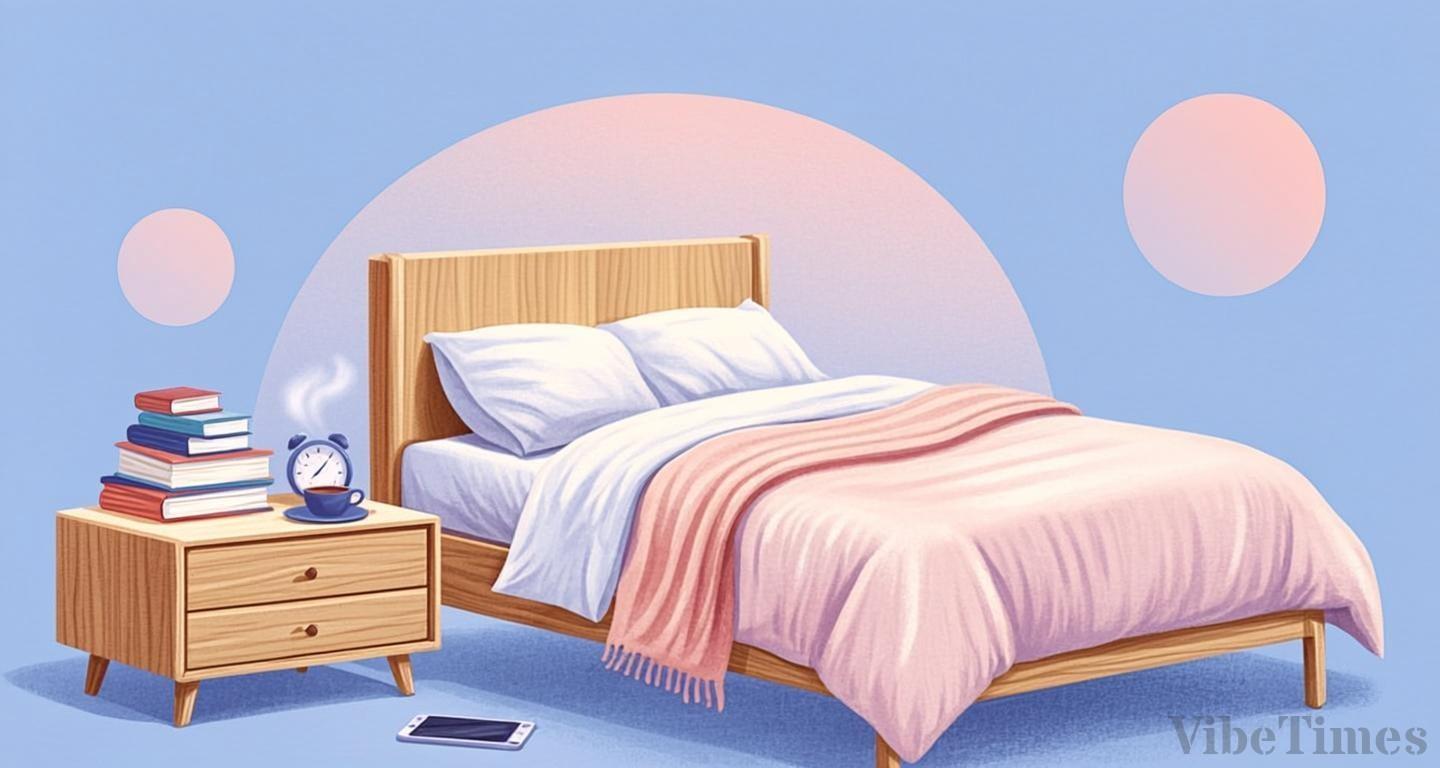
Using a phone in the four hours before bedtime cuts melatonin secretion by more than half and delays falling asleep by more than 10 minutes.
Those are the figures published by researchers at Rutgers University in the United States in 2015. But there is a more interesting point. The prevailing view in recent scholarship is that the arousal triggered by the content itself—social media, news, videos—is a bigger cause of delayed sleep than blue light. In other words, simply turning on night mode does not solve the problem. What is needed is a habit that replaces the act of putting the phone down. According to the Korea Health Promotion Institute, 40–50% of Korean adults use their smartphones right before bed.
The Structural Reasons You Can't Put Your Phone Down at Night
How Blue Light at 450–480nm Blocks the Sleep Hormone
The blue light from phone screens, in the wavelength band of roughly 450–480 nanometers, stimulates specialized photoreceptors in the retina and suppresses melatonin secretion. Melatonin is the sleep hormone that tells the body "night has come." When this signal is ignored, sleep arrives that much later. However, blue light filters only partially ease this suppression and cannot block the arousal induced by content.
'Revenge Bedtime Procrastination': A Psychological Trap
The core psychological mechanism is revenge bedtime procrastination—a phenomenon in which people who did not get enough time for themselves during the day delay sleep at night to claim some form of compensation. The endless scrolling through news and social media brings both delayed sleep and anxiety. To break free from the phone, it is essential to design a routine that satisfies this need for reward through other activities.
Koreans' Sleep Is Already Severely Strained
According to Statistics Korea's 2023 Time Use Survey, the average Korean sleeps 7 hours and 51 minutes, below the OECD average. Data from the National Health Insurance Service show that sleep disorder patients exceed 800,000 per year, while 37–40% of adults are classified as at risk for smartphone overdependence. With short sleep compounded by nighttime smartphone use, the burden keeps snowballing.
5 Habits to Replace Phone Use
Habit 1: Digital Curfew and Warm Lighting One Hour Before Bed
This is the most basic step with the biggest impact. One hour before bed, move your phone charger outside the bedroom and switch the room lighting to indirect lighting or warm light with a color temperature of 2,700–3,000K. When the environment itself changes, melatonin secretion recovers naturally. Environmental design reduces failure better than willpower.
Habit 2: Reading a Paper Book—Just 30 Minutes
A 2009 University of Sussex study found that reading reduced stress by up to 68%, with a relaxation effect that outperformed walking, listening to music, or drinking tea. Using a paper book or an e-ink reader lets you replace the pleasure of content without the arousal from a screen. However, an engrossing novel that leaves you desperate to know what happens next can actually be harmful, so it is safer to read an unfamiliar book for only about 30 minutes.
Habit 3: The 4-7-8 Breathing Technique and Progressive Muscle Relaxation
The 4-7-8 breathing technique—inhale for 4 seconds, hold for 7, exhale over 8—activates the parasympathetic nervous system and shifts the body into relaxation mode. Another option is progressive muscle relaxation, which involves tensing each muscle group from toes to head for 5 seconds and releasing for 10. Both are core components of cognitive behavioral therapy for insomnia (CBT-I). A 2015 study in JAMA Internal Medicine reported that mindfulness meditation showed effects comparable to medication in improving insomnia.
Habit 4: A Warm Bath or Foot Soak 1–2 Hours Before Bed
Showering or soaking your feet in water at around 40°C for 10–20 minutes dilates peripheral blood vessels and releases body heat, and this drop in temperature boosts the drive to sleep. A 2019 review in sleep medicine analyzed that bathing 1–2 hours before bed shortened sleep latency—the time it takes to fall asleep—by about 10 minutes on average. Timing is key, so it is better to bathe 1–2 hours before bed rather than right before.
Habit 5: Replacing Revenge Bedtime Procrastination with a Worry Journal and Offline Rewards
In a 2018 Rice University study, the group that spent five minutes before bed writing a to-do list for the next day fell asleep significantly faster than the group that wrote a journal of things they were grateful for. This is because transferring worries from your head onto paper reduces rumination. If revenge bedtime procrastination is the cause, filling your nighttime "me time" with offline rewards—journaling, a caffeine-free herbal tea like chamomile, or soothing music—is the sustainable path.
Designing a Routine to Start Tonight
An Hour-by-Hour Sequence
Start 1–2 hours before bed with a warm shower. One hour before, put the phone outside the bedroom and change the lighting. Thirty minutes before, move on to a paper book or a worry journal. Ten minutes before, finish with 4-7-8 breathing or muscle relaxation. Repeating this sequence every day teaches the body that "after this comes sleep."
Two Rules for Protecting Your Body Clock
Waking up at the same time every day is the key to a healthy sleep rhythm. Keeping your wake-up time within ±1 hour of your usual schedule, including weekends, prevents the phenomenon of Monday insomnia deepening. Exercise has its timing too. Regular exercise improves sleep quality, but vigorous workouts stimulate the sympathetic nervous system, so avoid them within 2–3 hours of bedtime; instead, do cat-cow poses or legs-up-the-wall stretching for just 5–10 minutes.
A Final Check on Environment and Diet
Recommended bedroom conditions are 18–20°C (22–24°C in summer), 40–60% humidity, and noise below 40–50 decibels. Since caffeine has a half-life of 5–6 hours, cut it off at least 6 hours before bed. It is also best to avoid overeating and alcohol before sleep, as they distort sleep architecture.
Precautions and Realistic Expectations
Give It 2–4 Weeks
The effects of habit change do not appear overnight. You need to maintain the routine for at least 2–4 weeks before you can feel an improvement in your sleep. It is also worth remembering that both the American Academy of Sleep Medicine and Korean psychiatrists recommend CBT—the theoretical foundation of sleep hygiene habits—as the first-line treatment for insomnia, ahead of medication.
When to See a Specialist
If insomnia persists three or more nights a week for more than three months, correcting lifestyle habits alone is not enough. It is safer to identify the exact cause through a polysomnography test or a consultation with a psychiatrist. Habit improvement and professional care are not substitutes but complements.
Don't try to do all five tonight. Moving the charger out of the bedroom alone is already half the battle for better sleep.