Trump Bars Three News Outlets From White House Access

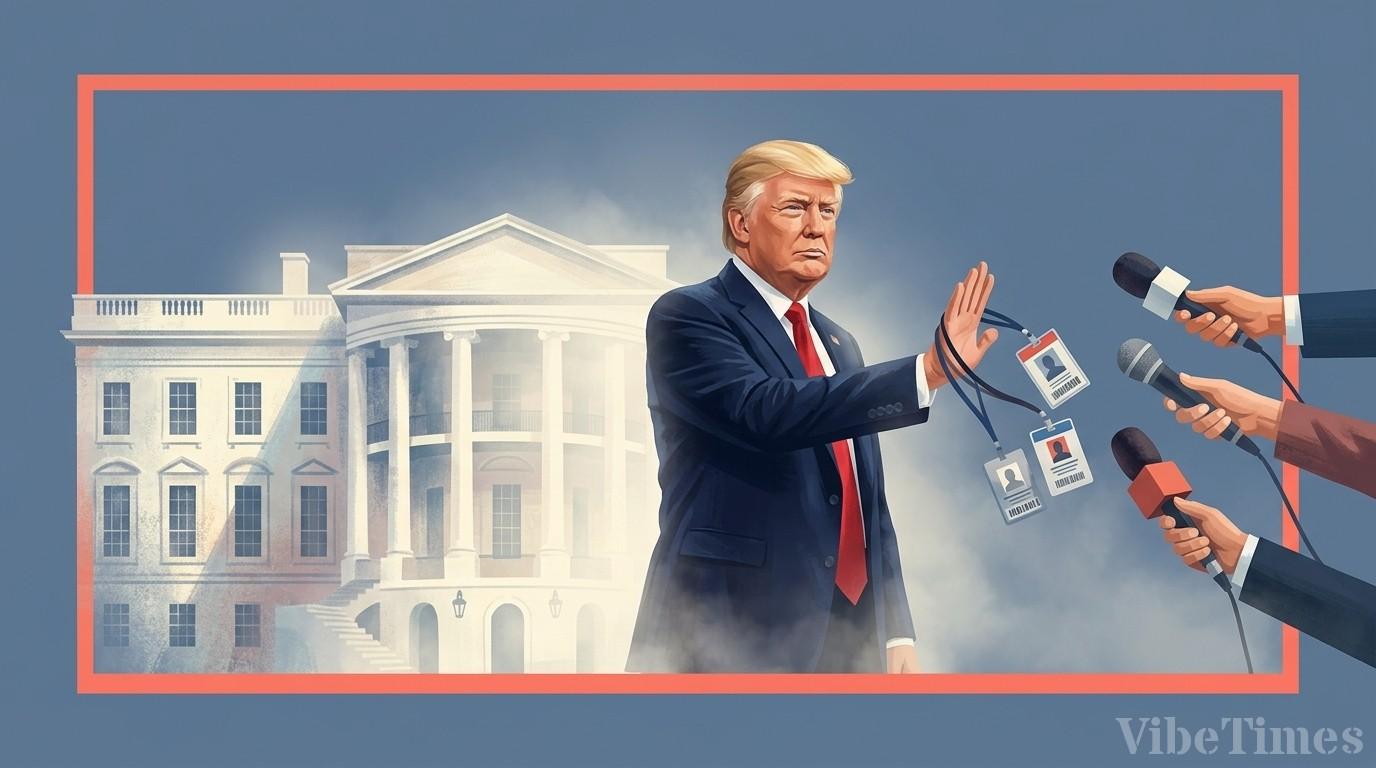
U.S. President Donald Trump on the 18th (local time) banned three news outlets — CNN, MS Now, and Politico — from White House access. On Truth Social that day, Trump said, "I am proud to announce that we are immediately barring CNN, which has ceaselessly peddled fake news; MS Now, which changed its name due to falling credibility; and Politico." He went on to claim, "Politico received $80 million in subscription fees from the U.S. government during the Biden administration," adding, "It seems corrupt to me."
Trump escalated his criticism in front of reporters at the White House Oval Office. "Reading and watching fake news is really exhausting. When you watch CNN, it's just fake," he said. "It's the same with MS Now — some people call it 'MS NDC,' a play on the Democratic National Committee — and that's fake news too." He added, "They deliberately write negative articles. They do it to tear down the Republican Party and the Republican administration." Asked whether there was any specific reason for the move, he replied, "There's no specific reason."
Trump warned that "other fake news outlets will face access bans as well," though it was unclear whether this would actually be enforced. The affected outlets' reporters reportedly remain in workspaces near the White House briefing room. While Trump said the measures take effect immediately, there were no signs they had actually been implemented.
Bruce Brown, president of the Reporters Committee for Freedom of the Press (RCFP), said in a statement, "Such access bans are plainly unconstitutional," criticizing that "the First Amendment makes clear that if the White House grants access to some reporters, it cannot bar others simply because it dislikes their coverage."
This is not the first time President Trump has attempted to restrict press access. In November 2018, during his first term, Trump got into a confrontation with CNN journalist Jim Acosta and revoked his White House press pass. CNN filed a lawsuit at the time, and a court overturned the action. If this latest move leads to a legal battle as well, courts could invalidate it as in the Acosta case — meaning the media environment for White House coverage could hinge on the outlets' responses and whether legal disputes ensue.