Justice Kim Seong-su Takes Office a Month After National Assembly Appointment, With President Lee Jae-myung's Approval

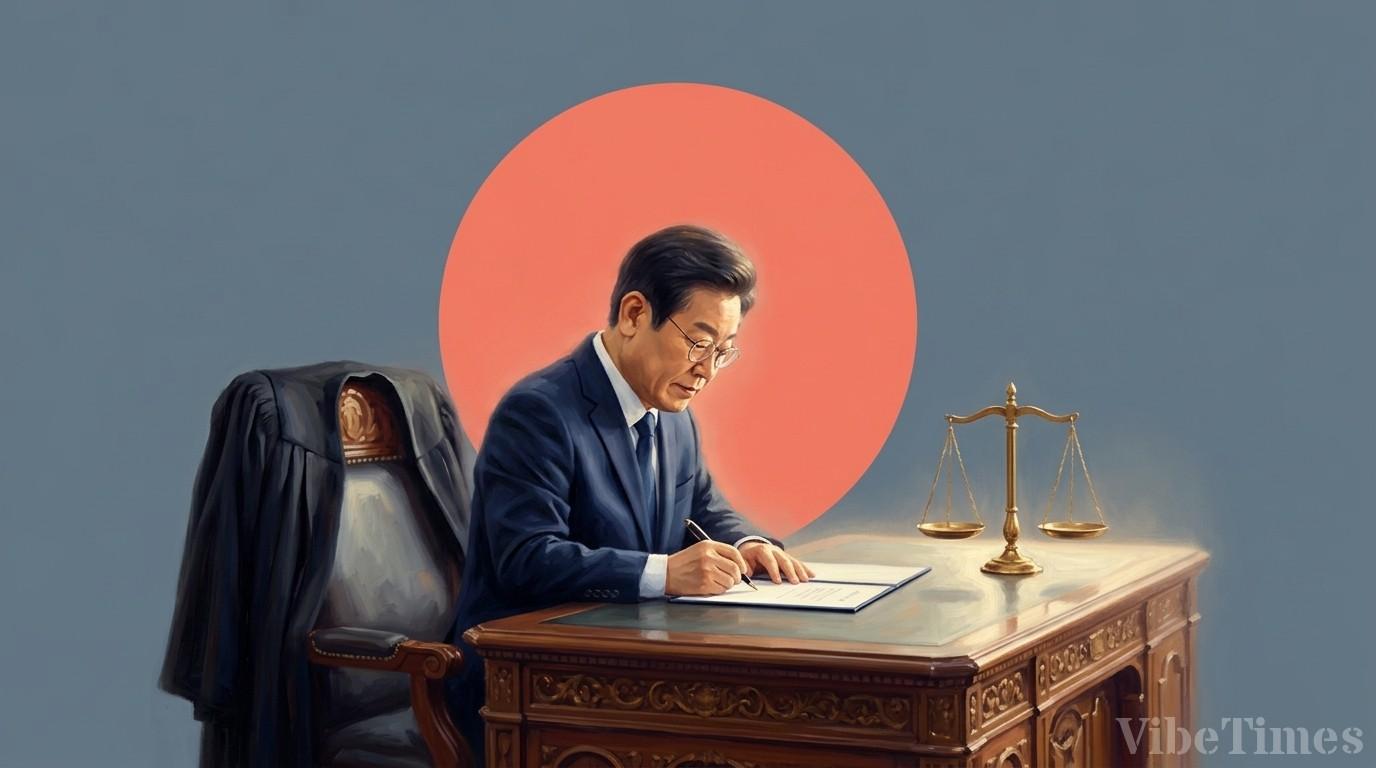
President Lee Jae-myung approved the appointment of Justice Kim Seong-su, allowing the first Supreme Court justice of this administration to take office after a month-long delay.
Approval a Month After Assembly Appointment... A Signal of Normalizing Judicial Appointments
With President Lee's approval, Justice Kim Seong-su has completed his appointment process and officially taken office, exactly one month after the National Assembly named him to the post. With concerns mounting over the judicial appointment vacuum caused by the prolonged delay, the approval is seen not merely as the completion of a procedure but as a demonstration of the administration's commitment to normalizing the judiciary. This marks the first Supreme Court justice appointment since the current government took office.
The timing is noteworthy. At his recent seventh press conference, President Lee urged supporters to "dispel suspicions of a rollback in prosecutorial reform," appealing for unity among his base. With his approval rating hitting a post-inauguration low of 37 percent and negative assessments climbing to 56 percent, analysts interpret the appointment of a Supreme Court justice as a calculated move to substantiate his "reform agenda" by playing the judicial personnel card first.
Fast-Track Prosecutorial Reform... Ruling and Opposition Camps Set to Clash Over Abolishing the Power to Withdraw Indictments
The next battleground is the power to withdraw indictments. As President Lee calls for its abolition, the ruling and opposition parties are expected to clash once again over the special prosecutor issue. The opposition criticizes the fabricated-indictment special probe itself as groundwork for pushing the indictment withdrawal. Rep. Jeong Jeom-sik of the People Power Party fired a direct shot, saying, "The fabricated-indictment special prosecutor is itself a push for withdrawing indictments," adding, "President Lee has no sincerity."
Even within the ruling camp, voices differ. Observers say a temperature gap has emerged between the president and his supporters in prosecutorial reform discussions, owing to the political burden stemming from the withdrawal of the indictment against President Lee himself. Indeed, while President Lee said at his press conference that he had made "the best personnel choices in his own way," he has repeatedly taken a cautious stance on multiple pending issues. He finds himself caught in a dilemma: accelerating reform risks fueling a political backlash.
The success or failure of reform hinges not on slogans but on the sincerity of the process. The approval of the Supreme Court justice's appointment is meaningful in that it saw through that first step.
A Widening Personnel Crisis Compounded by Controversy Over Forcing the Appointment Through
Things grew more complicated with the withdrawal of former Justice Minister nominee Kim Seung-won. President Lee nominated Kim on August 30, but the nomination ended with Kim's voluntary withdrawal 20 days later on September 19 — the second botched appointment after Yong Hye-in. During the process, President Lee said he had "not yet reached a final conclusion" and would consider the public's perspective, but the nominee ultimately stepped down on his own, dealing a blow to trust in the appointment vetting system.
Rep. Jeong Jeom-sik warned that "if Kim Seung-won's appointment were forced through, furious public sentiment would come crashing down." The Democratic Party's unilateral adoption of the confirmation hearing report prolonged the fallout, and perjury allegations surrounding the former nominee turned the controversy into a debate over the confirmation hearing system itself. That 18 of the 25 confirmation hearings for cabinet nominees under the Lee Jae-myung government were held with zero witnesses is also a point of sustained criticism from the opposition.
Against this backdrop, the approval of Justice Kim Seong-su's appointment carries different political weight, standing as one of the few "completed appointments" amid a chain of personnel failures. Some interpret it as laying the groundwork to move on to prosecutorial reform — the political front line — by wrapping up an appointment in the neutral domain of the judiciary.
The Key to an Approval Rating Rebound Lies in Reform's Completeness, Not Its Optics
Two things to watch going forward. First, what legislative outcome the call to abolish the power to withdraw indictments produces in the National Assembly. If the ruling and opposition camps clash again over the special prosecutor, the legislative calendar could shrink, delaying the passage of prosecutorial reform bills. With the special probe and reform legislation intertwined, the entire political schedule risks being crowded out by personnel and judicial issues.
The other is the direction of public opinion. With approval ratings hitting a low for four consecutive weeks, the question is whether the tangible achievement of appointing a Supreme Court justice will translate into a rebound. As the saying goes, success comes not from the outcome but from enduring the process; likewise, prosecutorial reform will only be judged once the full process — passage of bills and institutional consolidation — is complete. The prevailing view is that the real test of President Lee's ability to see reform through begins now.
