Kim Seung-won holds press conference to step down 20 days after nomination

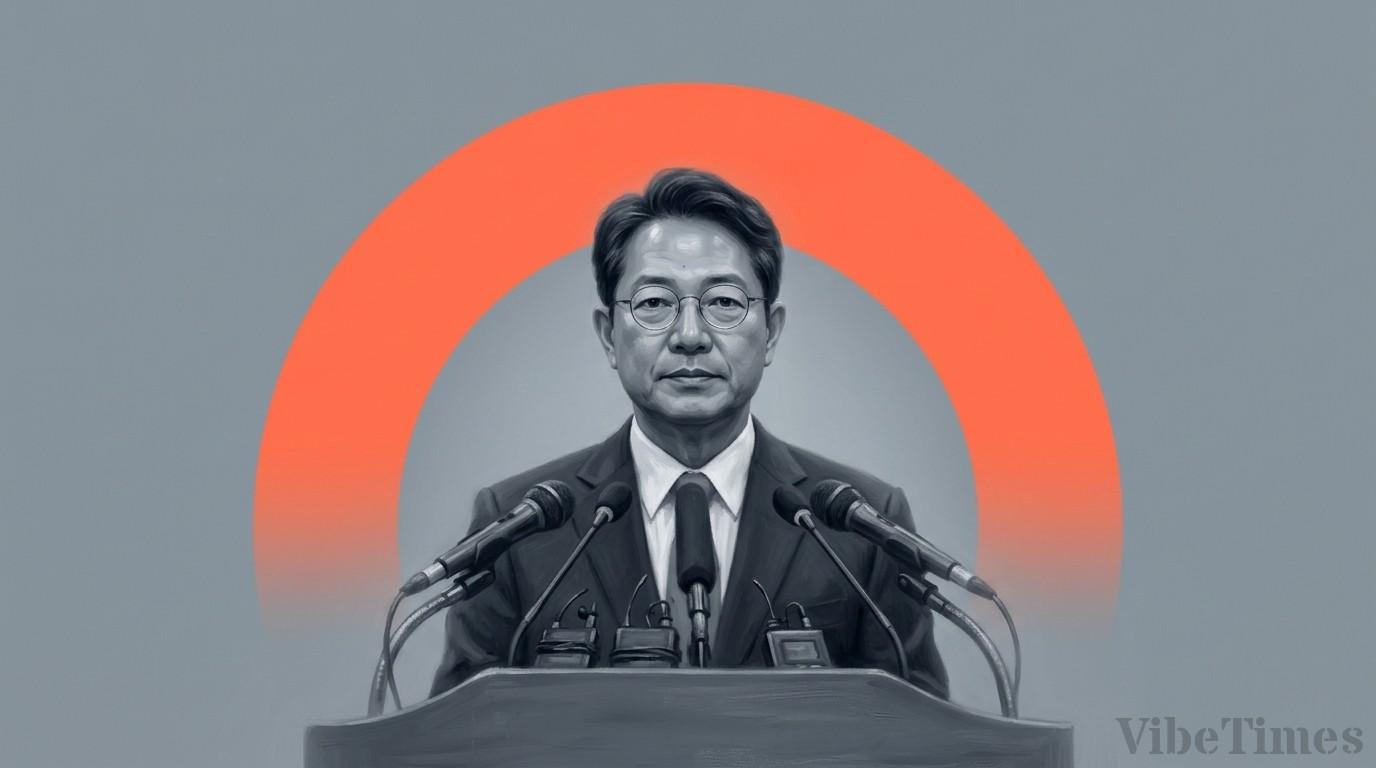
Lee Jae-myung: "Unable to reach a final decision"… Will Kim Seung-won's resignation press conference end the controversy?
Kim Seung-won, nominee for Minister of Justice, will hold a press conference at the National Assembly at 11 a.m. on the 20th to announce his resignation. The move comes 20 days after his nomination, marking the closing chapter of a personnel controversy that ended in his voluntary withdrawal. President Lee Jae-myung had earlier said at his seventh post-inauguration press conference held at the Blue House's Yeongbin-gwan that he had "not yet reached a final decision" on the appointment, adding that he would "decide carefully, taking into account the public's expectations."
Personnel vetting collapses in just 20 days
President Lee nominated Kim Seung-won as justice minister on August 30. However, allegations of lobbying over new drugs surfaced during the vetting process, and Kim's past role as head of a group demanding the cancellation of the president's criminal prosecution also came under scrutiny. Kim ultimately chose to step down voluntarily on September 19, just 20 days after his nomination. As the second nominee from the second Lee Jae-myung cabinet reshuffle to fall—following Yong Hye-in—the episode has shaken confidence in the personnel system as a whole.
At the press conference, President Lee said he had "made the best choice I could" but acknowledged that "various controversies have arisen during the public vetting process." It was effectively an admission of a failed vetting. He also signaled that he would "reexamine the personnel system," making stricter vetting for future appointments inevitable. Since leadership ultimately hinges on judgment, the episode inevitably becomes a test of the most fundamental capacity to run state affairs—personnel, not policy.
Signs of defection spreading within the ruling party and the political cost
What amplified the controversy was dissent within the ruling camp. Rep. Yoon Kun-young said after the president's press conference, "Now I feel at ease. His sincerity came through"—evidence of just how deep the anxiety ran even within the president's own camp. In fact, pressure to withdraw the nomination reportedly came not only from opposition attacks but also from within the Democratic Party itself. As whistleblowers came forward one after another, claiming that "Kim Seung-won had targeted Mr. Yang as a key target," the governance vacuum snowballed within days.
The political cost is reflected in the polls. President Lee's approval rating for his handling of state affairs fell to 37%, his lowest since taking office and a fourth consecutive weekly decline. Negative evaluations rose 5 percentage points to 56%, an all-time high since his inauguration. Of course, behind the falling approval rating, dissatisfaction with livelihood issues such as housing and the jeonse crisis compounded the personnel controversy. Seoul Mayor Oh Se-hoon is escalating his offensive, saying, "The jeonse crisis is a situation created entirely by the president." For the president, the burden lies in the fact that personnel failures, when combined with grievances over livelihoods, could steepen the downward curve.
What to watch at Kim's press conference and the outlook ahead
The first point of interest at Kim's press conference on the 20th is how he explains the lobbying allegations. While he has taken political responsibility through his voluntary resignation, the allegations themselves remain a matter for judicial judgment. The second is his position on his role as head of the group that demanded the withdrawal of prosecution against President Lee. If this intertwines with the president's request at his press conference to strip special prosecutors of the power to withdraw indictments, political conflict is likely to reignite over the impact of the justice minister appointment on the investigation and trial of the case.
The outlook forks in two directions. If President Lee genuinely overhauls the personnel vetting system as promised, the wounds from the second cabinet reshuffle could heal quickly. He also has grounds to shift attention to longer-term governance agendas, such as the dual-capital framework of "economic Seoul, administrative Sejong" he promoted at his 472-day-in-office press conference. On the other hand, if vetting controversies recur with the next justice minister nominee, the fundamental principle that "the supreme goal of governance is people's livelihoods" risks being eroded by the discord over appointments. The episode has made one thing clear: the key to recovering approval ratings lies not in grand policy declarations but ultimately in the judgment to pick the right people.